Portuguese
  Spanish


According to the Associated Press, on June 12, 2026, the Philippines classified as a hostile act the sanctions announced by China against Gilberto Teodoro Jr., a critic of Beijing in the South China Sea, with a ban on his and his family’s entry into Hong Kong and Macau, deepening bilateral tensions.
The South China Sea returned to the center of a diplomatic crisis between Beijing and Manila after China imposed sanctions against Gilberto Teodoro Jr., the Philippines’ Secretary of Defense. According to a report by the Associated Press, updated on June 12, 2026, the Philippine government classified the measure as a “hostile act.”
The decision announced by Beijing includes a ban on Teodoro and his family’s entry into China, including Hong Kong and Macau. China claims that the Philippine minister made statements that harmed its interests, while Manila says the sanctions further complicate an already tense relationship due to maritime disputes, regional security, and military rapprochement with the United States.
China barred entry of Teodoro and family
The Ministry of Foreign Affairs of China announced that Gilberto Teodoro Jr., his wife, and his son are prohibited from entering mainland China, Hong Kong, and Macau. The measure also prevents Chinese organizations and individuals from conducting transactions, cooperations, or other activities with them.
-
U.S. Establishes Permanent Embassy in Jerusalem, Reigniting International Debate Over Israel’s Capital

-
The world has nearly 12,000 nuclear warheads, with the majority held by the United States and Russia; see the figures for China, France, and the United Kingdom.

-
Venezuela Faces UN Alert for Hunger, Disease, and Service Collapse After Earthquakes Cause Nearly 2,000 Deaths and $6.7 Billion in Damages

-
Brazil Deploys Navy Field Hospital with ICU, Orthopedics, Pediatrics to Earthquake-Stricken Area in Venezuela, Offering 30 Beds and 150 Daily Consultations


According to the AP, Beijing justified the decision by stating that Teodoro made “irresponsible statements” that allegedly harmed Chinese interests. The sanction turns a discourse dispute into a concrete diplomatic measure, with direct impact on the relationship between the two governments.
Philippines called the measure a hostile act
The Department of Foreign Affairs of the Philippines stated that imposing sanctions is China’s prerogative, but said it views the measure as a hostile act that complicates bilateral relations. The statement was made in Manila, on Friday, June 12, 2026, according to the Associated Press.
The Philippine government also stated that measures of this type do not contribute to building mutual trust, managing differences responsibly, or creating conditions for constructive engagement between the two countries. The response indicates that Manila does not intend to treat the episode as a mere symbolic gesture.
Teodoro is one of Beijing’s harshest critics
Gilberto Teodoro Jr. was appointed Secretary of Defense by Philippine President Ferdinand Marcos Jr. in June 2023. Since then, he has become one of the most critical voices against Chinese actions in the South China Sea and also regarding Taiwan.
According to the AP, Teodoro has already classified China’s expansive claims in the South China Sea as “fiction” and “lies.” After the sanctions, he stated that he will continue to fulfill his duties and defend Manila’s interests against what he describes as Beijing’s aggression.
Beijing accuses minister of escalating tensions
China rejects the Philippine interpretation and accuses Teodoro of inciting conflicts. Chinese Foreign Ministry spokesperson Lin Jian stated that Teodoro and other “anti-China” sectors in the Philippines are creating problems and amplifying disputes between the two countries.
Lin also said that the words and actions of the Philippine secretary are not, as he claims, a defense of national dignity. For Beijing, they serve his own political interests. This exchange of accusations shows how the conflict has moved beyond being merely maritime and now directly affects high-ranking figures.
Maritime dispute remains at the center of the crisis
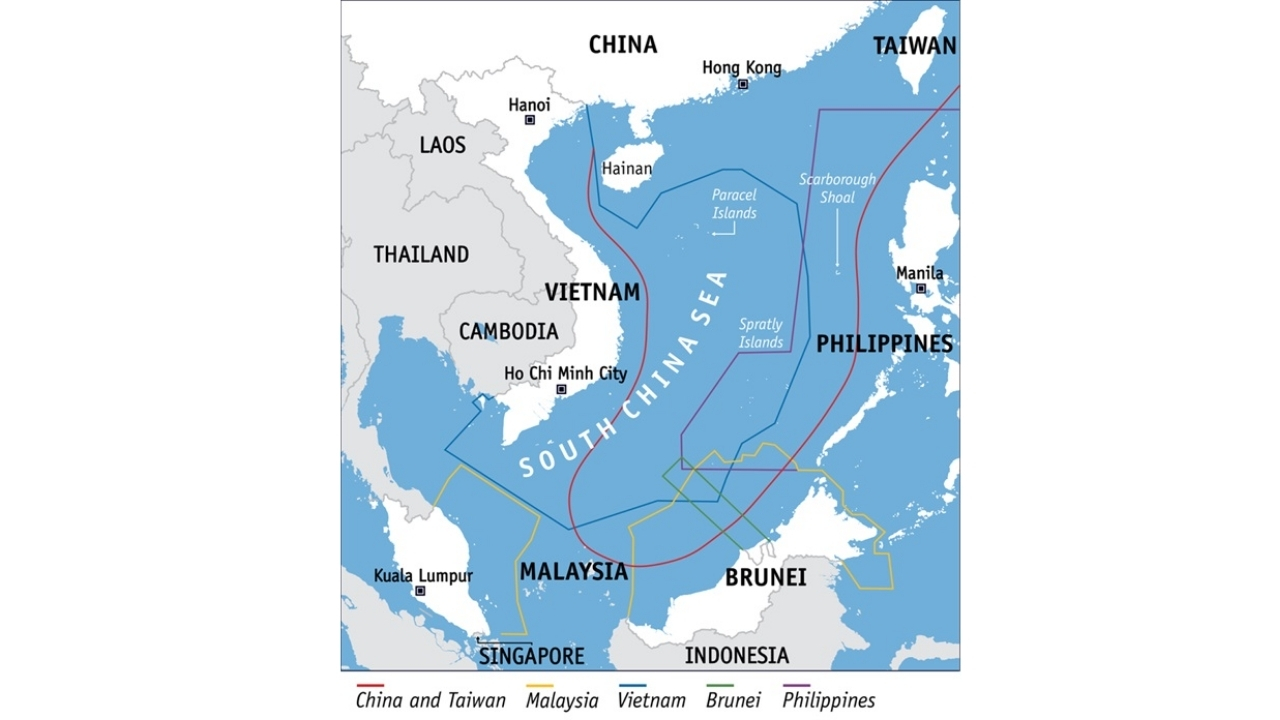
The crisis is set against the backdrop of the South China Sea, one of the most contested maritime areas in the world. China claims almost the entire region, while the Philippines and other countries contest these claims at various points on the map.
For Manila, Chinese pressure in disputed areas affects its maritime rights and resources. For Beijing, criticisms like those from Teodoro threaten its interests and deteriorate bilateral relations. The result is an escalation where statements, patrols, internal laws, and sanctions begin to intermingle.
Former Filipino Senator Had Also Been Targeted
The Associated Press recalls that China had already imposed sanctions on Francis Tolentino, a former Filipino senator. He authored two bills that reaffirmed the extension of the Philippines’ maritime territories and the country’s right to resources, including in the South China Sea.
The bills were later sanctioned by President Ferdinand Marcos Jr. This history shows that Beijing has used sanctions as a tool against authorities who, in China’s view, challenge its positions on sovereignty, maritime borders, and strategic interests.
Crisis May Bring Manila Closer to the US
Teodoro also led efforts to deepen the Philippines’ defense and security ties with the United States, Manila’s historical ally by treaty. According to the AP, this rapprochement includes expanding annual military exercises with American forces.
These activities have come to involve joint naval patrols and training in the South China Sea. For China, the advancement of military cooperation between the Philippines and the United States is seen within a broader context of containment and regional pressure. For Manila, the partnership reinforces deterrence and security.
Philippines Seek Agreements with Other Partners
Besides the United States, Teodoro also led efforts for visiting forces agreements with countries considered partners, including Japan, France, Canada, and New Zealand. The justification presented by the Filipino secretary is to expand deterrence capacity in the face of Chinese assertiveness.
This network of rapprochements indicates that the dispute in the South China Sea does not only involve China and the Philippines. The issue crosses alliances, military exercises, maritime legislation, and narrative disputes over who threatens regional stability.
Sanctions Elevate Dispute to a New Level
The Chinese decision to sanction Gilberto Teodoro Jr. and his family adds a personal and diplomatic layer to an already sensitive crisis. The episode involves entry into Chinese territory, Hong Kong and Macau, bilateral relations, and the role of the Filipino secretary as a voice of national defense.
At the same time, the Filipino response shows that Manila sees the measure as another factor of strain. The risk is that the dispute in the South China Sea leaves even less room for dialogue and increases the Philippines’ dependence on external alliances, especially with the United States.
Is the sanction against Gilberto Teodoro Jr. just a diplomatic response from Beijing or does it mark a new phase in the South China Sea dispute? Do you think Manila should strengthen military alliances or insist on direct negotiation with China? Leave your opinion in the comments.