Portuguese
  Spanish


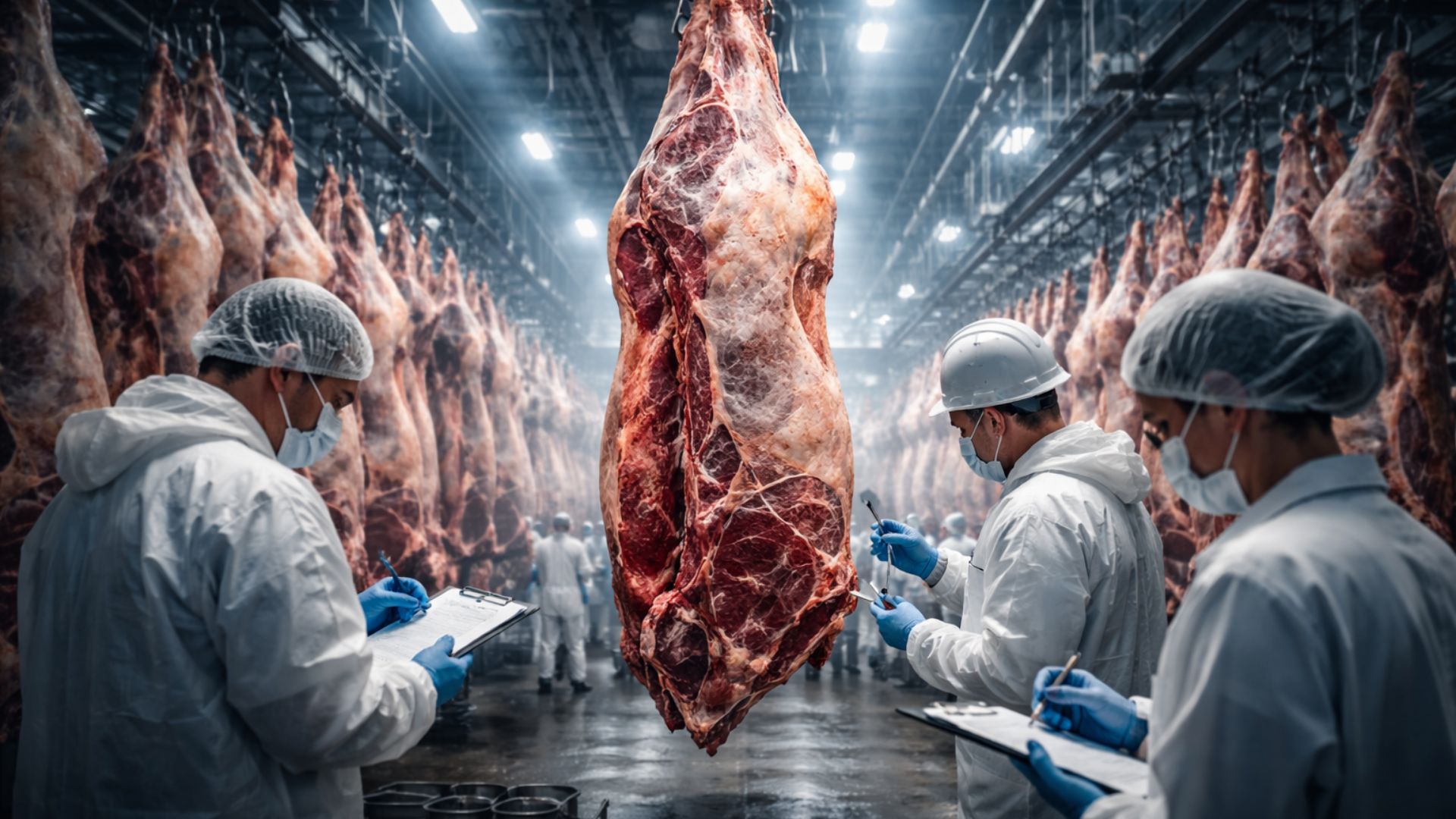

Sanitary suspension reignites trade tension between Brazil and China and pressures the beef supply chain with the risk of stricter inspections, impact on exports, and the need for immediate reinforcement of production controls and traceability in the sector.
The temporary suspension of exports from a slaughterhouse in Várzea Grande, Mato Grosso, has placed the sanitary relationship between Brazil and China back at the center of concerns in the beef sector.
The measure was adopted after Chinese authorities identified an unauthorized substance in an exported batch, prompting the Ministry of Agriculture and Livestock to open an investigation and strengthen technical dialogue with Beijing.
The affected unit operates under SIF 1206 and belongs to Pantaneira Indústria e Comércio de Carnes e Derivados, a company linked to Frigosul.
-
Researchers Turn Discarded Mango Pits into Hydrogel That Absorbs 400% of Its Weight in Water, Offering Agricultural Solution for Droughts and Waste Reuse

-
Flower strips in Brazilian farms become pest control strategy, attracting predator insects and reducing the need for chemical pesticides.

-
Yara acquires Texas ammonia plant for $1.3 billion, boosting global fertilizer competition with 1.3 million tons annual capacity
-
At 35, Lawyer Leaves Corporate Career to Turn 1-Hectare Farm into Organic Supplier for Schools in Southern Brazil


According to communication sent by agricultural attachés to the Brazilian government, the GACC, China’s customs and sanitary authority, detected residues of medroxyprogesterone acetate in frozen boneless beef, a product linked to the Mato Grosso establishment.
As a result, the Chinese authority halted new import declarations from the plant for shipments made from April 13.
The involved cargo was rejected and discarded according to sanitary protocols, while other Brazilian slaughterhouses authorized to sell to the Chinese market continue to operate normally, according to Abiec.
Investigation into the origin of the substance
The case is still under analysis by the Ministry of Agriculture, which is trying to trace the origin of the detected residue and consolidate the information that will be passed on to the Chinese authorities.


The investigation seeks to identify at what point in the production chain the non-compliance occurred, with special attention to the use of veterinary medicines and the internal controls adopted by the industry.
The technical assessment within the government is that episodes of this nature are no longer perceived merely as isolated occurrences and now require a quicker and more detailed response.
Therefore, the topic has gained traction in recent discussions between technical teams from both countries, in an effort to prevent the suspension of one unit from being interpreted as a sign of systemic fragility in Brazilian control.
In this scenario, the immediate focus is on the traceability of raw materials, sanitary records on farms, and the self-control programs maintained by slaughterhouses.
The reading of technicians involved in the negotiations is that the prevention of new blockages depends less on speeches and more on the ability to demonstrate, with documentation and continuous monitoring, that shipments comply with the limits required by Chinese legislation.
Stricter inspection at Chinese ports
Although the restriction affects only one unit, the episode has heightened fears of a tightening in the inspection of Brazilian cargoes arriving in China.
The trend indicated by authorities is an increase in sampling at Chinese ports, which may raise the chance of new detections and, consequently, additional measures against exporters who present nonconformities.
This movement carries more weight because China remains at the center of Brazilian beef exports.
The Chinese share exceeds half of the product’s exports, both in volume and revenue, which increases the sector’s sensitivity to any changes in inspection standards.
The dependence on the Chinese market helps explain the immediate reaction of authorities and companies in the face of sanitary episodes of this nature.
Impacts on slaughterhouses and Brazilian exports
In practice, the suspension of the Mato Grosso plant has a direct effect on the affected company, but the scope of the episode is broader.
Whenever the inspection of a relevant market becomes more severe, pressure increases throughout the chain, from the rural producer to the exporter.
Any deviation in residues, documentation, or traceability has the potential to interrupt business in a decisive destination for the sector’s trade balance.
Moreover, the nature of the product involved makes the case particularly sensitive.
The medroxyprogesterone acetate is a veterinary medication that is not accepted by Chinese legislation for animals intended for food production.
This means that the presence of the residue in exported meat constitutes a sanitary nonconformity from the importer’s perspective.
The industry’s reaction, so far, has been one of restraint.
In a statement, Abiec stated that it is monitoring the case together with the Ministry of Agriculture and reiterated that Brazil maintains one of the most rigorous sanitary control systems in the international market.
The entity also classified the suspension as temporary and preventive, aimed at the traceability of the raw material and the adoption of measures required by the competent authorities.
Government strategy to avoid new restrictions
Behind the scenes, the priority of the Brazilian government is to prevent the occurrence from unfolding into broader barriers.
The strategy involves responding quickly to investigations, presenting technical elements to Chinese authorities, and strengthening guidance to the productive sector on veterinary medicines.
The focus includes withdrawal periods and acceptable residue limits in each international market.
This front has gained additional importance because China is not only the largest individual buyer of Brazilian beef but also a partner whose regulatory actions often have an immediate effect on prices and shipping flows.
When sanitary control becomes stricter in a destination of this magnitude, the consequence is an increased level of alert among companies, associations, and the government.
For now, the suspension remains concentrated in the Várzea Grande unit, with no indication of a widespread halt of Brazilian sales to the Chinese market.
Still, the episode reinforces the pressure for stricter controls at the source and for quick technical responses in the face of a market highly sensitive to sanitary failures.