






 Portuguese
  Spanish
  3 min of reading
  1 comment


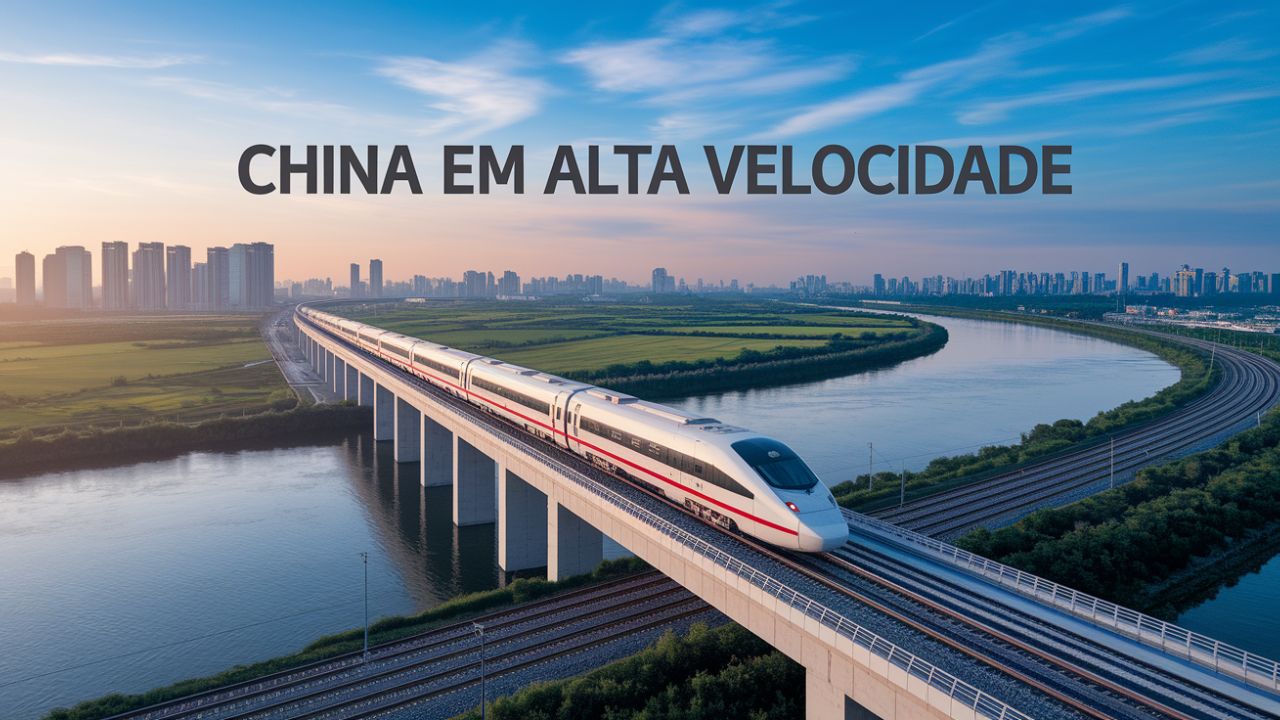


With 60,000 km of high-speed tracks planned by 2030, China’s Railway Leads a Revolution in Transportation, Connecting Cities, Boosting the Economy, and Moving Billions of Passengers and Tons of Cargo Every Year.
Have you ever stopped to imagine traveling between cities at over 300 km/h with the same ease as being in your living room? Well, this is the reality that China’s railway is taking to another level. The country has announced ambitious plans to expand its high-speed rail network to 60,000 km by 2030, consolidating its position as a global leader in this sector.
China’s Railway: A High-Speed Landmark
China is not just building tracks but also redefining the concept of mobility. Currently, its high-speed network already exceeds 48,000 km, and the coming years promise even more astonishing advancements. But why does China lead in this sector?
Beyond cutting-edge technology, the country combines massive investments with a strategic vision to integrate urban and rural areas. And it doesn’t stop there: by 2030, the total mileage of the railway network, including conventional lines, is expected to reach an impressive 180,000 km.
-
The hydroelectric plants on the Madeira River, like Jirau, came for the energy, but now the drought wave has reduced artisanal fishing by 39% and emptied the tables of the riverside communities in the Amazon.

-
The Zuluk road has 32 zigzag curves at 3,400 meters in the Himalayas, originated as the Silk Route in Sikkim and became a military border where foreigners cannot pass.
-
Rio de Janeiro receives more than R$ 5.5 billion in sanitation, includes almost 1 million residents from communities in the formal customer base, and brings water, sewage, and proof of residence to regions historically neglected by urban infrastructure.

-
Via Mar promises to relieve BR-101 in Santa Catarina, but it will be the state’s first toll state highway and faces soft soil and rice fields that threaten the timeline.


Growing Infrastructure: Impacts and Benefits

What does this mean in practice? Imagine connecting distant cities in just a few hours, facilitating access to markets, tourism, and jobs. It’s like shortening distances with a simple blink. This expansion also promotes more even economic growth, allowing less developed regions to thrive.
Structural Investments and Future Projections
No major achievement happens without robust investments. By 2025, China plans to invest 590 billion yuan in the railway sector, ensuring that an additional 2,600 km of tracks are operational. In 2024, this investment had already grown 11.3%, reaching 850.6 billion yuan. It is a clear example that strategic planning and efficient execution go hand in hand.
Impact on Mobility and the Economy
The impact is not just about tracks, but about people and cargo. In 2024, the network moved 4.08 billion passengers, a number that is expected to grow even more in 2025. For cargo transport, the results are also impressive: 3.99 billion tons were transported last year, maintaining a growth streak for eight consecutive years.
China’s High-Speed Trains: Leading the Future
Beyond connecting people and goods, the railway expansion reflects a growing concern for sustainability. High-speed trains are a cleaner and more efficient alternative compared to other modes of transport, aligning with global emissions reduction goals.
Finally, the China-Europe freight trains, an important pillar of international trade, made 19,000 trips in 2024, strengthening global connectivity.
China’s railway is not just an infrastructure project; it is a revolution that transforms how the country connects internally and with the world. With solid investments, clear goals, and technological innovation, China is shaping the future of global mobility. After all, who said the future can’t arrive on tracks?





Não é a china está revolucionando é o ocidente e americano ainda discutindo como definir quem é mulher ou homem ou se é outro ou outra… Não é democracia deixar cada ser o seu e não atrapalha vidas dos normal, ficar gastar tempo dos falsos político só quer votos para regresso da humanidade ou o país