






 Portuguese
  Spanish


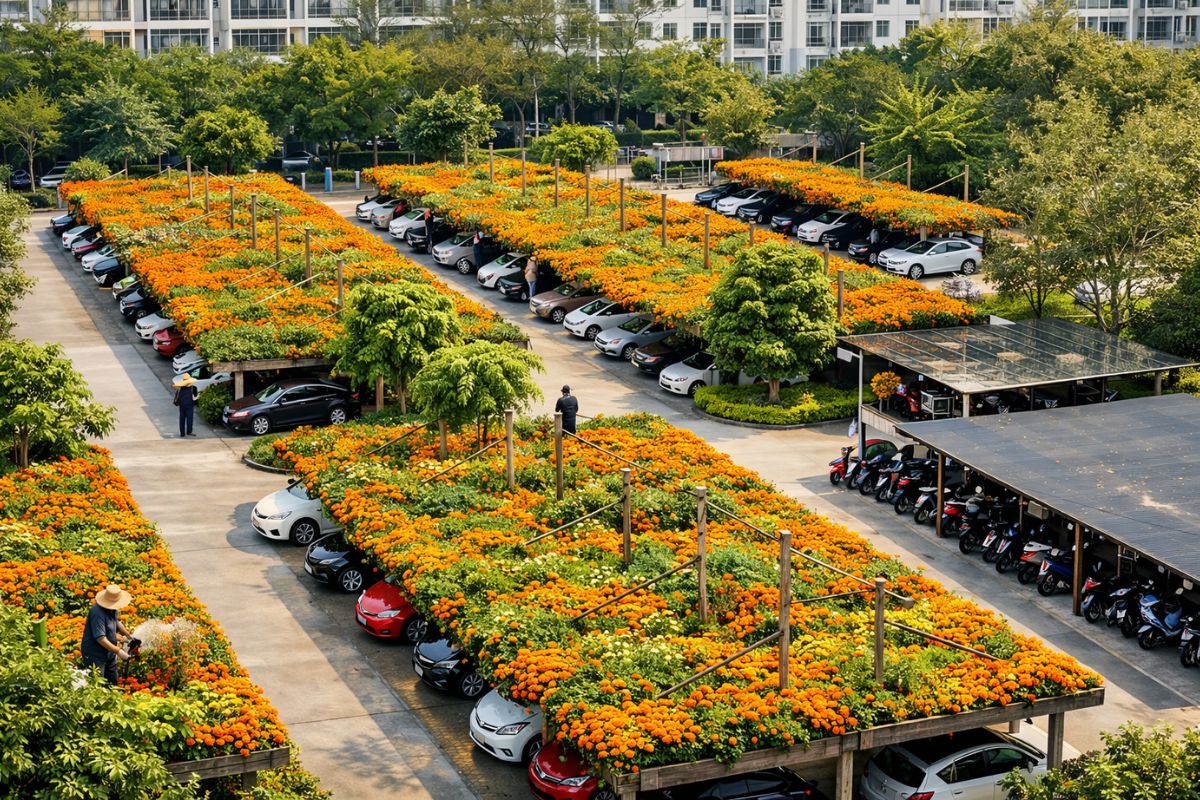

In Nanning, the transformation of rooftops into suspended gardens combats heat islands, improves air quality, retains rainwater, and enhances urban biodiversity without occupying new land
The suspended gardens are changing the landscape of parking lots in China. In Nanning, previously gray and hot rooftops now function as green corridors over asphalt, with a direct goal: reduce urban heat and make the space more livable.
The proposal is simple in form and powerful in impact. By integrating vegetation into existing infrastructure, the city creates a practical solution to combat heat islands, improve air quality, and reconnect urban life with nature.
What are suspended gardens on parking lot rooftops

The suspended gardens mentioned in the project are green areas installed on parking lot rooftops. Instead of creating new parks from scratch, the city utilizes an already built surface and converts it into green coverage.
-
AI Radar Built with Old Camera and $20 Gains Attention After Alleged $317,000 Sale to Chinese Government, But Lack of Documentation and Official Confirmation Raises Questions

-
Amateur Detectorist Discovers 3,400-Year-Old Bronze Age Gold Treasure with 121 Pieces in Transylvania, Including a Unique Ring

-
Italian Designer Develops Solar-Powered Terracotta Water Purifier Producing Up to 5 Liters of Drinking Water Daily Without Electricity

-
New Hydrogel Made from Algae and Shrimp Shells Absorbs 60 Times Its Weight in Water to Combat Drought in Spanish Agriculture


The result creates “floating gardens” that function as green passages and breathing spaces, transforming a place associated with concrete and heat into a structure with climatic and environmental functions.
How suspended gardens combat heat islands
The logic is physical and immediate. Plants absorb solar radiation, release moisture, and cool surfaces, reducing the heat that asphalt and concrete accumulate throughout the day.
By doing this in extensive and exposed areas, such as parking lot rooftops, the suspended gardens directly tackle the effect of heat islands, which leave entire neighborhoods warmer than regions with more vegetation.
Benefits that go beyond temperature: air, water, and biodiversity
The project is not limited to cooling. The suspended gardens also contribute to air quality, helping to make the urban environment more pleasant.
Another significant gain is water: vegetation retains part of the rain, reducing the pressure of immediate runoff and increasing the absorption capacity of urban space.
Moreover, the gardens create refuge for pollinators and other organisms, which helps to increase biodiversity. Instead of a “dead roof,” a living space emerges, with a real ecological function.
A climatic solution integrated into what already exists

One of the strongest points of this initiative is space efficiency. By installing suspended gardens on already constructed rooftops, the city improves its climatic performance without needing to occupy new areas, which preserves land and reduces conflicts over land use.
In practice, it is a way to make the city more resilient and more human, using the existing infrastructure as a platform for climate adaptation.
What this idea indicates for the future of cities
The example of Nanning shows that climate solutions can be implemented incrementally, distributed, and connected to urban daily life. Instead of relying solely on large projects, the city places nature on top of what is already built.
And for you: if your city could transform rooftops into suspended gardens, do you think it should start with parking lots, schools, or public buildings?


