Portuguese
  Spanish


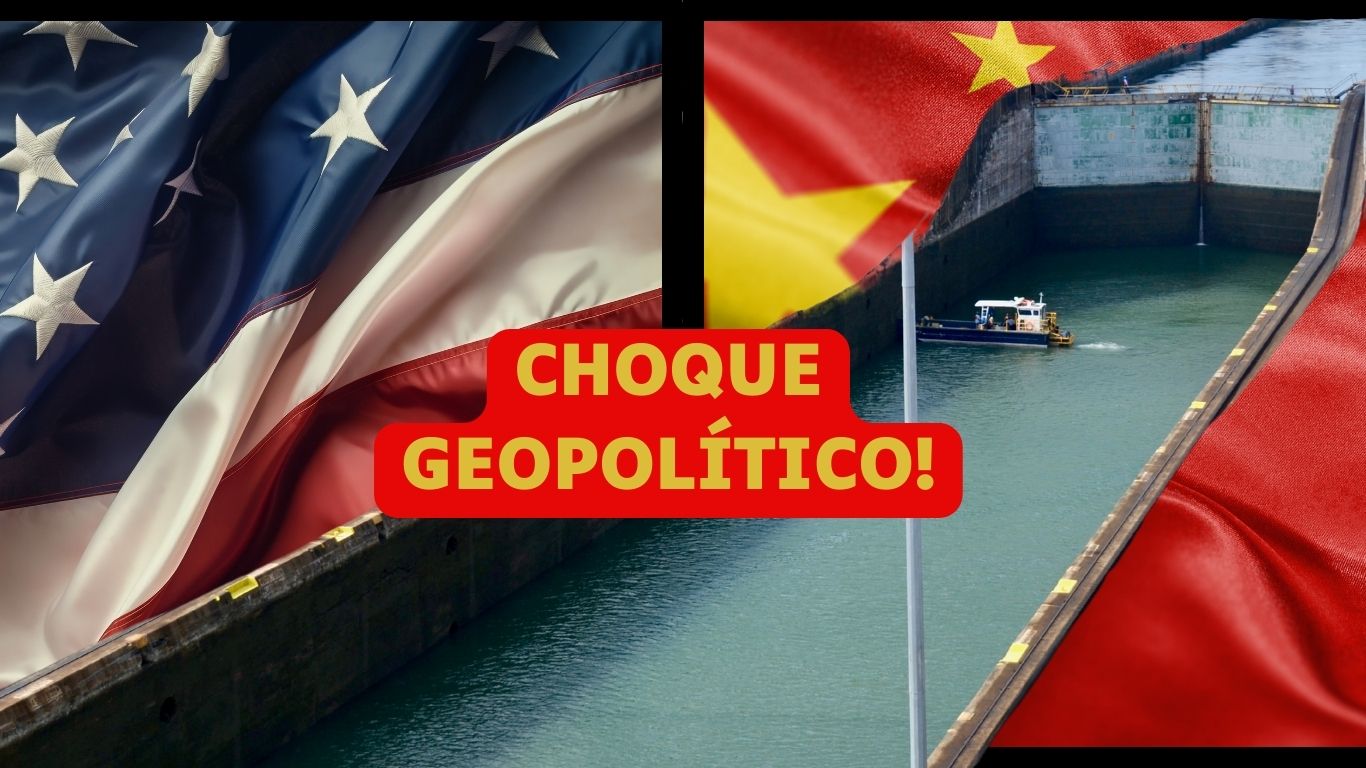

Discover How Panama’s Decision to Cancel the Agreement with China, Under Pressure from the US, Can Impact the Future of the Panama Canal and Alter Geopolitical Relations in Latin America.
Understand the motivations and consequences of this strategic shift regarding the Panama Canal.
The President of Panama, José Raúl Mulino, officially announced on February 5, 2025 that the country will withdraw from the New Silk Road, an ambitious economic program led by China that finances global infrastructure projects.
Therefore, the cancellation of the economic agreement with China represents a significant shift in Panama’s international relations. This comes especially in light of the growing pressure from the United States (US) on Latin American countries maintaining strategic agreements with the Chinese government.
-
Brazil’s Federal Revenue Auction: iPhone 13 for $95, PlayStation 4 for $80, and Volkswagen Jetta for $2,600 Among 232 Lots Available

-
Tech Giant Oracle Lays Off 21,000 Employees and Invests $70 Billion in Artificial Intelligence

-
Chilean Giant Acquires St. Marche, Expanding from Discount to Premium Supermarkets in São Paulo’s High-End Retail Market
-
After 60 Years of Selling Cheap Milk, Brazilian Family Invests in $4,000 Equipment to Transform Farm’s Milk into Premium Sweets, Producing 2 Tons Daily and Aiming for $6.4 Million


This information was reported by the G1 portal. The portal highlighted the relevance of the decision for the region.
History of the New Silk Road and Panama’s Adhesion
The New Silk Road, also known as the Belt and Road Initiative (BRI), is a global initiative from China launched in 2013 by President Xi Jinping. The goal is to expand its influence through infrastructure investments, including roads, railways, and ports.
Hence, Panama became the first country in Latin America to join the program in June 2017 during the presidency of Juan Carlos Varela.
However, the government of Mulino decided to end the agreement. The president claimed that the decision reflects “national sovereignty” and the “best interest of the Panamanian people”.
Despite the president’s statements, experts from the Center for Strategic Studies believe that US pressure played a crucial role in the decision.
On the other hand, US President Donald Trump, who resumed the presidency in January 2025, expressed concern over China’s growing influence in the region. This concern is particularly concerning the strategic Panama Canal.
The Panama Canal and the Influence Dispute
Thus, Trump suggested in recent speeches that the US could intervene to ensure that the canal, vital for global trade, remains out of indirect control of Chinese interests.
The Panama Canal, inaugurated on August 15, 1914, connects the Atlantic Ocean to the Pacific. The canal represents a crucial shipping route.
However, the possibility of China exerting influence over this infrastructure created diplomatic tensions. These tensions arose since the signing of the agreement in 2017.
Still, the Panamanian government denied any foreign involvement in the management of the canal. The government also criticized the US State Department’s statements, labeling them as “false and unfounded”, as reported by the Reuters Agency.
The Regional Impact: How the Country’s Exit Affects Latin America
The decision by Panama to leave the New Silk Road raises questions about the future of relations between China and Latin America.
Consequently, the cancellation may influence other countries in the region that also participate in the Chinese economic program, such as Venezuela and Ecuador. This could create a domino effect on global infrastructure agreements.
With this choice, Panama demonstrates a closer alignment with the United States. This alignment could redefine geopolitical strategies in Latin America.
Moreover, Washington observes with suspicion China’s influence in the region, especially through programs such as the New Silk Road. The US seeks to contain China’s expansion in the western hemisphere, according to the New York Times.
International Reaction and Future Consequences
Now, the world watches how China will react to this decision and whether other countries will adopt the same stance.
Finally, analysts and world leaders closely monitor the impact of this exit on global infrastructure development. They also watch the international economic relations, as discussed in reports from the World Economic Forum.