Portuguese
  Spanish


German Scientists Produce Solar Cells From Lunar Dust With 12.1% Efficiency. Innovation May Power Future Colonies on the Moon With Clean Energy
Space agencies, such as NASA, are preparing to maintain a permanent presence on the Moon. However, one of the biggest challenges is the high cost of transporting materials from Earth. To solve this, scientists are looking to use lunar resources themselves. A recent example comes from the University of Potsdam, where researchers created solar cells using lunar dust and perovskite.
How Lunar Solar Cells Are Made
The proposal is simple and promising: use lunar regolith — the dust covering the Moon’s surface — to create a type of “lunar glass.”
This material serves as a base for a thin layer of perovskite, an efficient and inexpensive compound already used in solar cells as an alternative to silicon. The combination of the two results in a lightweight and low-cost solar panel.
-
Scientists Convert Food Waste into Aviation Fuel, Successfully Test 50% Blend with Conventional Kerosene to Cut Emissions and Promote Sustainable Flights

-
OnePlus N6 Smartphone to Launch in India with 8,000mAh Battery and 45W SuperVOOC Charging, Lasting Up to Three Days
-
Scientists Plan to Release Air Bubbles Underwater to Protect Antarctica’s “Doomsday Glacier” from Melting

-
Chinese R6000 Drone Combines Airplane and Helicopter Features, Carries Up to 12 People for Multiple Missions
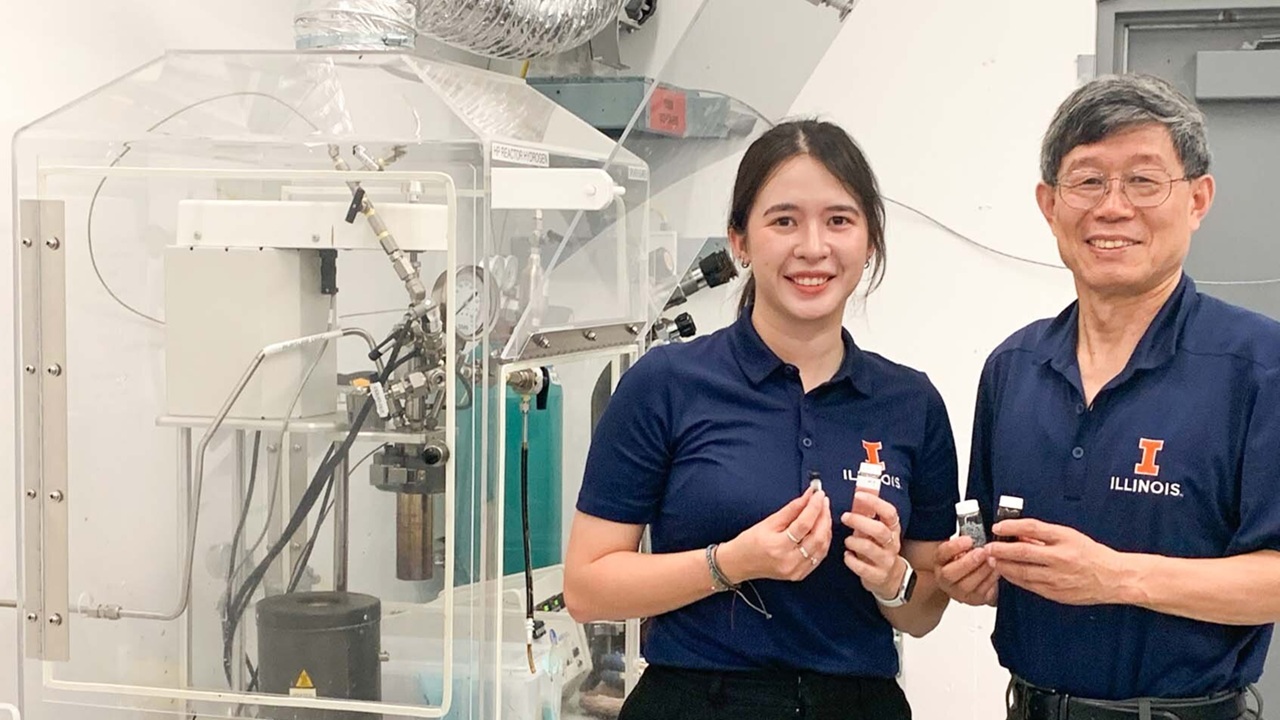



The process of creation involves melting simulated regolith at around 1,540 °C. Then, the material is slowly cooled until it forms “moonglass,” the lunar glass. On top of it, scientists apply an ultrathin layer of halogenated perovskite.
Although perovskite still needs to be brought from Earth, the required amount is small. Only 0.91 kg of the material is sufficient to manufacture 400 square meters of solar panels.
Weight Savings and Energy Efficiency
This weight savings is crucial. Carrying less cargo into space means significant reductions in launch costs. Instead of transporting entire structures, it would suffice to take a small amount of perovskite, leveraging lunar soil for the rest of the production.
In laboratory tests, the panels produced with this technique achieved efficiencies between 9.4% and 12.1%. This number is lower than that of more advanced space solar cells, which reach up to 30% or even 40%. However, the ease of direct manufacturing on the Moon, combined with the use of local materials, may offset this difference in practice.
Extra Advantages of Lunar Glass
Another important point is the natural protection that lunar glass offers against radiation. The brown hue of the material helps to reduce exposure, which is vital in an atmosphere-less environment like the Moon.
Perovskite also demonstrates good tolerance to impurities, making it ideal for use in locations with extreme or unpredictable conditions.
The technology is still in the experimental phase. One of the next steps will be to test the manufacturing of these cells on a small scale directly on the lunar surface.
The researchers want to understand how factors like low gravity and temperature variations will affect the performance and durability of the material.
Future Applications on the Moon and on Earth
Although it is not ready for the first Artemis missions, this innovation may become essential in the next phases of lunar colonization. It shows that it is possible to develop energy locally, without relying so much on resources from Earth.
Besides space use, the research also points to pathways for applications here on Earth. The use of alternative and local materials, such as regolith on the Moon, may inspire more sustainable ways to generate energy on Earth.
Perovskite, for example, offers a viable alternative to silicon in various situations, especially where traditional panel transport or manufacturing is challenging.
This technology highlights how space exploration can generate practical solutions, both beyond and within our planet.
With information from Eco Inventos.