Portuguese
  Spanish


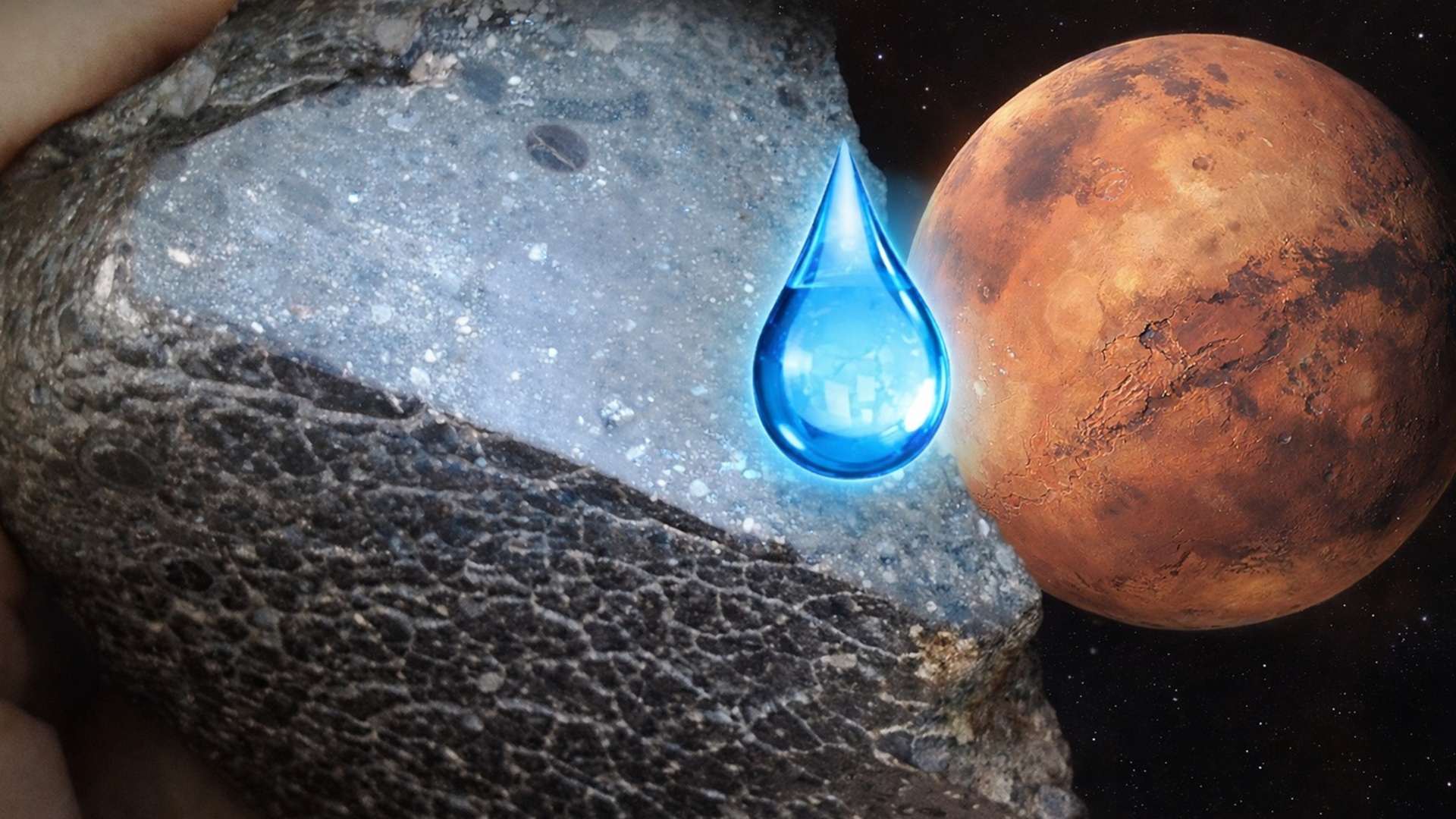


Scientists analyzed a rock on Mars while studying the meteorite NWA 7034, known as Black Beauty, using non-destructive computed tomography, identifying clasts rich in hydrogen that concentrate a significant part of the water in the sample and reinforce evidence of abundant water in Mars’ past.
Origin And Importance Of The Black Beauty Meteorite
The meteorite NWA 7034, nicknamed Black Beauty, is a fragment of Mars that fell to Earth after a major impact on the planet. The material is about 4.48 billion years old, making it one of the oldest identified from Martian origin in the solar system.
Part of its scientific relevance comes from the fact that it preserves primitive geological records of a rock on Mars. Previous studies required cutting, grinding, or dissolving samples, procedures that compromised the integrity of the meteorite and limited future analyses.
-
Lenovo Unveils Legion Y700 Tablet with RGB Backlighting, 5G, and SIM Card Support

-
World’s First Nuclear Hydrogen Unit Begins Operation: Copper-Chlorine Technology with Initial Capacity of 150 Liters per Hour, Aiming for 3,000 Liters per Hour
-
Mechanics Retrofit Old Fiat Uno with BYD Electric Motor for Silent, Low-Voltage Operation Reaching Nearly 60 km/h in Home Test
-
Free Internet Begins Testing in São Paulo Metro Stations, Network-Wide Rollout Expected by 2026


New Computed Tomography Tools
The study describes the use of two computed tomography techniques to examine Black Beauty non-destructively.
X-ray tomography, widely used in medicine, is effective in detecting dense materials like iron and titanium.
On the other hand, neutron computed tomography uses neutrons instead of X-rays.
This method has a greater ability to penetrate dense materials and detect hydrogen, a fundamental element in identifying water within a rock on Mars and other planetary bodies.
Clasts Found In The Rock On Mars
The researchers analyzed a small polished sample of the meteorite, approximately the size of a fingernail. Within it, they identified clasts, fragments of rock embedded in a larger matrix, something already known in the composition of Black Beauty.
The novelty was the specific type of clast identified. Called hydrogen-rich iron oxyhydroxide clasts, or H-Fe-ox, these aggregates represented about 0.4% of the total volume of the sample analyzed by the tomographers.
Water Concentrated In Microscopic Fragments
Although they occupy a small fraction of the volume, H-Fe-ox clasts concentrate approximately 11% of all the water content present in the meteorite sample.
This data reveals a highly localized distribution of water within the examined rock on Mars.
The chemical composition of the sample indicates an estimated concentration of 6,000 parts per million of water. This value is considered high given the current scarcity of water observed on the planet and reinforces the importance of Black Beauty as an ancient hydrological record.
Relation To Other Martian Samples
The findings obtained from the meteorite complement analyses of aqueous samples identified in the Jezero crater. Although Black Beauty originated from a completely different region of Mars, the results converge toward a scenario of abundant water in the past.
This connection between samples from distinct regions suggests that the presence of water, likely liquid, was not an isolated phenomenon.
The evidence strengthens interpretations about wetter environmental conditions on the Martian surface billions of years ago, despite regional differences.
Implications For Future Research
Black Beauty serves as a kind of sample return mission concentrated in a single rock. The non-destructive tomography techniques have demonstrated the ability to examine the interior of the meteorite without compromising its structure.
Scientists intend to apply the same methods to future samples from Mars, as tomography can penetrate titanium structures used in collection.
With the recent cancellation of specific programs, this direct application may take time to occur.
There is still a forecast for a Chinese sample return mission, which may expedite new analyses.
Until then, repeating non-destructive examinations on other Martian meteorites is seen as an efficient use of the experience gained and the available equipment, expanding knowledge about the water preserved in each rock on Mars.