






 Portuguese
  Spanish


Researchers From Brazil and the United States Discovered That Alpha-Copaene, a Natural Compound Present in Copaiba Oil, Has High Repellent Power Against the Citrus Psyllid, an Insect Transmitting the Bacteria Causing Greening, One of the Most Destructive Diseases in Citrus Cultivation. The Discovery May Represent a Significant Advance in Sustainable Pest Control.
The study was developed in collaboration by scientists from Fundecitrus and the University of California, who analyzed the efficiency of volatile compounds in repelling the vector. The tests demonstrated that alpha-copaene acts in nanometric doses, being 100 times more potent than beta-caryophyllene, which was previously considered the main natural repellent.
Greening, also known as Huanglongbing (HLB), is an incurable disease that compromises the productivity and quality of citrus fruits, causing million-dollar losses to citrus cultivation. Controlling the psyllid is essential to curb the spread of the bacteria, making the discovery even more relevant to the sector.
From Observations in Vietnam to the Lab
The line of research originated in plantations in Vietnam, where farmers observed that intercropping guava and tangerine trees reduced the presence of the insect. Later, it was identified that beta-caryophyllene, emitted by the guava trees, had a repellent effect.
-
The Day the Soviet Union Forfeited Against Chile, Leading to an Uncontested Goal and a Spot in the 1974 World Cup

-
New Law Highlights Salvador’s Role in Brazil’s Independence Day Celebrations on July 2nd
-
Coffee Grounds Find New Purpose Beyond Waste in Innovative Uses
-
Brazilian Entrepreneur Revives Used Cookware, Now Earning $10,000 Monthly at 41


Based on this evidence, researchers introduced genes producing volatile compounds into transgenic plants of the species Arabidopsis thaliana. During the experiments, the plants began emitting, in addition to beta-caryophyllene, the compounds alpha-copaene and alpha-humulene.
The scientists then evaluated the isolated action of each compound. Alpha-copaene proved to be the most effective, repelling the psyllid even at very low concentrations, between 0.9 and 2.1 nanograms per microliter.
Tests Under Simulated Conditions and Practical Application
To simulate real field conditions, a diffuser was created that releases the compounds in constant proportions, mimicking the behavior of a living plant. Tests confirmed that alpha-copaene alone offers strong repellent action against the insect that transmits greening.
Furthermore, the use of commercial copaiba oil was also successfully tested. The substance naturally contains the three evaluated volatile compounds — alpha-copaene, beta-caryophyllene, and alpha-humulene — in proportions similar to those of genetically modified plants.
These results indicate that copaiba oil, when properly diluted, can be used as a natural and viable alternative for pest control in sustainable agricultural systems.
Innovative Strategy Combines Repulsion and Attraction
The research integrates into an approach called “repel-attract-kill,” which combines repellent and attractive plants around the crops to control the insect. While copaiba oil can be used to repel the psyllid, plants like curry serve as natural traps, attracting the vector for subsequent elimination.
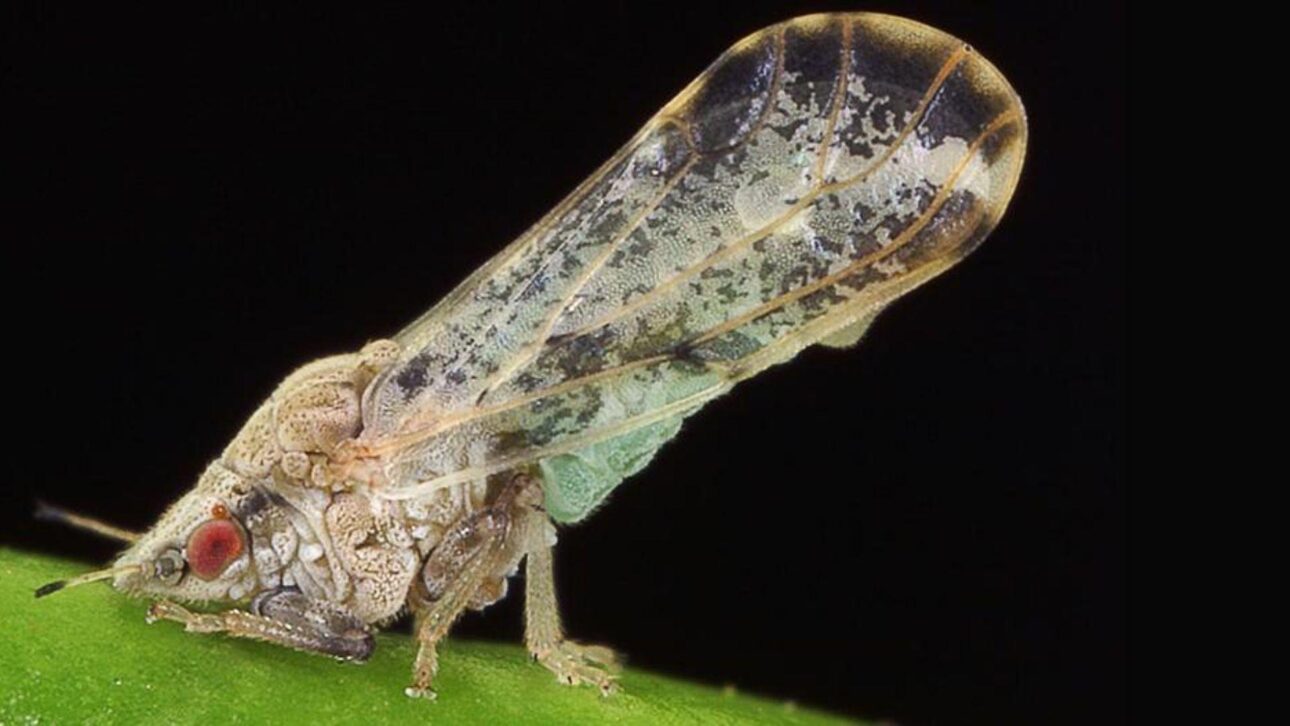
The advantage of curry is that it attracts the psyllid but does not transmit the greening bacteria, making it ideal for use as a biological bait. Myrtle, on the other hand, has a low transmission rate but can still pose a risk.
The expectation is that this integrated management strategy will significantly reduce the presence of the insect in the plantations, contributing to the sustainability of citrus fruit production in Brazil.
According to Revista Cultivar, researchers are now studying the practical application of alpha-copaene in diffusers and agricultural sprays. The development of genetically modified citrus plants to naturally produce alpha-copaene is also underway.
According to the publication, Fundecitrus and its partners are advancing studies to make curry lethal to the psyllid, which could further strengthen the control strategy based on natural compounds and biotechnology.
The complete research is available at: Nature Briefing


