Portuguese
  Spanish


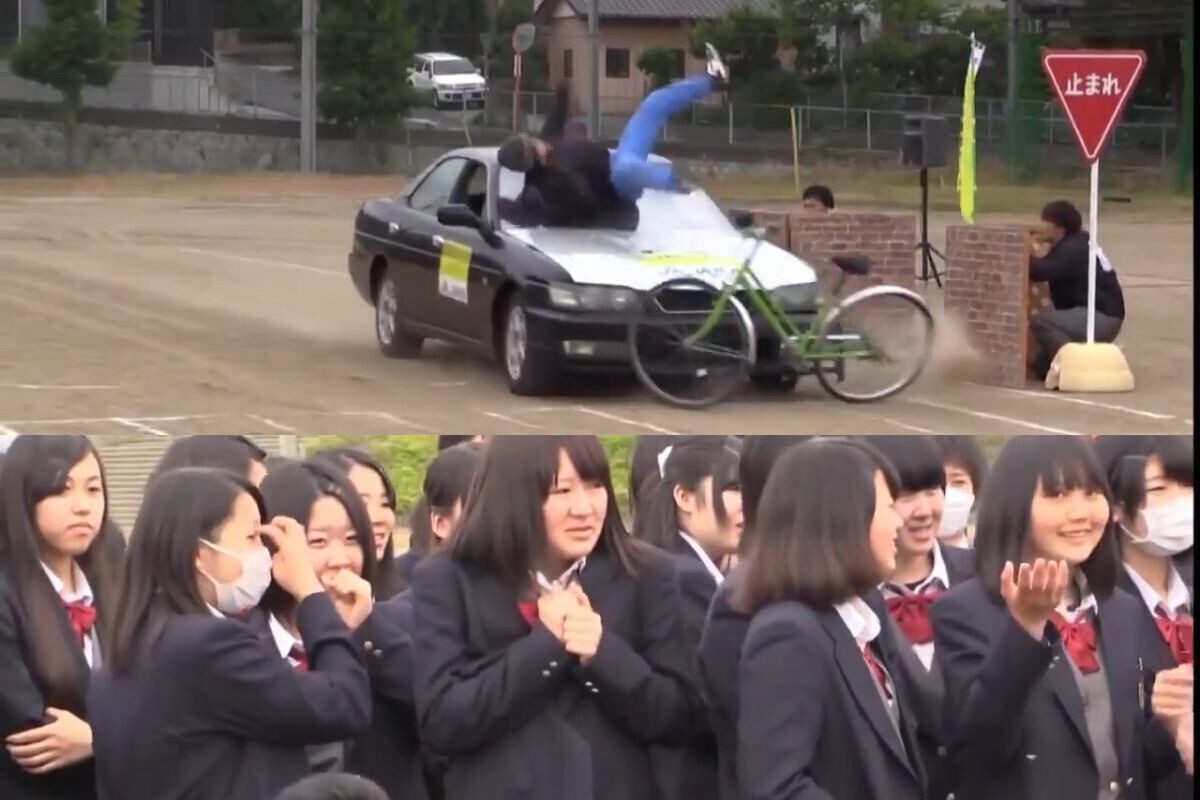

Trained stunt doubles appear in Japanese classes to stage traffic accidents, in local school actions that use visual impact and practical guidance to reinforce care with children, pedestrians, and cyclists.
Schools, city halls, and safety agencies in Japan use presentations with professional stunt doubles to demonstrate traffic risks to children and teenagers.
The practice, known in local actions as the “scared straight” or “sukeado sutoreito” method, involves recreating collisions and run-overs in a controlled manner in front of students to reinforce traffic rules and accident prevention.
The activities do not appear in official sources as a mandatory measure in all Japanese schools.
-
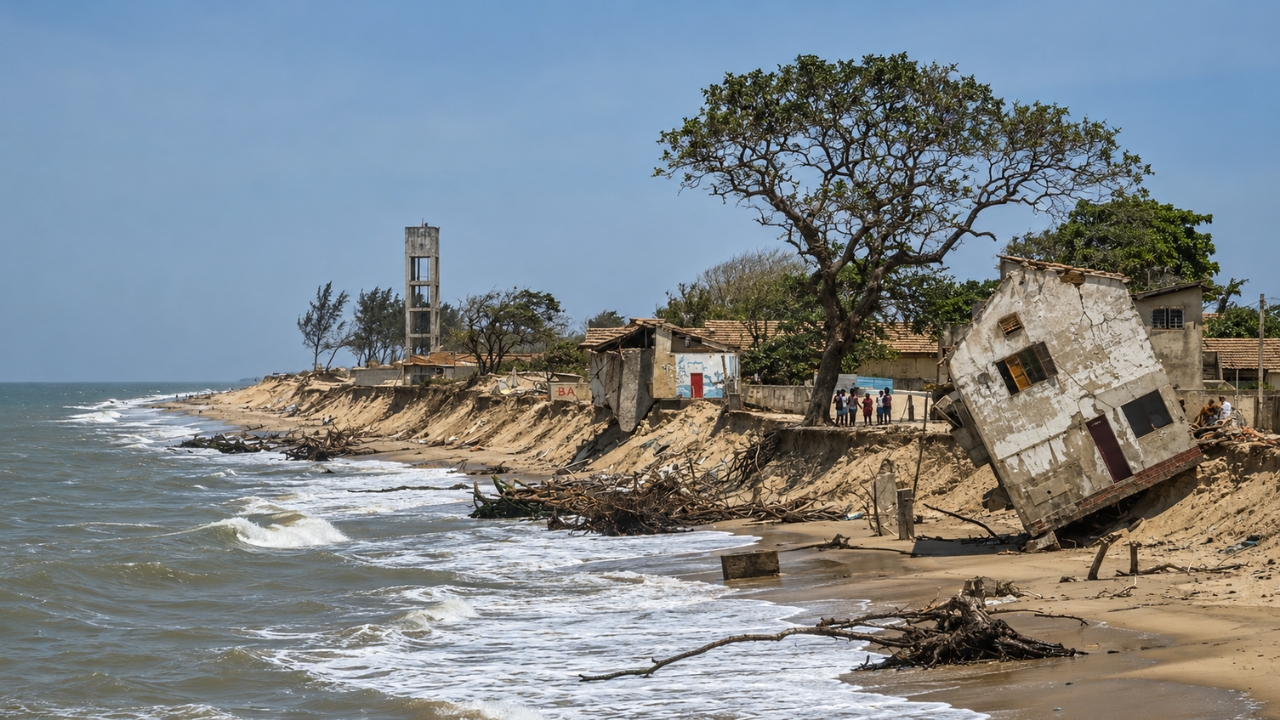
Coastal City in Rio de Janeiro Faces Slow Destruction as Sea Claims 500 Homes and Businesses

-
48-Year-Old Woman Wins Million-Dollar Prize, Gifts Neighbor First International Trip as Thanks for Years of Support

-
Women Once Mocked for Collecting Trash Form Group to Turn Organic Waste into Compost, Generate Daily Income, and Improve Market Cleanliness in One of the World’s Lowest GDP per Capita Countries
-
Archaeologists Uncover 40,000 Roman Bronze and Copper Coins from the 3rd Century in Fire-Destroyed French Neighborhood


There are records of municipalities, provinces, and public agencies using this type of demonstration in traffic education programs, focusing on situations involving pedestrians, bicycles, cars, trucks, and buses.
The method uses the schoolyard or public areas as a space for supervised demonstration.
Instead of just explaining that a bicycle can be hit at an intersection or that a truck has blind spots, instructors present the situation with trained professionals, protective equipment, and controlled vehicles.
How simulations with stunt doubles work in Japanese traffic
In presentations documented by Japanese local governments, stunt doubles recreate traffic accidents to show the impact of common infractions and distractions.
Among the examples cited by local authorities are collisions involving bicycles, falls caused by reckless maneuvers, accidents at intersections, and situations where larger vehicles cannot see pedestrians or cyclists.
The Chiba province describes the method as an educational technique aimed at increasing awareness through experiences that provoke a sense of danger.
According to the local government, the approach uses the realistic reproduction of accidents by stunt doubles to reinforce the understanding of traffic rules and good circulation practices.
In Higashi-Osaka, a city in the Osaka province, an action publicized in November 2025 showed stunt doubles reproducing accidents related to truck blind spots, bicycle collisions, and risky behaviors.
Among the examples presented were using a cell phone while moving and cycling while holding an umbrella.
There are also records of similar activities in Toda, in the Saitama province, and in Higashiyamato, in the Tokyo metropolitan area.
In the materials released by these municipalities, “scared straight” is defined as a technique where stunt performers recreate accidents in front of participants to enhance the perception of traffic risks.
Why Staged Accidents Are Part of Traffic Education
The purpose of the presentations, according to materials from Japanese agencies, is to make students visualize risk situations in a concrete way.
For children and teenagers, crossing outside the crosswalk, running between stopped vehicles, or cycling without observing an intersection may seem like quick decisions, but the simulations aim to associate these actions with possible consequences.
The National Police Agency of Japan states, in an official report, that measures aimed at preventing accidents involving children should not be limited to memorizing rules and good manners.
The agency advocates for actions that consider the characteristics of the child audience, including the difficulty of predicting dangers and avoiding risk situations on the way to school.
In programs focused on bicycles, the Japanese police also record partnerships with schools, local governments, and entities related to the topic.
In official documents, the agency mentions practical activities, bicycle simulators, and accident reconstructions with stunt performers as part of the content used in the education of children, students, and other audiences.
The declared focus of these actions is not to treat the collision as a spectacle, but to associate the image of the accident with a safety rule.
After the enactment, the instructor can explain why the traffic light must be respected, why blind spots are dangerous, and why pedestrians and cyclists need to observe their surroundings.
Bicycles Frequently Appear in Japanese Classes
Part of the documented actions involves bicycles, a common means of transport in Japanese cities and used by students.
The simulations show situations where advancing at an intersection, cycling distractedly, or ignoring signage can result in a collision with another cyclist, a car, or a heavy vehicle.
In municipal communications, specific behaviors appear, such as using a cell phone while walking or cycling, riding a bicycle with an umbrella, disrespecting traffic lights, and moving inattentively at intersections.
These examples are cited by local authorities for being associated with situations present in urban daily life.
The National Police Agency of Japan already reported, in a 2011 report, that about 30,000 safety classes on bicycle use were held in the country for children, students, the elderly, and other audiences.
According to the document, the activities gathered approximately 4.4 million participants.
This data does not indicate that all these classes used stunt performers.
However, it shows the scale of cyclist education programs in the country and helps contextualize where accident reconstructions fit within prevention actions.


Difference between controlled simulation and real accident
Although the scenes are described as realistic by local governments, the sources consulted treat the episodes as controlled enactments.
The stunt performers are professionals, the maneuvers are planned, and the presentations are organized to demonstrate risk in a supervised environment.
In some actions, schools and municipalities also use dummies, adapted vehicles, and braking demonstrations to show the distance a car travels before stopping.
A municipal school in Kitahiroshima, Hokkaido, reported an activity with a real vehicle and dummy to demonstrate blind spots, the trajectory difference of large vehicles, and the impact of a collision.
This distinction prevents the method from being interpreted as direct exposure of students to danger.
The objective reported by the authorities is to present a risk situation in a controlled environment, with trained professionals, support materials, and an educational purpose.
There is also no solid basis, in the sources consulted, to claim that the entire Japan has adopted this strategy in a standardized way in all schools.
Official records point to local traffic safety programs that use stunt performers in specific municipalities, schools, and provinces.
Traffic safety and Japanese campaigns in schools
In Japan, traffic education is linked to public campaigns, schools, police, local governments, and civil entities.
The National Police Agency reports that safety campaigns are conducted periodically, focusing on accident prevention involving children and the elderly, safe bicycle use, responsible driving, and combating serious violations.
Classes with stunt doubles are included in this set as a tool for direct communication.
The enactment shows the moment of collision and allows for guidance to be given immediately afterward, with an explanation of the behavior that created the risk and the expected conduct to avoid it.
Even so, Japanese technical documents on cyclist education indicate that fear-based strategies should be planned carefully.
The material discusses the need to avoid undesirable effects and to combine visual impact with objective guidance on safe behavior.
For this reason, the educational function of these actions depends on the explanation that accompanies the simulation.
The demonstration makes sense when it shows which behavior created the risk, why it is dangerous, and what behavior could reduce the chance of an accident.
What practice shows about safety in Japanese schools
The presence of stunt doubles in traffic classes shows a form of prevention used by some Japanese communities within school and local programs.
In these cases, children and adolescents do not just receive the ready-made rule; they follow a planned demonstration of what can happen when a safety guideline is ignored.
This model also involves different parties responsible for traffic education.
Schools provide the space and contact with students, local governments organize campaigns, the police contribute with technical guidance, and trained teams execute the scenes in a controlled environment.