






 Portuguese
  Spanish


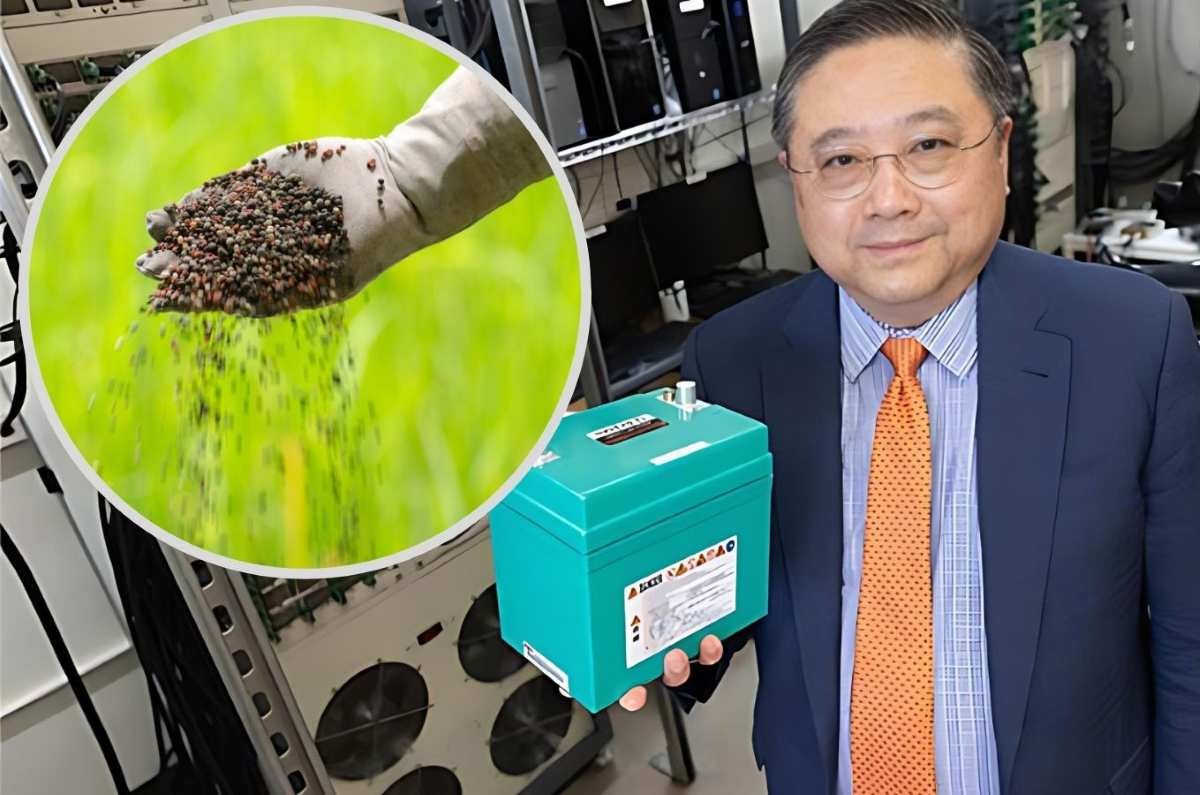
Researchers at the University of Wisconsin-Milwaukee Create a Method That Transforms Electric Car Batteries into Fertilizers, Reduces Recycling Costs and Strengthens Local Agriculture with Essential Nutrients
As electric vehicles multiply on the roads, a silent challenge grows alongside it: the fate of used lithium batteries. With a lifespan of about ten years, they accumulate as an environmental problem that is difficult to solve.
But a group of researchers at the University of Wisconsin-Milwaukee (UWM), led by Professor Deyang Qu, found an innovative solution: to transform these batteries into fertilizers.
The idea, developed in partnership with graduate student Soad Shajid, can address two crises at once — technological waste management and reliance on imported fertilizers. The project proposes to repurpose lithium iron phosphate (LFP) batteries, widely used in electric cars, vans, and buses.
-
Chile’s Plan for a 20,000 km Undersea Cable to Hong Kong Halted by U.S. Pressure, Highlighting the Silent Data Control Battle in Latin America

-
In Somaliland’s Desert, Greenhouse Uses Sun and Seawater to Grow Lettuce, Cucumbers, and Tomatoes Without Rain: 1-Hectare Project Cools Crops, Desalinates Water, and Converts Brine into Commercial Salt
-
Trump Unveils $400 Million Boeing 747 Donated by Qatar as Temporary Air Force One Amid Boeing Delays, Sparking Debate on National Security, Costs, and Foreign Influence
-
Chinese Company Unveils Robotic Toilet That Comes to You, Featuring Lidar Sensors, Voice Command, Bidet, Hot Air Drying, UV Light, and Self-Cleaning Waste Disposal


An Economical and Ecological Alternative
The conventional recycling of LFP batteries is expensive and not very profitable, as these models do not contain high-value metals like cobalt or nickel. Professor Qu proposed a different approach: to use an ion exchange process that removes lithium and substitutes it with potassium.
This method extracts three essential elements for agriculture — phosphorus, potassium, and nitrogen — creating fertilizers from materials that would otherwise be discarded.
The advantage goes beyond chemical utilization: the new fertilizers can be produced locally, reducing costs and transportation emissions, as well as decreasing reliance on imports from volatile markets.
The national production of these nutrients strengthens agricultural autonomy and helps stabilize the supply chain, which currently relies heavily on countries like Russia, China, and Morocco. In this way, the proposal also gains a strategic and geopolitical character.
Agriculture and Recycling in Alliance
In the United States, modern agriculture relies heavily on external inputs, especially phosphorus and potassium. In light of global instability, the model proposed by UWM emerges as an opportunity to strengthen internal food security and boost green jobs.
The conversion of batteries into fertilizers is also environmentally cleaner than traditional recycling. It eliminates high-temperature furnaces and heavy chemical processes, reducing energy consumption. Additionally, the materials from the batteries are already processed, which facilitates reuse and lowers the carbon footprint of the operation.
From Laboratory to Field
The project received support from the United States Department of Agriculture (USDA) and internal innovation funding from UWM. With this, the team was able to demonstrate that the concept works in the laboratory. The next step will be to test the fertilizer in open fields, starting with tomato crops on one hectare of land.
If the results are equivalent to or exceed those of conventional fertilizers, the technology could attract the interest of large agricultural companies and become a new industrial sector.
The state of Wisconsin plays a strategic role in this transition, combining a strong industrial base with diverse agriculture. The region could become the world’s first hub for circular recycling of batteries applied to agricultural production.
A Model of Circular Economy
The proposal to convert batteries into fertilizers goes beyond technical innovation — it represents a new model of circular economy. According to the researchers, the project brings multiple benefits:
- Reduces the environmental impact of technological waste, which tends to multiply with the expansion of electric vehicles.
- Strengthens the local agricultural chain, making it more resilient to global crises.
- Creates green jobs and promotes the training of professionals in sustainability and innovation.
- Decreases the carbon footprint of both recycling and fertilizer production.
- Promotes national self-sufficiency, reducing dependence on imported inputs.
If this technology achieves industrial scale, it could become an example of how science can turn waste into regenerative resources.
More than just a solution for recycling, it is about reimagining what is considered “waste” — and transforming an environmental challenge into a sustainable opportunity.


-

-

-

8 people reacted to this.