






 Portuguese
  Spanish


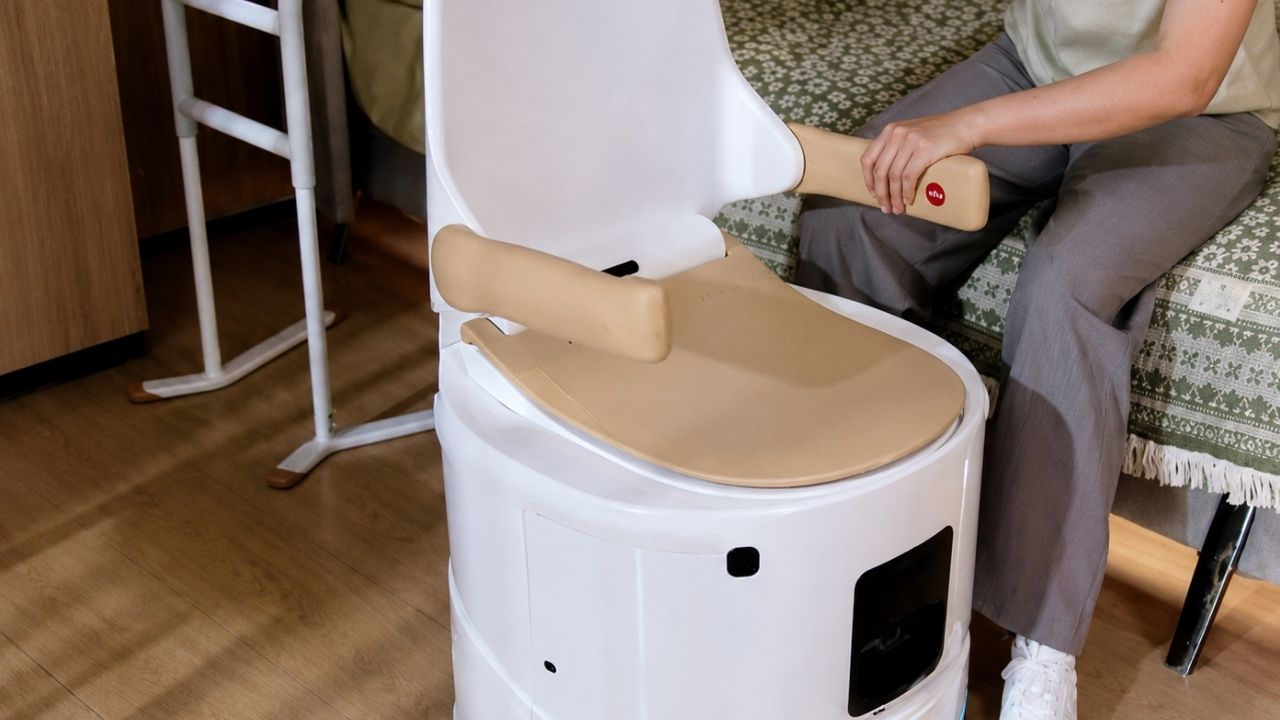
Presented by Yueban at an elderly care exhibition in Shanghai, according to The Verge, the Xiaoban robotic toilet promises to move around the house with lidar, ultrasonic sensors, and voice, in addition to bidet, hot drying, ultraviolet light, and automatic waste disposal to support people with reduced mobility in China.
The Xiaoban robotic toilet, presented by the Chinese company Yueban, was created to solve a daily accessibility problem: bringing the bathroom to the user, not the other way around. The autonomous equipment uses sensors, route planning, and voice commands or remote control to move around homes or care institutions.
According to a report by The Verge published on June 18, 2026, the product was showcased at a Shanghai fair focused on elderly care, assistive devices, and rehabilitation medicine. The proposal targets people with reduced mobility due to age, injuries, or disability, although the source notes that the user may still need help transferring to the seat.
Mobile bathroom targets accessibility inside the home
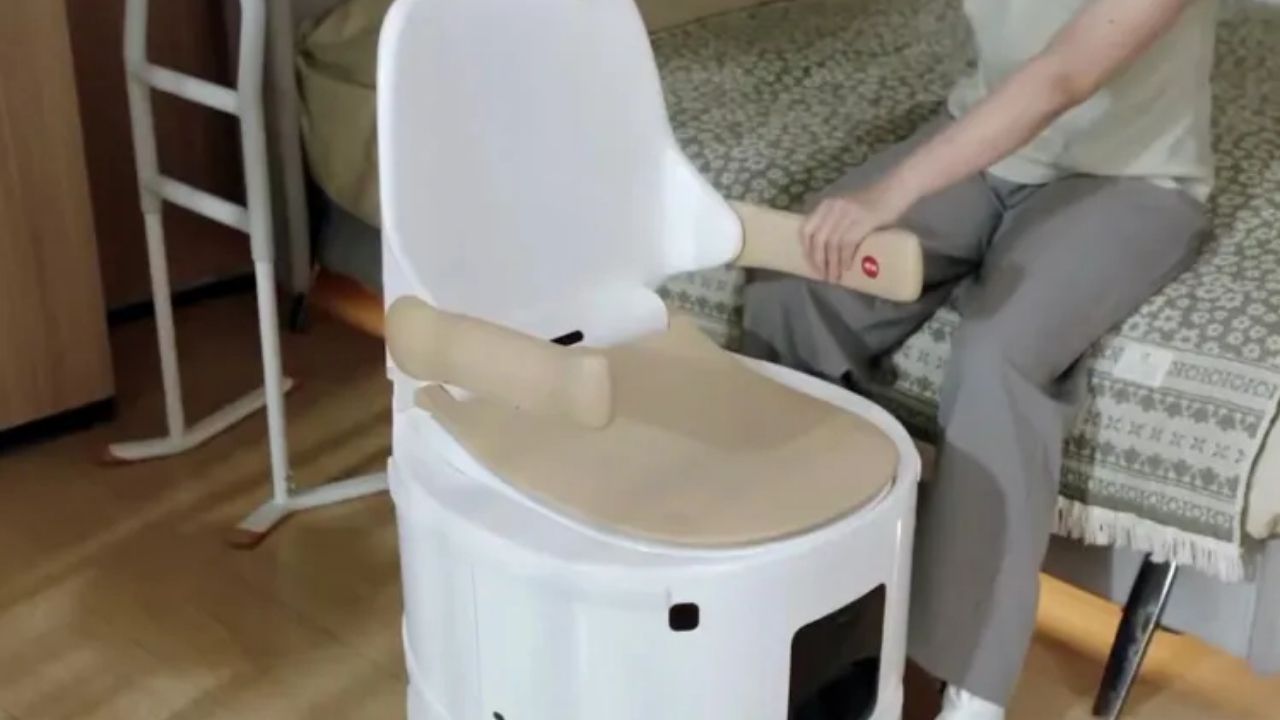
The Xiaoban was presented as a smart bathroom on wheels, capable of moving to the person when activated. The idea is to reduce the need to bring the user to the traditional bathroom in situations where walking, standing up, or crossing the house poses a risk or difficulty.
-
Rotterdam Develops Floodable Square to Absorb Nearly 2 Million Liters of Rainwater, Doubling as Sports, Theater, and Leisure Space When Dry to Combat Urban Flooding

-
U.S. National Park Deploys Robotic Birds Near Wyoming Airport to Protect Endangered Species: Dancing and Sound-Emitting Replicas Aim to Lure Real Birds to a 100-Acre Restored Area Away from Runways After 32 Aircraft-Related Deaths
-
Russia and India Lift 320-Ton Pressure Vessel into Kudankulam Nuclear Plant Reactor, Advancing Project That Has Already Prevented 112 Million Tons of CO2 Emissions

-
Brazilian Student Wins Global Science Fair in the U.S. with Sound Wave Method to Alter Alzheimer’s-Linked Genes


This aspect places the robotic toilet in the field of assistive technology. It does not appear as a common luxury item but as equipment designed for the elderly, people in rehabilitation, users with disabilities, or patients who need more support in their daily routine.
Chinese company presented the product in Shanghai
The company behind Xiaoban is Yueban, from China. The equipment was showcased during an exhibition in Shanghai dedicated to elderly care, assistive devices, and rehabilitation medicine.
According to The Verge, Xiaoban is expected to be sold in China for 28,999 yuan, an amount close to US$ 4,300 according to information attributed to IT Home. However, the report states that global availability has not yet been confirmed, so there is no indication of international sales or arrival in Brazil.
Lidar sensors aid in autonomous navigation
Xiaoban uses technology similar to that found in advanced robotic vacuum cleaners. The lidar system includes lidar and ultrasonic sensors to plan routes inside the home or in care environments.
These sensors help the equipment avoid obstacles and stairs when called by the user. In practice, the robotic toilet attempts to transform autonomous navigation, common in household robots, into a solution aimed at personal accessibility.
Voice command or remote control activates the route
The user can call Xiaoban by voice command or remote control, according to the report. From this activation, the equipment calculates the movement to the point where the person is.
This functionality is one of the most striking elements of the project. Instead of just adapting the seat, height, or support bars of a fixed bathroom, Yueban proposes equipment that moves through the environment to reduce user movement.
Bidet and hot air replace part of manual cleaning
Xiaoban also includes a built-in bidet and hot air drying mechanism. These features were designed to reduce paper use and automate part of the cleaning after use.
According to The Verge, videos of the equipment in operation indicate that it handles a good part of the post-use steps. This may reduce user exposure and relieve part of the caregiver’s work, although it does not completely eliminate the need for human assistance.
Ultraviolet light enters the hygiene system
The equipment also features ultraviolet light used to kill bacteria, as described by the source. The system also self-cleans the bowl and seals the waste in a closed container.
The combination of a closed container, self-cleaning, and ultraviolet light has another goal: to reduce odors and decrease the discomfort of using a toilet outside the traditional bathroom. For assistive technology, this attempt to preserve privacy and dignity is an important part of the project.
Waste can be emptied in two ways
After use, the Xiaoban proceeds to one of two possible destinations. If the charging base is connected to plumbing and drainage, the equipment goes to the dock to recharge, refill reservoirs, and empty the collected waste.
In this mode, the waste is shredded before disposal, according to The Verge, to prevent blockages. This solution brings the equipment closer to a fixed infrastructure, although the main use remains mobile within the home or institution.
Robotic arm can take waste to the common toilet
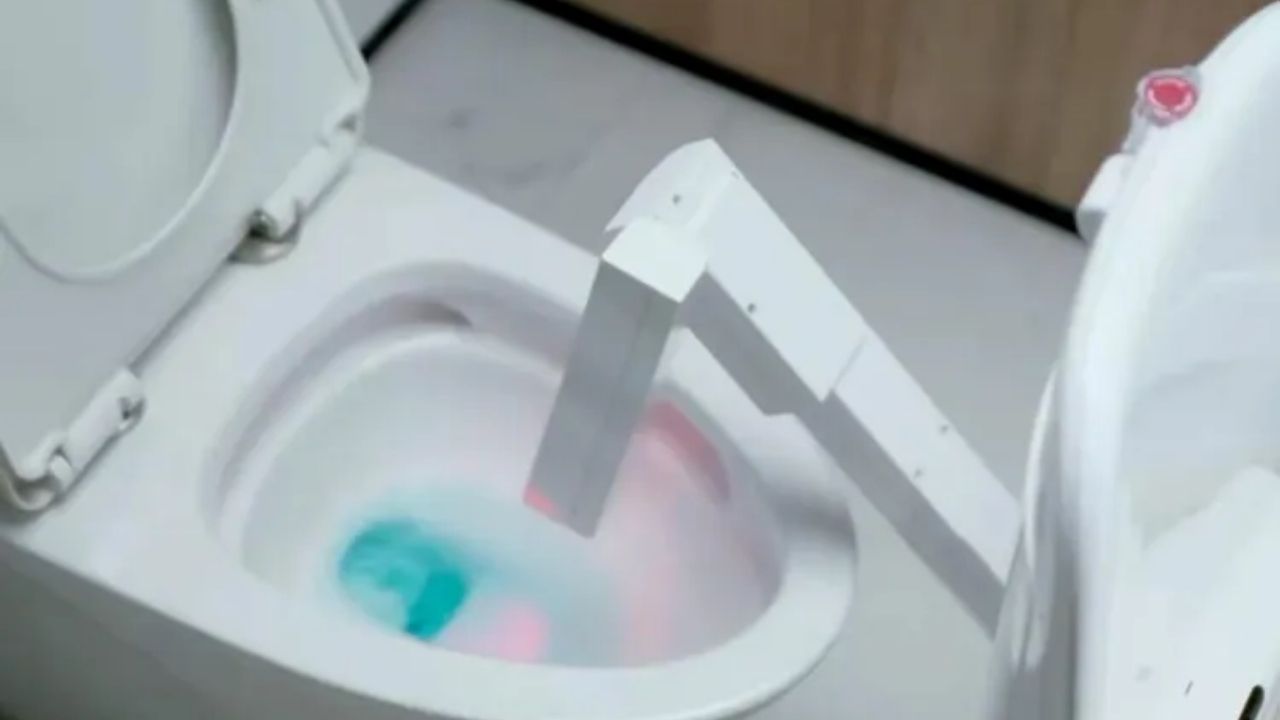
When the base does not have drainage, the Xiaoban takes another path. It moves to a traditional bathroom and uses an extendable arm to pump the waste into a common toilet, allowing for flushing afterward.
This feature is one of the technical differentiators of the robotic toilet. Instead of requiring someone to manually carry the container, the system itself tries to complete the disposal step, reducing one of the most delicate tasks for caregivers.
Product does not completely replace caregivers
Despite the autonomous functions, The Verge highlights an important limitation: the user may still need help to sit on the equipment. In other words, the Xiaoban does not completely eliminate the presence of caregivers.
The central point is another. The product can reduce trips to the bathroom and automate part of the cleaning and disposal. In long-term care, small reductions in effort can change the routine of those who care and those who depend on assistance.
Technology aligns with the aging population
The emergence of equipment like this accompanies a growing demand for home care and accessibility solutions. In many countries, the aging population pressures families, clinics, and institutions to seek technologies that reduce risks and increase autonomy.
The robotic toilet enters this discussion because it deals with a basic, intimate, and frequent need. The innovation draws attention not only for the initial strangeness but for the attempt to solve a sensitive point in the routine of people with reduced mobility.
Price still limits immediate access


The reported price, close to US$ 4,300 according to the conversion mentioned in the report, indicates that the Xiaoban is still not a simple or cheap product. Therefore, its adoption may start with clinics, care institutions, or consumers with greater purchasing power.
This detail avoids an exaggerated reading of the novelty. The equipment is technically striking, but it still needs to face issues of cost, maintenance, user acceptance, safety in real environments, and integration with different homes.
China tests a new stage of the smart bathroom
Smart bathrooms have existed for years, especially with functions like seat heating, automatic bidet, water jet, drying, and cleaning. The Xiaoban tries to go further by adding autonomous locomotion and automated disposal.
The difference lies in the movement. The robotic toilet does not wait for the user to arrive: it tries to become a mobile assistance device, combining sensors, robotics, hygiene, and automation in a single platform.
When the bathroom ceases to be a fixed room
The proposal by Yueban raises a larger question about the future of the adapted home. If vacuum robots already move to clean floors and delivery robots circulate in controlled environments, the Xiaoban shows an attempt to bring this logic to personal care.
The question that remains is direct: do you think a robotic toilet with voice command, lidar, bidet, ultraviolet light, and automatic disposal can improve the lives of people with reduced mobility, or does it still seem like an expensive technology far from reality? Leave your opinion in the comments.




Be the first to react!