






 Portuguese
  Spanish


Presented on June 19 at Andrews Base, Qatar’s Boeing 747 was accepted as a luxurious gift to become a temporary Air Force One, while delays in Boeing’s new planes, national security, emoluments clause, and costs ignite political dispute in the United States under foreign influence and intense public pressure.
The luxurious gift from Qatar to the United States government became the center of controversy after Donald Trump presented a Boeing 747-8 adapted to temporarily join the presidential fleet. The ceremony took place on June 19, 2026, at Joint Base Andrews, in Maryland.
According to the channel Today in the Military World and United States Air Force, the plane valued at about US$ 400 million, was offered by Qatar and underwent adaptations to serve as a provisional solution while the new presidential planes ordered from Boeing remain delayed. The aircraft reignited debates about national security, costs, foreign influence, and constitutional limits for gifts from external governments.
A luxury plane became a response to an industrial delay
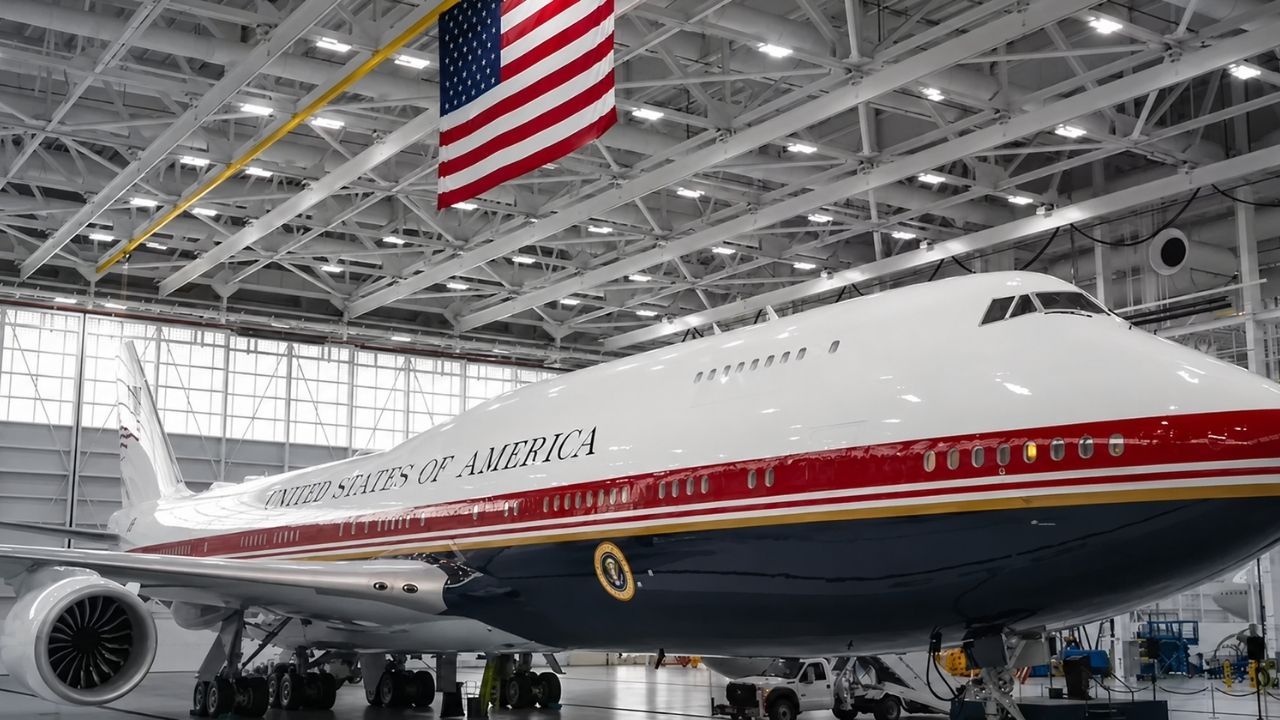
The new Boeing 747-8 was presented as a bridge for the American presidential fleet. The idea is to use the aircraft temporarily until the definitive Air Force One replacements, contracted with Boeing, are ready.
-
In Somaliland’s Desert, Greenhouse Uses Sun and Seawater to Grow Lettuce, Cucumbers, and Tomatoes Without Rain: 1-Hectare Project Cools Crops, Desalinates Water, and Converts Brine into Commercial Salt

-
Chinese Company Unveils Robotic Toilet That Comes to You, Featuring Lidar Sensors, Voice Command, Bidet, Hot Air Drying, UV Light, and Self-Cleaning Waste Disposal
-
Rotterdam Develops Floodable Square to Absorb Nearly 2 Million Liters of Rainwater, Doubling as Sports, Theater, and Leisure Space When Dry to Combat Urban Flooding
-
U.S. National Park Deploys Robotic Birds Near Wyoming Airport to Protect Endangered Species: Dancing and Sound-Emitting Replicas Aim to Lure Real Birds to a 100-Acre Restored Area Away from Runways After 32 Aircraft-Related Deaths




The situation exposes a larger problem. The new presidential planes, known as VC-25B, have been delayed for years, within a billion-dollar program that was supposed to modernize the flying White House. The delay opened space for an unusual solution: accepting a plane from a foreign government.
The luxurious gift gained even more attention because it is not an ordinary jet. The aircraft belonged to the fleet linked to Qatar and was publicly described as one of the most luxurious planes in the world, with high-standard interiors and a structure far above conventional commercial aviation.
But luxury is not the same as military capability. An Air Force One needs to operate as a command center, transport the president safely, and maintain strategic communications in critical situations. It is precisely at this point that doubts begin.
Air Force One is not just a presidential plane
The name Air Force One is used for any United States Air Force aircraft when the president is on board. In practice, however, the term has become associated with planes specially prepared for presidential trips.
The current models, the VC-25A, are modified Boeing 747-200Bs and have been in service since 1990. They were designed to function as a kind of command post in the air, with secure communications, defense systems, medical structure, electronic protection, and the ability to keep the government operating during crises.
That is why transforming a luxury Boeing 747 into a presidential plane is not just about changing the paint and installing better seats. The adaptation requires deep inspection, threat protection, encrypted communication systems, and integration with military protocols.
According to information released by international media, part of the modifications was accelerated to allow temporary use of the plane. This fueled the discussion about which features were included, which were left for later, and whether the aircraft will have the same standard as traditional presidential planes.
National security became the most sensitive point of the controversy
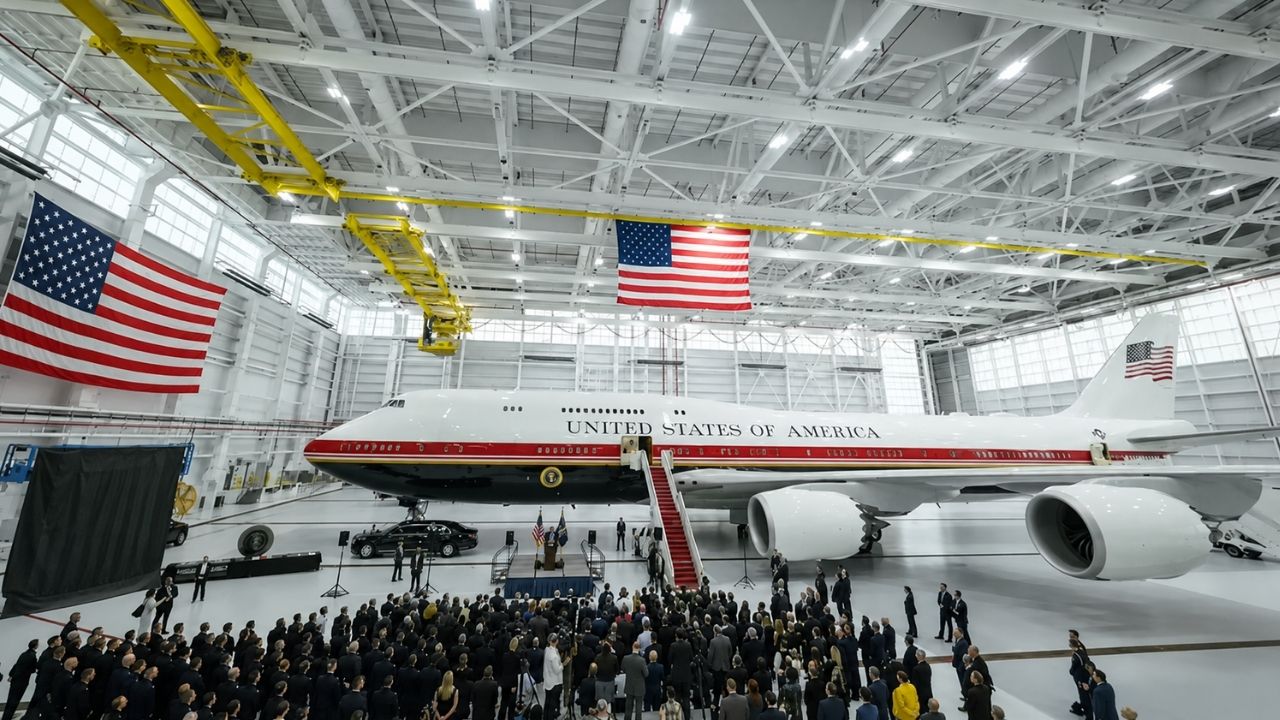
The main doubt surrounding the luxurious gift is not just the price or comfort, but the origin of the aircraft. Accepting a plane from a foreign government to transport the President of the United States raises counterintelligence questions.
Even with disassembly, inspection, and refurbishment, critics argue that an aircraft of this size requires extreme verification. The concern is that components, systems, or structures inherited from previous use may pose a risk, even though authorities claim that the plane undergoes security standards before entering service.
Qatar occupies a delicate strategic position. The country hosts an important American military presence in the Middle East, but also maintains diplomatic relations and channels of dialogue with complex regional actors. Therefore, the gesture is seen by critics as more than a donation: it is also an act of geopolitical influence.
The White House and Trump’s allies argue that accepting the plane would be a practical decision in light of Boeing’s delays. However, opponents see an institutional risk because the ultimate symbol of American presidential power would carry the mark of a foreign gift.
Constitutional debate involves foreign gift and personal benefit
Another point of controversy involves the so-called emoluments clause of the American Constitution. In general terms, it limits the receipt of gifts, payments, or benefits from foreign governments by United States officials without proper authorization.
The government’s defense claims that the plane was accepted by the Department of Defense, and not directly by Trump as an individual. This distinction is important because it seeks to frame the case as a transfer between governments for official use.
But critics question the future destination of the aircraft. The controversy grew because Trump stated that the plane could later be transferred to his presidential library. This point fuels the central question: does the luxurious gift serve the American State or also create a political and personal benefit for Trump?
The debate is legally sensitive and politically explosive. Even if the government maintains the legality of the operation, the appearance of proximity between a foreign gift, presidential use, and personal legacy keeps the issue at the center of criticism.
Costs remain surrounded by doubts
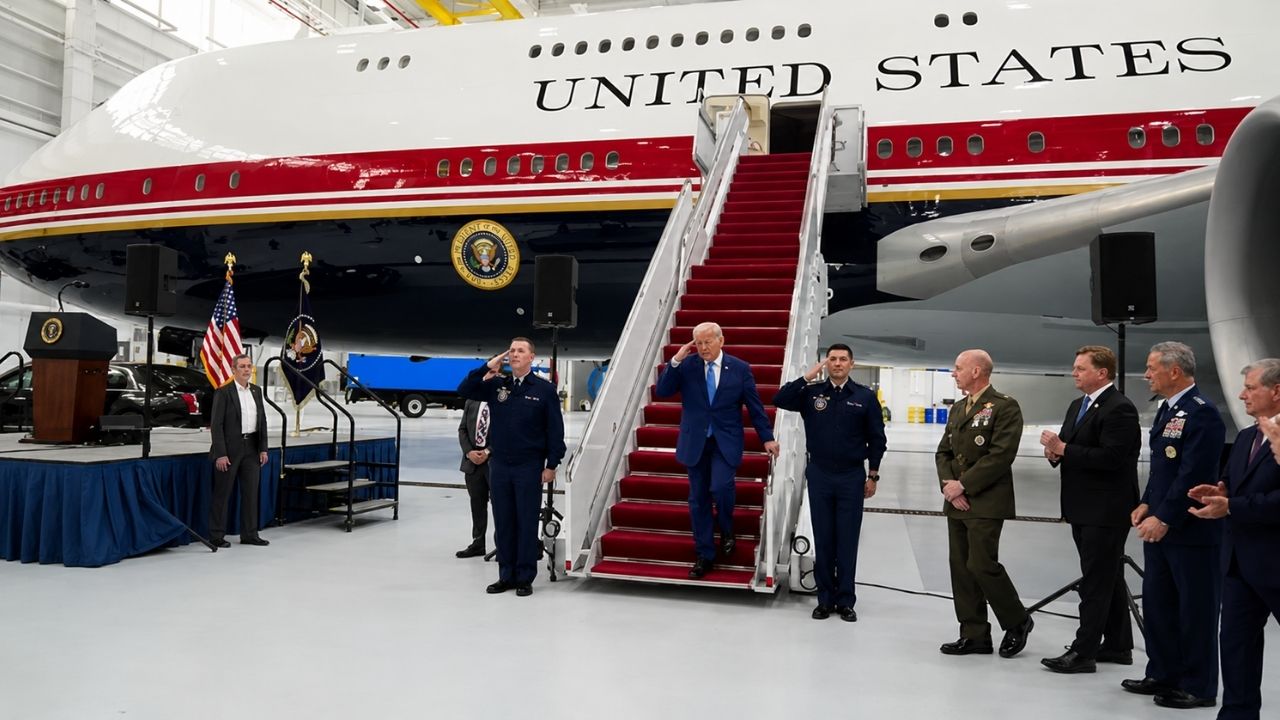
Although the plane was presented as a donation, this does not mean zero cost to public coffers. Adapting an aircraft for presidential use requires refurbishment, testing, certifications, communication systems, security, and specialized maintenance.
The refurbishment was associated with L3Harris, a defense company involved in the adaptation of the aircraft. The final cost of the modifications was not fully disclosed to the public during the presentation, which reinforced calls for transparency.
The case shows an important difference between receiving an airplane and putting it into presidential operation. The gift may have a billion-dollar value in image, but transforming it into a State tool depends on money, time, and technical decisions.
Moreover, there is the political cost. At a time of pressure on public spending, any expense linked to a luxurious presidential plane becomes ammunition for opponents, especially when the equipment is associated with a foreign government.
Boeing delays helped create the impasse
The backdrop of the story is the delay of the new presidential planes ordered from Boeing. The VC-25B program was created to replace the old models and deliver a more modern generation of Air Force One.
These planes were supposed to represent institutional continuity, with manufacturing, adaptation, and certification within the American defense system. But delays, costs, and industrial difficulties pushed the delivery forward, leaving the White House dependent on an aging fleet for longer.
It was in this vacuum that Qatar’s luxurious gift appeared as an alternative. The aircraft solves part of the immediate problem of image and availability, but also creates a new layer of controversy.
The crisis, therefore, does not only involve Trump or Qatar. It also exposes the difficulty of the United States in delivering, on time, one of the most symbolic and complex aircraft in the world.
American symbol now carries international dispute


The Air Force One has always been more than transportation. It represents power, security, government continuity, and the global presence of the United States. Each presidential trip, each landing, and each image of the plane are part of American visual diplomacy.
Therefore, the origin of the new aircraft weighs heavily. A Boeing 747-8 donated by Qatar, painted in a new color combination and adapted for presidential use, changes the traditional narrative of autonomy and national control.
For supporters, the plane shows pragmatism in the face of delays and operational necessity. For critics, it reveals institutional vulnerability and excessive openness to foreign influence.
The dispute tends to accompany each use of the aircraft. Whenever the plane takes off, the debate about security, cost, and the origin of the gift is likely to resurface.
Temporary solution became a permanent image problem
The Qatar Boeing 747-8 was introduced as a quick response to Boeing’s delays and as a temporary reinforcement for the American presidential fleet. But the luxurious gift ended up becoming one of the greatest symbolic controversies of the new phase of Air Force One.
The aircraft combines luxury, geopolitics, national security, public cost, and constitutional dispute in one object. The question remains whether an aircraft received from a foreign government can serve as a practical solution without compromising public trust. Do you think the United States should accept this type of gift for presidential use, or does the foreign origin make the risk too great? Leave your opinion in the comments.


Be the first to react!