Portuguese
  Spanish




International Study Published In One Of The Most Respected Scientific Journals In The World Unveils The Molecular Mechanism Behind A Rare Adverse Effect And Points The Way To Safer Vaccines In The Future
During the first months of the COVID-19 pandemic, the world witnessed an unprecedented scientific race to develop effective vaccines. In record time, different technologies were tested, approved, and distributed on a global scale. However, as millions of people began to be vaccinated, reports of extremely rare but serious adverse effects associated with a specific type of vaccine also emerged. Now, after years of investigation, scientists claim to have finally unveiled the cause of these events and, more importantly, how to avoid them in the future.
The information was disclosed by specialized scientific reports based on a study conducted by an international team of researchers led by Flinders University in Australia and published in the New England Journal of Medicine. According to the authors, the discovery represents the final chapter of a long investigation into the biological mechanisms responsible for a rare coagulation disorder observed in a small portion of the vaccinated population.
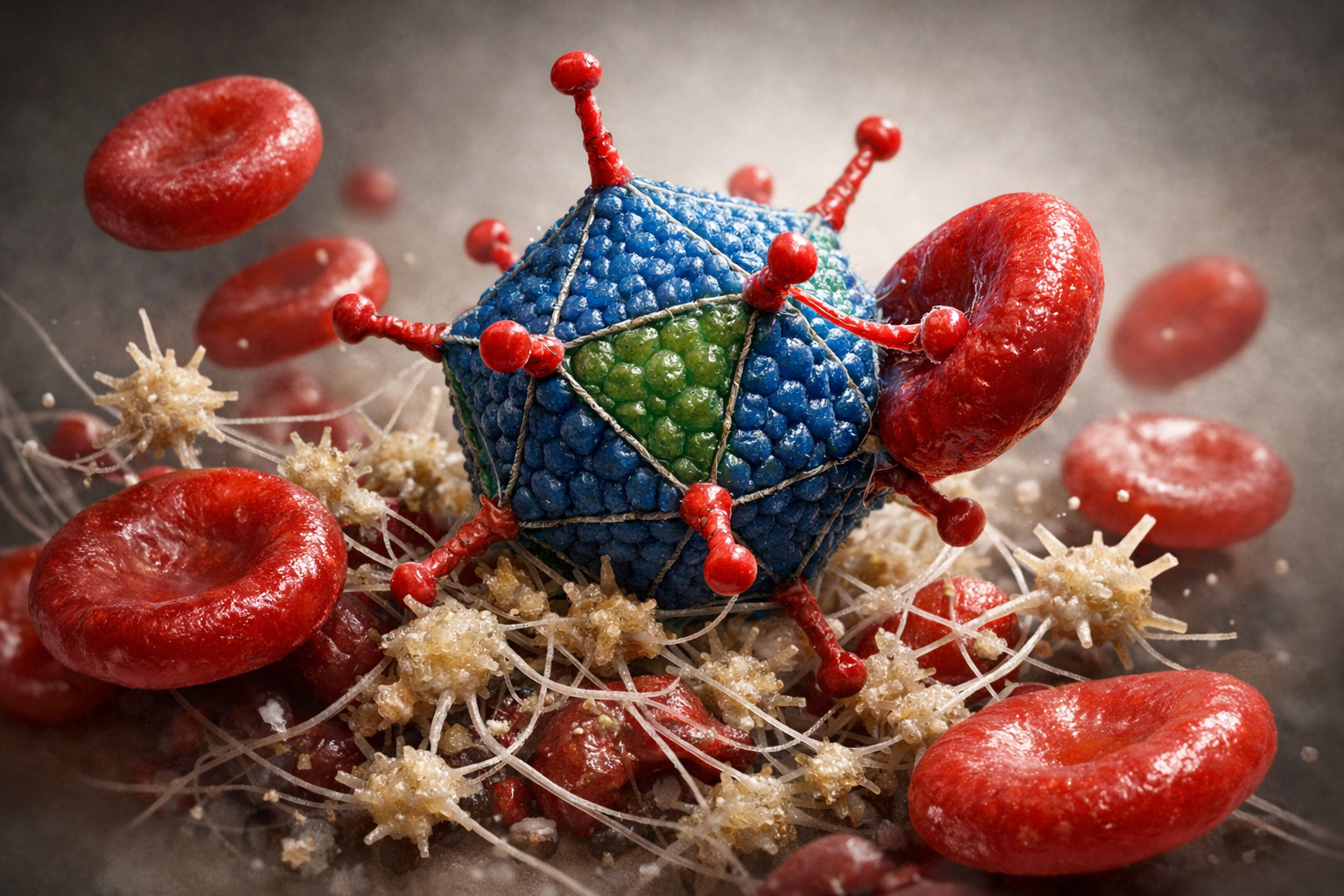
Unlike most COVID-19 vaccines still in use today — based on messenger RNA (mRNA) technology — some of the first vaccines administered during the pandemic used a different approach. This includes the vaccines developed by Oxford/AstraZeneca in the United Kingdom and Johnson & Johnson in the United States, which used adenoviral vectors to induce an immune response.
-
Pennsylvania Mine Creates Ice in Summer Heat and Melts in Winter, Turning a Mountain Crevice into a Reverse Natural Refrigerator

-
China Accelerates Global Expansion of Robotics: From Smart Vacuums to Industrial and Humanoid Machines, Millions Exported to Over 150 Markets
-
Polar Air Mass to Hit Brazil: Temperatures to Plummet in Nine States, Near Freezing in the South with Frost Risk Until Monday
-
Chinese “dark factories” produce electric cars 24/7 with minimal human intervention, as Zeekr assembles 800 units daily, raising concerns in Brazil.





These vaccines employed a harmless adenovirus to humans as a “vehicle” to transport genetic information from SARS-CoV-2 into the body. Although this technology had been extensively tested before the pandemic, including in studies on MERS, another coronavirus, its large-scale application revealed an extremely rare but potentially fatal adverse effect that caught the attention of the global medical community.
What Is Vaccine-Induced Thrombosis And Why It Scared Doctors
Shortly after the start of mass vaccination, doctors began to identify unusual cases of a disorder called vaccine-induced thrombocytopenia and thrombosis, abbreviated as VITT (vaccine-induced immune thrombocytopenia and thrombosis). The condition combined two dangerous factors: the formation of blood clots and a sudden drop in the number of platelets, cells essential for normal blood clotting.
Initially, the phenomenon puzzled specialists, as the clinical pictures did not fit traditional thrombosis patterns. As investigations progressed, it was discovered that affected patients produced autoantibodies against a human protein called platelet factor 4 (PF4). These autoantibodies activated the immune system uncontrollably, triggering the formation of clots.
Despite the severity of the condition, VITT cases were extremely rare compared to the total number of doses administered. Nevertheless, the impact was sufficient to lead health authorities in various countries to review vaccination protocols and restrict the use of these vaccines in certain at-risk groups.
How Scientists Linked The Adenovirus To The Problem
The investigation progressed in stages. In 2022, Professor Tom Gordon and researcher Jing Jing Wang led a study that identified genetic factors associated with the production of autoantibodies against PF4. The following year, another study revealed that the same genetic factors could provoke a condition similar to VITT after exposure to natural adenoviruses, such as those responsible for some common colds.
These findings raised a crucial hypothesis: the problem might not be in other components of the vaccine, but rather in the adenovirus itself used as a vector. To confirm this suspicion, researchers from different countries joined forces and compared cases of vaccine-induced VITT with similar disorders caused by natural adenovirus infections.
The results showed that, from an immunological and clinical perspective, the two conditions were practically identical. This reinforced the conclusion that the adenovirus played a central role in triggering the autoimmune response observed in a very small number of people.
The Final Discovery That Could Make Future Vaccines Safer
In the final stage of the research, scientists resorted to advanced molecular analyses to understand exactly why the immune system of some individuals reacted this way to the adenovirus. The response revealed a “molecular confusion” mechanism: a protein present in the adenovirus has a structure similar to that of the human platelet factor 4.
In genetically predisposed individuals, this similarity causes the immune system to confuse the viral protein with PF4, activating pre-existing autoantibodies and triggering the cascade of abnormal clotting. According to the study’s authors, this process clearly and definitively explains the origin of VITT.
According to researcher Jing Jing Wang, the discovery paves the way for practical solutions. By modifying or removing this specific protein from the adenovirus, future vaccines could maintain high efficacy against infectious diseases without carrying the still minimal risk of this rare adverse effect.
The work has also been praised by other specialists involved in the research. For Professor James McCluskey, the study represents “a brilliant piece of molecular investigation,” capable of demonstrating how a normal immune response can, under very specific circumstances, evolve into a pathological autoimmune condition.
Additionally, the case is pointed out as an example of the effective functioning of science and health regulation. As soon as the risk was identified, vaccination strategies were adjusted to protect the most vulnerable groups, while researchers continued, behind the scenes, to seek definitive answers.
With Information From: IFL Science