






 Portuguese
  Spanish
  3 min of reading
  0 comments


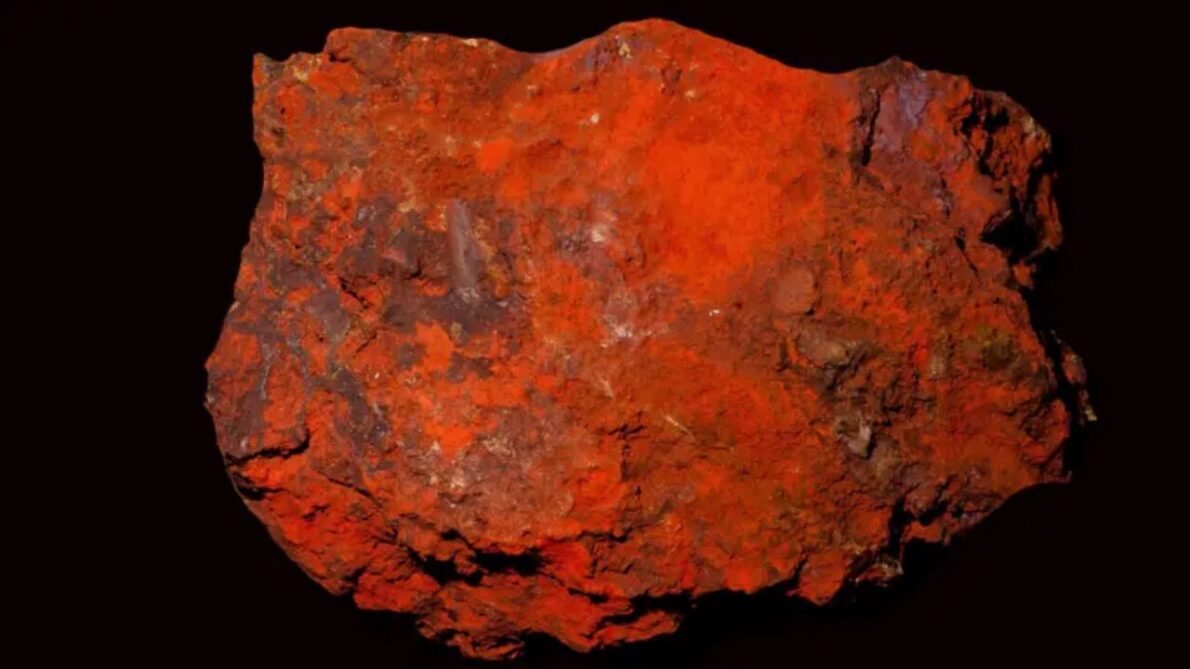
Cinnabar, A Fascinating Mineral Used By Ancient Civilizations, Hides A Toxic Side Due To Its Association With Mercury.
Have you heard of Cinnabar? Originating in the cracks of volcanic eruptions, it is a fascinating yet toxic mineral. It fills the cracks that remain in the rocks, forming attractive red veins that have fascinated those who discover it for millennia. Found in all regions with or that have had volcanoes, cinnabar has a rich and complex history.
An Attractive And Multifunctional Mineral
Cinnabar is one of the few minerals that were discovered, processed, and used independently by ancient peoples in various parts of the world.
Its ability to be easily ground into a fine powder, which when mixed with different liquids becomes paint, made it highly desirable.
-
Helicopter Drops 180 Tons of Sand and Gravel on Swedish River to Revive Ecosystem Damaged by Decades of Exploitation

-
Brazilian Company Launches Retro Smartphone with 48 MP Camera, T9 Keyboard, and Privacy Features for Social Media-Free Use

-
Self-Taught Chinese Farmer Builds 5-Ton Submarine from Scrap, Launches It in Anhui River
-
Invisible Induction Technology Enables Wireless Power for Blenders, Coffee Makers, and Air Fryers, Reducing Countertop Cables





Moreover, cinnabar is the primary ore of mercury, a metal that, although toxic, has various applications.
The Historical Value Of Cinnabar
As a pigment, known as vermilion, cinnabar produced shades ranging from bright orange-red to reddish violet.
About 10,000 years ago, the first artists used it to paint images of aurochs on the walls of the ancient settlement of Çatalhöyük, in present-day Turkey, and on ceramics from the Yangshao culture in China (5000 to 3000 BC).
On the American continent, cinnabar was used in tombs, murals, masks, and ornaments in Andean and Mesoamerican cultures.
In Spain, which is home to the legendary Almadén mines, from where the largest amount of mercury in the world was extracted, the oldest known pigment dates back to 6000 BC.
Almost all of the deep red paint that wealthy Romans used to paint their homes was imported from Almadén and cost three times as much as Egyptian blue.
During the Renaissance, artists such as Giotto, Titian, and Van Eyck used cinnabar in their works, and Europe imported the pigment from China as it was considered more beautiful and pure.
In addition to its decorative use in art, in tattoos, and in cosmetics, cinnabar was used for medicinal, metallurgical, and symbolic purposes.
As noted by the Greek philosopher Theophrastus, when the mineral is crushed along with vinegar, cinnabar yielded liquid silver (mercury).
Mercury escaped as vapor when heated, condensing into liquid mercury.
Pliny the Elder reports that mercury dissolved gold, a process that became one of the main methods of purifying the metal.
The Romans imported five tons of mercury per year, most for this purpose.
The mixture was used to make gilded objects, with the mercury disappearing in the furnace and revealing a layer of pure gold.
Alchemists And The Fascination With The Mineral
Alchemists discovered they could produce cinnabar by heating mercury and sulfur.
The transformation of cinnabar into mercury and its reversal was a cyclical process, akin to resurrection, for some.
Therefore, some cultures believed that the material granted special powers.
In the Chinese Empire, vermilion elixirs were consumed to prolong life and attain immortality. Even today, about 40 traditional medicines contain cinnabar.
From the Middle East to Latin America, cinnabar was used in blessing rituals and burials.
Hindu women applied vermilion in the parting of their hair as a sign of marriage, a ritual known as sindoor, related to Hindu astrology and the feminine energy of Shakti.
The Toxic Danger Of Cinnabar
Experts explain that, in its natural form, cinnabar is not dangerous.
However, when heated, it releases mercury vapor, which is toxic if inhaled.
“As long as cinnabar is not heated, mercury remains trapped in the sulfur, making it low in toxicity,” said Terri Ottaway from the Gemological Institute of America.
Pablo Higueras and other experts agree that separating the components of cinnabar poses a health risk.
Due to the dangers associated with mercury, the use of cinnabar has decreased. Currently, those who work with it, such as archaeologists, do so with extreme caution.
Vermilion, once the most widely used red pigment in the world, was replaced by cadmium red in the early 20th century.





Be the first to react!