






 Portuguese
  Spanish


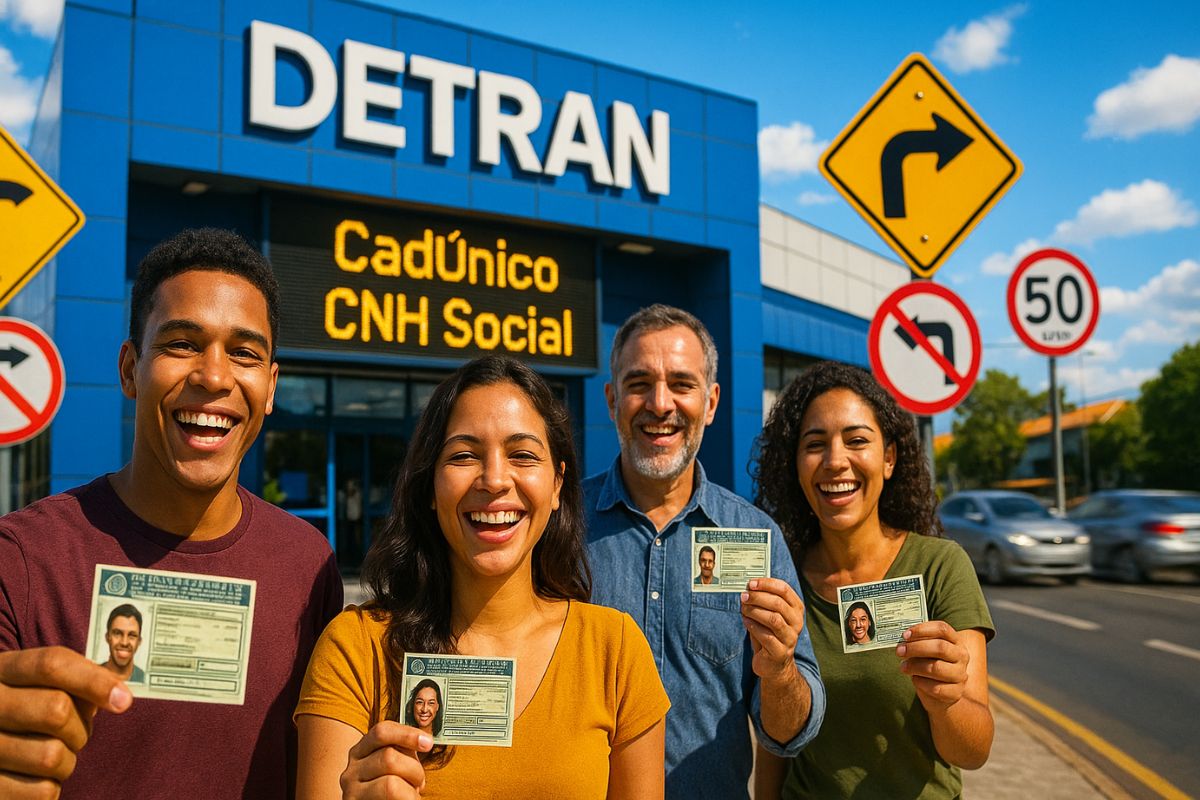


The Social CNH Ensures Free Licenses for Over 350 Thousand Brazilians. New Government Program Offers Licenses at No Cost for Applicants in the CadÚnico, Funded by Traffic Fines, with a Goal of Reaching 1 Million Beneficiaries by 2028
The Social CNH guarantees free licenses for thousands of Brazilians who previously could not afford the process costs. Created by Law No. 15,153 and sanctioned in 2025, the initiative targets individuals enrolled in the Single Registry for Social Programs (CadÚnico), offering all stages of the CNH without charging fees.
According to the federal government, over 350 thousand Brazilians are expected to benefit in the first year. The goal is for the program to reach the milestone of 1 million licenses issued by 2028, aiding employability, social inclusion, and reducing regional disparities.
Who Can Participate in the Social CNH
The Social CNH is for those registered in the CadÚnico, targeting citizens in situations of social vulnerability. The goal is to broaden job and mobility opportunities, especially in sectors that require a driver’s license such as school transportation, motorcycle taxis, deliveries, and logistics.
-
Coca-Cola Shuts Down 100-Year-Old Factory in the U.S., Impacting 85 Workers and Shaking Local Community with Historic Consequences

-
Bianca Andrade Invests $30 Million of Her Own Money in Boca Rosa, Launches Over 100 Products in a Year, Aiming for $400 Million by 2026
-
Belo Horizonte Becomes First Brazilian City to Fund Housing, Utilities for 100 Homeless Families with $900,000 Initiative
-
Brazilian Joins Homeownership Consortium, Faces Decade of Dual Payments Totaling $141,000, Surpassing Traditional Mortgage


In addition to opening doors to the formal market, the program aims to serve urban and rural areas, adapting the registration procedures according to local needs. This customization is seen as essential to ensure that the measure reaches all regions of the country.
How Program Financing Works
The financing of the Social CNH comes from the collection of traffic fines, a resource that ensures sustainability without compromising the federal budget. This model is considered innovative for using penalties imposed in traffic to fund a social benefit with significant impact.
The law also establishes transparency and control mechanisms, such as periodic accountability and the availability of information on digital platforms, allowing society to monitor the program’s execution.
Direct Impact on Employability
Experts argue that the Social CNH can transform the lives of millions of Brazilians, as the document is required for various job vacancies. For those living in areas with limited public transportation options, having a license becomes essential to seek better opportunities.
The expectation is that the measure will reduce informality and strengthen the transportation sector, creating new entrepreneurs in activities such as mobility apps, school transportation, and small freight businesses.
Social Inclusion and Citizenship
One of the biggest differences of the Social CNH is its impact on historically marginalized groups, such as women, youth, black individuals, and indigenous communities. Ensuring access to licensing also means expanding citizenship, autonomy, and equal opportunities.
According to social organizations, the initiative can also help reduce rates of urban and domestic violence, as access to formal employment contributes to breaking cycles of poverty and exclusion.
Challenges and Improvement Perspectives
Despite the advances, the Social CNH still faces obstacles. Among these are the standardization among state traffic departments, the expansion of service capacity, and the accessibility of the registration process for those without internet access.
The government is exploring ways to simplify registration and establish partnerships with the private sector to expand the program’s reach. The challenge is to make the Social CNH a lasting public policy that continues to benefit millions of Brazilians in the coming years.
And you, do you think that the Social CNH will really generate more jobs and opportunities for those in need, or do you believe that adjustments are still needed to expand the impact? Leave your opinion in the comments — your view is essential in this debate.





Uma boa atitude