






 Portuguese
  Spanish


The Citizen Housing Project, from the Belo Horizonte city hall, adopts the Housing First method and will cover rent, water, electricity, and furniture for 100 homeless families, with R$ 4.5 million. The proposal goes beyond the Housing Allowance and bets on the house as the starting point for a new beginning.
For the first time in the country, a city hall has decided to pay the rent, water, and electricity bills for those living on the street, and do so without demanding anything in return beforehand. This is the bet of Belo Horizonte with the Citizen Housing Project, which will take 100 families and people from homelessness and put them in a house first, to then take care of the rest. R$ 4.5 million are reserved to fund this new beginning, in a design that swaps the queue of demands for the key in hand.
The initiative gained prominence in a report by the newspaper O Tempo published on May 29, 2026, within the series From the Street to a New Beginning, and relies on a method with its own name: Housing First. The logic is simple to state and bold in practice. Instead of demanding that the person first quit addiction, find a job, or prove they deserve it before receiving a roof, the Housing First method delivers the house right away. The city hall claims that Belo Horizonte is the first city in the country to structure a project of this type.
The method’s turnaround: the house comes first, without demanding anything in return
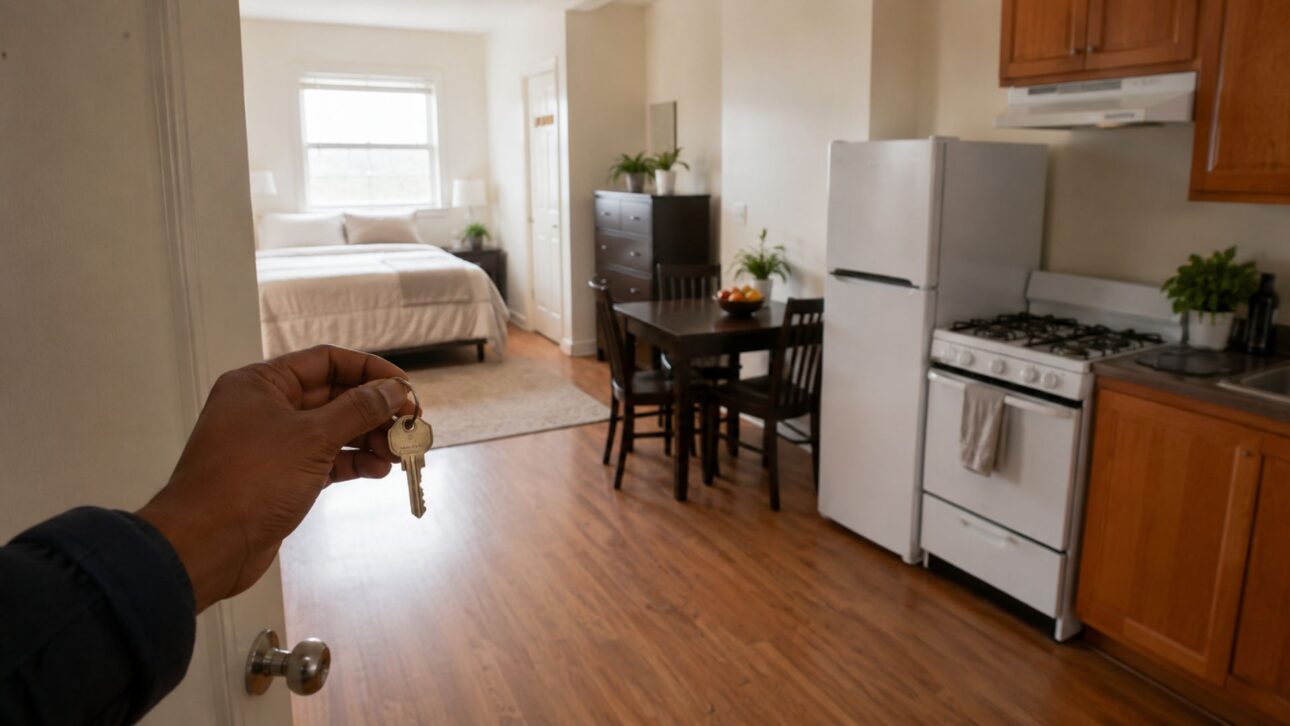
The traditional assistance model treats housing as a prize at the end of the line: the homeless person goes through shelters, has to complete stages, stop drinking, find work, and only at the end, if everything goes well, do they earn a place to live. The Housing First method completely reverses this ladder. First comes the house, then the rest.
-
Brazilian Joins Homeownership Consortium, Faces Decade of Dual Payments Totaling $141,000, Surpassing Traditional Mortgage

-
Land Rover to Halt Production in July, Putting 371 Jobs at Risk, as Chinese Automaker Negotiates to Convert Factory to 100,000 Vehicles Annually by 2027

-
Mexican Pest Threatens U.S. Cattle Herds at Historic Lows, Potentially Boosting Brazilian Beef Exports as Burger Prices Soar

-
Brazilian Freight Bill Progresses in Congress with $5,000 Minimum Wage, 70% Advance Payment, and Fines Up to $1 Million, as Agriculture and Industry Warn of Rising Costs and Legal Uncertainty


The idea has a name and a date. According to the newspaper O Tempo, the concept was created in 1992 by psychologist Sam Tsemberis and became known abroad as Housing First. The premise behind it is almost obvious when said out loud: it is very difficult for someone to reorganize their life, treat their health, or look for a job while sleeping on the sidewalk. With a fixed address and a door that closes, the rest becomes possible.
In practice, the Housing First method operates on five principles. Access to housing is immediate and does not depend on preconditions. The beneficiary chooses and decides about their own life, in what is called self-determination. The service is focused on the person’s recovery, with individualized support guided by them, and all this aims at social and community reintegration. It’s not about giving the key and disappearing, it’s about giving the key and walking together.
How much does it cost and where does the money for the Citizen Housing Project come from
The Citizen Housing Project has a defined value and a clear origin. It is R$ 4.5 million transferred by the Ministry of Human Rights and Citizenship, in partnership with the city hall of Belo Horizonte, according to the official statement from the City Hall of Belo Horizonte. The money is federal, the execution is local, and the target is 100 families and individuals in the initial service.
What this amount covers is the heart of the story. The project funds the housing costs, that is, the rent, as well as water and electricity expenses, and also ensures basic furniture for the house to start functioning. It doesn’t stop there: along comes specialized social support, with a team that helps the person to get back on their feet. It’s the difference between receiving a key and receiving a house that you can truly live in.
Add it all up and it becomes clear why the Citizen Housing Project is more ambitious than it seems at first glance. Paying rent, water, electricity, and furniture for one hundred families at the same time, with professional support, is expensive and complex. The R$ 4.5 million exists precisely to sustain this complete structure, and not just to transfer a simple aid like the Housing Allowance and wash hands of it.
Who gets the 100 spots and why women have priority
The 100 spots are not distributed randomly. The target audience is people and families from the homeless population or those in institutional shelter units, including arrangements like single-parent families of up to four members. The priority, according to the project’s information, is for women, the group identified as the most vulnerable within the homeless population.
This focus has a reason. Women on the street face risks that go beyond hunger and cold, such as violence and exploitation, and many are with children. Putting this group at the front of the line for the Citizen Housing Project is a public policy choice that recognizes who is at greater risk sleeping outdoors. The house, in these cases, is not just comfort, it’s protection.
A hundred families represent, at the same time, a lot and a little. It is a concrete number of lives moving from the street into a home, and also a fraction considering the size of the problem in the city. The project begins by assuming this role of a qualified pilot, a model to test and, if successful, expand. A hundred is the beginning, not the ceiling.
The street that doubled in five years in Belo Horizonte
To measure the size of the challenge, it’s necessary to look at the city’s numbers. The homeless population in Belo Horizonte practically doubled in five years. Data from the Cadastro Único and the Observatory of the Homeless Population of UFMG show a jump from about 8,500 people in 2020 to more than 15,000 by the end of 2025. In March 2025, there were 14,454 people, a number that placed the capital of Minas Gerais in third position among Brazilian capitals.
The profile of those on the street helps to understand the problem. The majority are men, with an average age around 42 years, and the average time spent on the street exceeds a decade. People who have been without an address for more than ten years do not return home with a small push, and this is where the logic of continuously funding housing comes in, instead of offering just a shelter spot for a few nights.
This accelerated growth is the backdrop that makes the Cidadã Housing Project urgent. When the homeless population doubles in half a decade, crowded shelters can no longer cope, and the city needs a solution that truly removes people from the street, not just temporarily accommodates them. Belo Horizonte’s bet is that stable housing breaks this cycle at its root.
The leap in relation to the R$ 800 Housing Allowance
Belo Horizonte already had an instrument for this, and understanding the difference is important. The Housing Allowance provides R$ 800 per month directly to the user, specifically for paying rent, and in 2026 it called upon 300 people, also prioritizing women. It is an aid that helps, but it delivers the money and stops there.
The Cidadã Housing Project was designed to go beyond the Housing Allowance in two key areas. First, in what it covers: it’s not just the rent, but also water, electricity, and furniture. Second, and perhaps most decisively, in the support. “One of the differentiators of our project is the social support. We have a multidisciplinary team that provides this support and is a very important backup beyond the rent”, stated Claudenice Rodrigues Lopes, coordinator at the Street Pastoral.
The comparison does not diminish the Housing Allowance, which continues to assist people. The point is that paying the rent alone solves part of the problem, and the other part, which makes the person actually leave the street and not return, depends on constant human support. It is this backup that the Housing First method places at the center of the equation, and that simple aid could not offer.
Who will run the project and what the city hall says
The execution of the Citizen Housing Project is not directly in the hands of the public authorities. The organization chosen through a public call to lead the initiative is the National Pastoral of Street People, an association that already has experience in this field. Since 2023, the Pastoral has welcomed more than a hundred people through its own Housing First program, which gives the project a real experience base, not a start from scratch.
On the side of the city hall, the discourse is one of ambition. “We intend for Belo Horizonte to truly be a reference in humane service to this public,” said Alice Brandão, director of Policies for the Homeless Population, Migrants, and Refugees of the city hall, to the newspaper O Tempo. The statement summarizes the size of the bet: the city not only wants to run a program but wants to become a model for Brazil.
There are also initiatives that run alongside and show that the city is moving on several fronts. The Solidarity Rent, of a private nature and driven by donations, benefits 43 people in 34 homes, according to the report. These are efforts that, combined with the Citizen Housing Project, form a network, still small given the size of the homeless population, but pointing to a different path from the usual temporary shelter.
One hundred families in a universe of thousands: the test begins now
The story of Belo Horizonte is, at its core, an experiment in administrative courage. Putting one hundred families in homes, with rent, water, and electricity paid and a team accompanying them, is a concrete promise of dignity that the Housing Allowance alone did not deliver. But it is also a modest number compared to more than 15,000 people living on the streets in the city, and success will depend on the Housing First method proving, in the practical setting of Minas Gerais, what it has already shown abroad. If it works, one hundred becomes a thousand; if it stalls, it remains a lesson. The restart for these families begins now.
And you, do you think paying rent, water, and electricity for those on the street, without demanding anything beforehand, is the right way to solve the problem, or do you bet more on shelters and requirements? Share in the comments if your city should copy the Citizen Housing Project of Belo Horizonte.


Be the first to react!