






 Portuguese
  Spanish


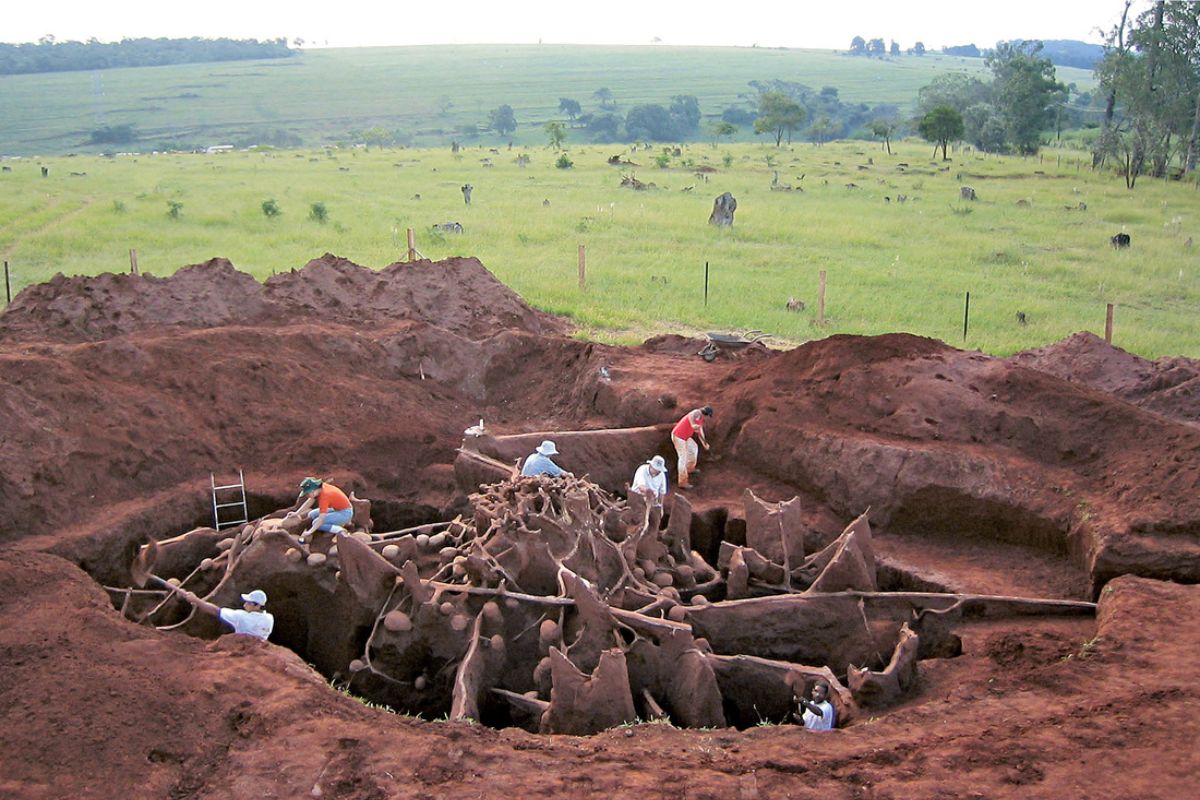


The Mold With 10 Tons of Cement Showed Tunnels, Chambers, and Connections So Complex That They Seem Like a Miniature Human City
A colony of leafcutter ants transformed the underground of a grassland in Brazil into a gigantic structure full of paths, branches, and areas separated by function.
To see this “city” from the inside, researchers poured 10 tons of cement at the entrance of the anthill. What emerged afterward impresses with its scale and organization level.
10 Tons of Cement Disappeared Into the Ground Without Overflowing
The cement was poured through an access point that seemed ordinary. Even so, it kept descending and spreading without stopping.
-
China Develops Custom 140-Ton Electric Mining Truck with 770 kWh Swappable Battery, Deploys 290 Units in Xinjiang’s Largest Zinc Mine

-
Meta to Launch Arena, a New Prediction App Targeting 3.56 Billion Users, Competing with Polymarket and Kalshi

-
Scientist Challenges Famous Human Evolution Theory, Argues Homo Sapiens Evolved Gradually Over Thousands of Years
-
15-Year-Old American Builds Ocean Generator with PVC Pipe and 3D-Printed Propeller for $12, Wins National Prize, Presents at White House, and Makes Forbes 30 Under 30 List




It took 3 days to fill up to complete the 10 tons, without the material coming back out. This indicated a much larger underground system than it appeared.
The cement entered tunnels and chambers, filling every internal space as if it were “drawing” the nest from within.
The Mold Only Appeared After 1 Month of Waiting

After filling, it was necessary to wait about 1 month for the cement to fully harden inside the structure.
Only then did the excavation begin, done with machines, as if it were a search for something buried long ago.
The goal was to remove the piece without breaking the main connections, preserving the actual shape of the nest.
The Subterranean City Reached 8 Meters in Depth and Occupied 50 Square Meters
The mold revealed a branched network that descended to about 8 meters below the surface.
The total area occupied was around 50 square meters, showing that the colony built much more than just a simple mound of earth.
From above, the structure resembles a 3D map, with dense regions and corridors that link everything like a mesh.
The Colony Moved About 40 Tons of Soil to Make Space
To create this subterranean megacity, the ants removed around 40 tons of soil throughout the life of the nest.
This happened grain by grain, in a slow, repetitive, and extremely constant process.
All together, the work involved billions of individual movements to sculpt the complete set.
Wide Tunnels Function Like “Avenues” and Connect Specialized Chambers
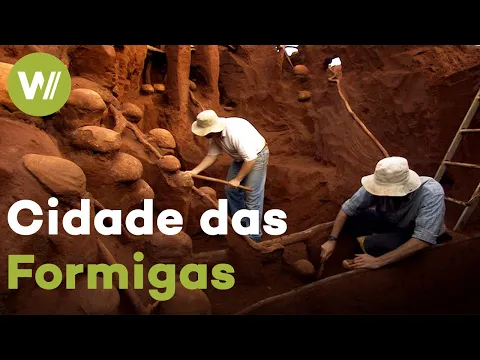

The mold showed wider tunnels connecting the central areas of the nest, as if they were main circulation routes.
From these paths, narrower galleries emerge that lead to spaces with specific functions.
Among them are fungus gardens, used as cultivated food, as well as rearing chambers and areas designated for waste disposal.
Each Ant Carries Up to 4 Times Its Own Weight and Keeps the System Active
The physical effort is also impressive. Each worker can carry loads of up to 4 times its own weight.
This rhythm, repeated over a long time, helps explain how the colony can open tunnels, widen corridors, and reorganize spaces.
Even with small individuals, the final result becomes gigantic when the work is collective and continuous.
The Logic of the “Superorganism” Creates a City Without Engineer and Without Blueprint
A colony of ants can be understood as a superorganism, where each worker functions as part of a larger body.
No ant knows the complete “map” of the nest. Still, local decisions accumulate and generate a highly organized structure.
With small constant adjustments, the nest takes shape, connecting areas and creating more efficient routes.
The mold made with 10 tons of cement revealed that a colony of leafcutter ants can build a subterranean megacity with a surprising level of organization.
With 8 meters in depth, 50 square meters of area, and about 40 tons of soil removed, the structure shows how collective work can create true cities hidden beneath the ground.







Ridículo como o ser humano se acha no direito de destruir tudo pra benefício próprio!!! Coitadas das formigas, anos a fio de trabalho, pra vir o homem e destruir tudo aff
Essa colônia já estava desativada? Ou o ser racional ou irracional destruiu só para pesquisar
Anos e anos de esforço, 40 toneladas de terra retirada grão a grão, esforço hercúleo e vem o homem e mata a colônia toda com cimento