Portuguese
  Spanish


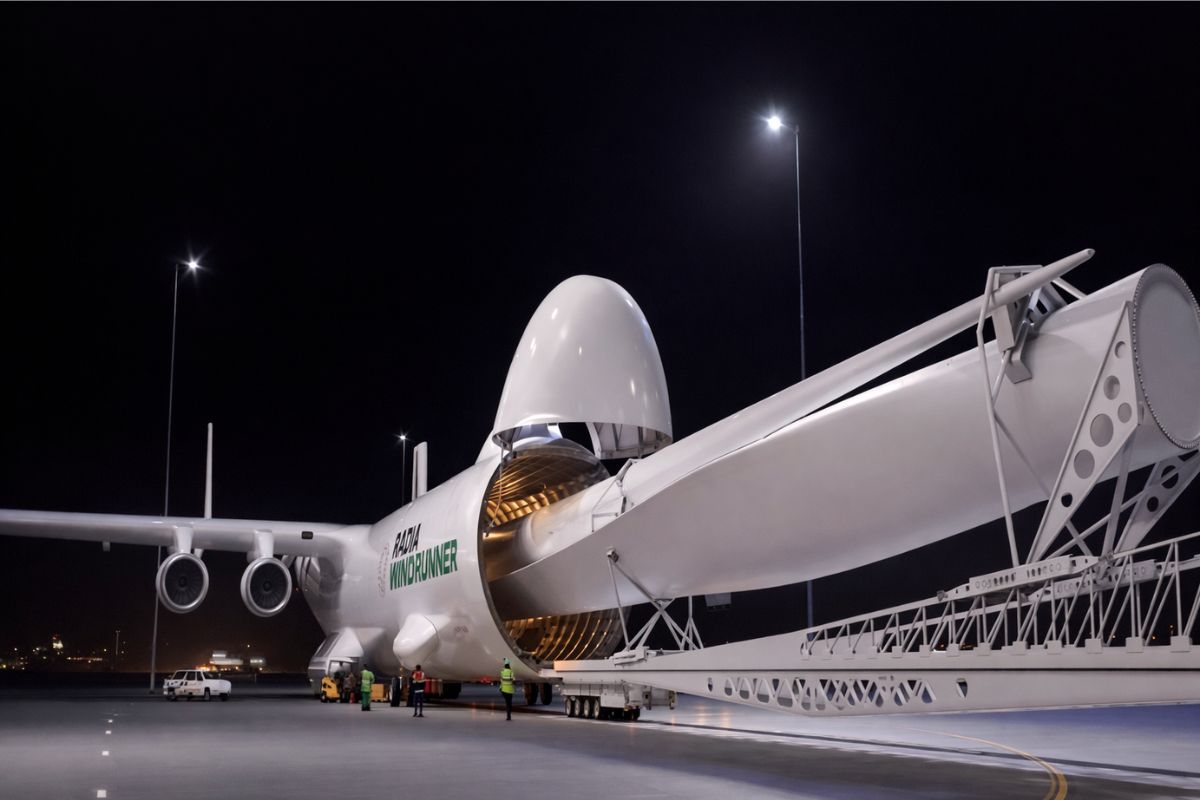


The WindRunner, Radia’s New Giant Airplane, Aims to Transform Wind Energy by Transporting Blades Over 100 Meters to Remote Parks, Overcoming Land Limitations and Enabling More Powerful Turbines
The global race for clean energy is hitting an increasingly costly obstacle: transporting wind turbine blades that exceed 100 meters in length. Narrow highways, low bridges, and impossible curves turn every land transport into a logistical nightmare.
To tackle this bottleneck, the American company Radia decided to think big, literally. The company is developing the WindRunner, a colossal airplane designed to carry giant components that currently struggle to leave factories.
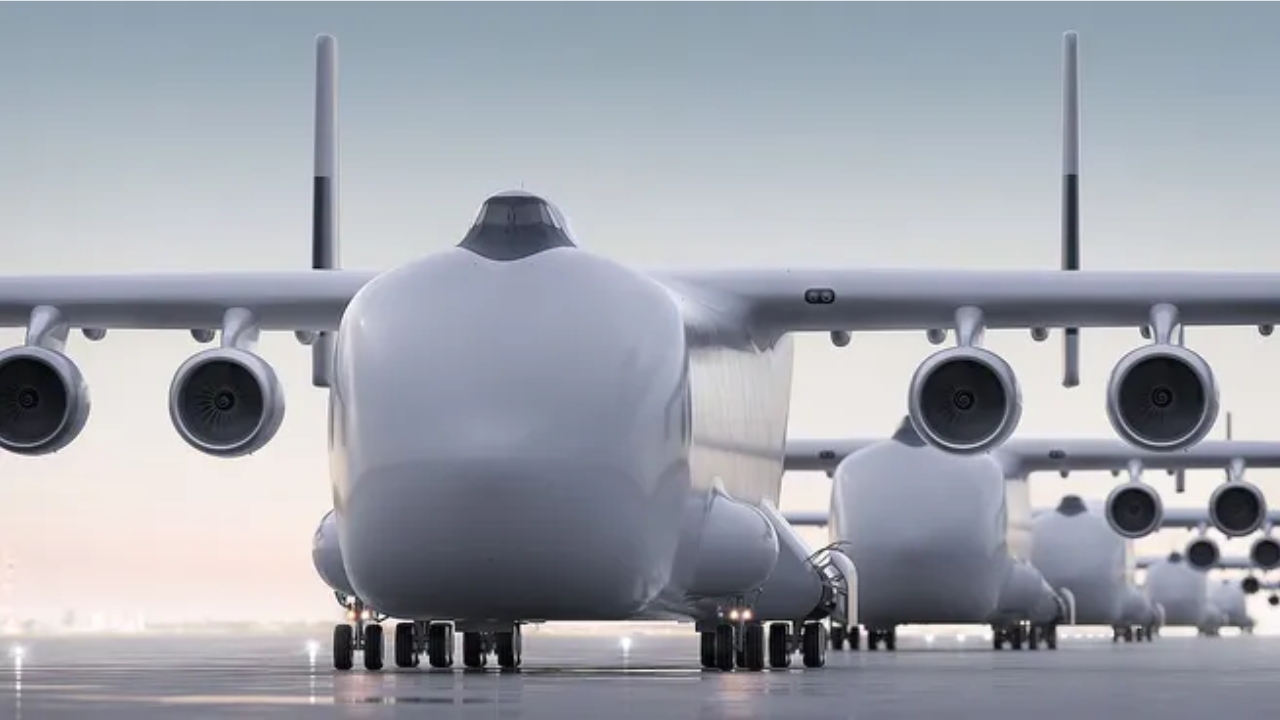
With a length of 108 meters and a wingspan of 80 meters, the aircraft promises to completely change the logistics of wind energy on a global scale. Radia’s forecast is to begin the first flight by the end of 2029, with commercial debut in 2031, following certification by the Federal Aviation Administration (FAA).
-
YouTuber Discovers Surreal Collection in 400-Year-Old Italian Fortress Near Florence: 419 Anvils, Giant Walruses, Ancient Church, and WWII Tunnels

-
Creative Uses for Toilet Paper Rolls That Will Change Your Perspective
-
Crab Trapped in Plastic Bottle for 62 Days Near Okinawa Highlights Little-Known Impact of Marine Pollution on Small Animals
-
Esperanza’s Bamboo Barrier in Oaxaca Redirects River and Reduces Erosion by 85% in Five Years



A Logistical Challenge That Became a Barrier to Clean Energy
Moving a wind blade of 100 meters or more by land is something that borders on impossible. In some routes, it is necessary to dismantle poles, close avenues, redesign road sections, and even perform temporary construction. Each transport can cost millions and still may not guarantee access to the remote areas where wind farms need to be installed.
It is precisely in this scenario that the WindRunner presents itself as a game changer. The aircraft will be able to land on dirt runways of just 1.8 km, allowing direct access to the places where the turbines will be assembled, even in isolated regions. The idea is that the plane bypasses the limitations of ports, roads, and bridges that currently serve as brakes on the advancement of land-based wind energy.
Mark Lundstrom, CEO and founder of Radia, summarizes the challenge: “Wind energy is limited unless we figure out how to transport giant objects by air.” According to him, the increase in the size of the blades, driven by the search for more powerful turbines, requires transportation solutions as disruptive as the equipment itself.
The WindRunner: A Colossus Designed for Extreme Missions
The airplane will be one of the largest structures ever built in the history of aviation. It will stand as tall as a three-story building and have the capacity to carry up to:
- three 80-meter blades,
- two 95-meter blades,
- or one 105-meter blade.
The estimated range is 2,000 kilometers per flight. To handle operations on uneven ground, the fuselage will be predominantly made of aluminum, which offers strength and ease of repair. The wings, made of composite materials, will be positioned at a high altitude to avoid damage caused by debris from dirt runways.
Unlike commercial jets, the WindRunner will have straight wings to allow slower landings, around 185 km/h, a speed similar to that of small utility aircraft. This increases safety and enables operations in improvised locations with minimal infrastructure.
The Project Gained Significant Political and Technological Support
Radia does not operate as an experimental startup: its advisory board includes influential names such as former U.S. Secretary of Energy Ernest Moniz and former Australian Prime Minister Malcolm Turnbull. According to the company, a significant portion of strategic suppliers has already been selected, and the program will be financed by billions of dollars from private funds and government incentives linked to the energy transition.
Lundstrom also does not rule out the military use of the aircraft for heavy transport, something that could increase production scale and open new commercial fronts.
A study commissioned by Radia indicates that 10-megawatt turbines, whose blades exceed 100 meters, could increase capacity factors by 20%, reducing costs and emissions. For the company, ensuring the transportation of these giant pieces is the key that will unlock new wind farms planned for areas with moderate winds but high demand for clean energy.
A Leap Towards the Next Generation of Wind Energy
If it delivers on its promises, the WindRunner will be a key player in the global expansion of renewable energies. The combination of giant airplanes, more powerful turbines, and customized air logistics could usher in a new phase for land-based wind generation, especially in countries where road transport is unfeasible.
As Lundstrom highlights, “The goal is not just to fly higher or farther, but to enable wind energy to reach new places and scale to a truly global level.”
More than just an airplane, the WindRunner represents a shift in mindset: the idea that the energy transition also depends on logistical innovation. If the timeline holds, the largest airplane in the world could be responsible for taking clean energy even further, literally.