Portuguese
  Spanish


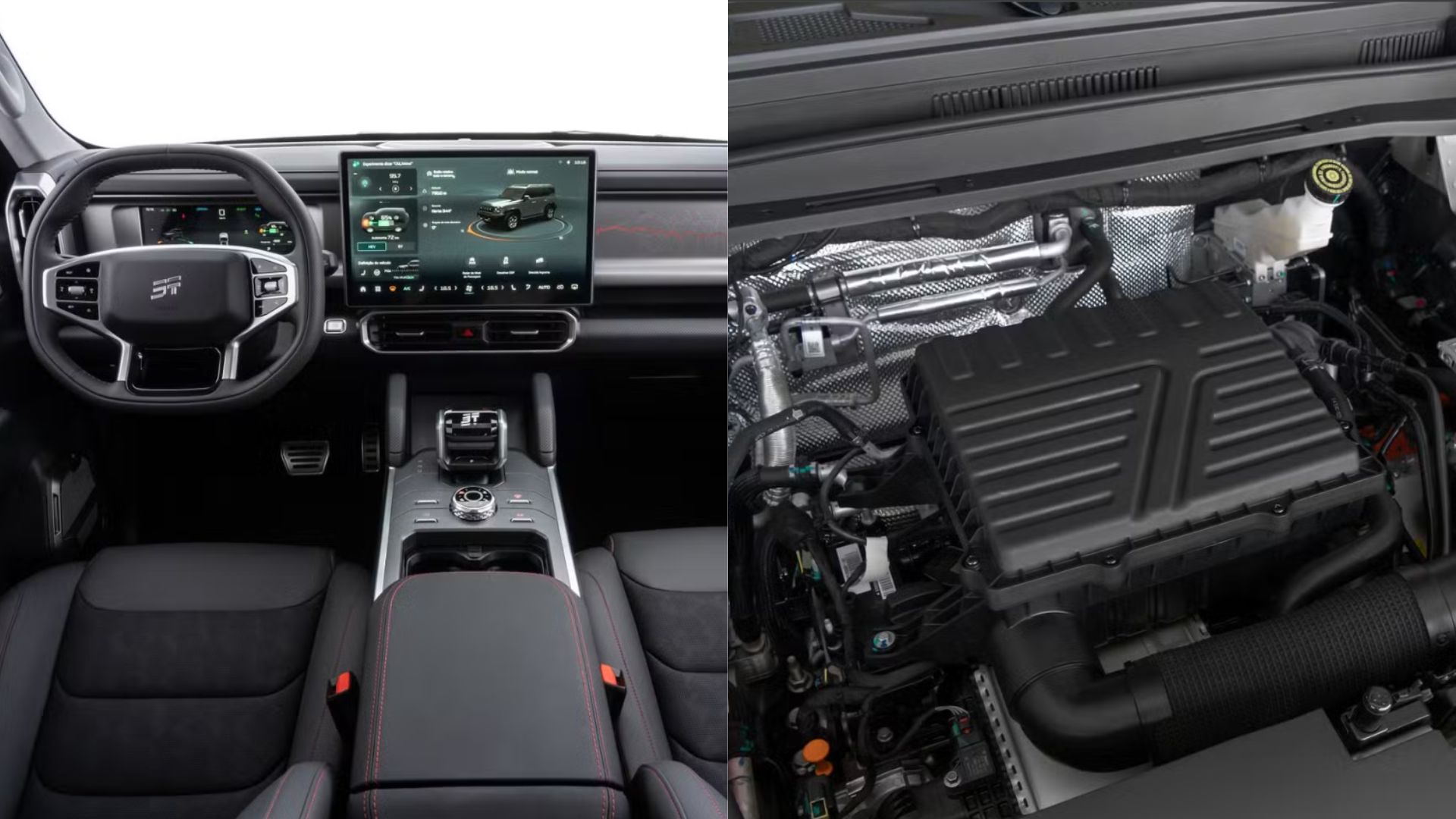


Plug-In Hybrid SUV With Three Motors And 320 Hp Marks The Debut Of Jetour In Brazil With An Electrified Proposal, Design Inspired By Classic Off-Road Models And Electric Range Of Up To 75 Km, Expanding The Competition In The Mid-SUV Segment.
Jetour, a brand from the Chinese group Chery, has started its operations in Brazil with the aim of selling electrified SUVs and kicked off the offensive with the T2, plug-in hybrid with 320 hp and 62.2 kgfm, priced from R$ 289,900.
In the package, the model combines three motors, delivers up to 75 km of range in electric mode, and has dimensions of 4.78 m in length, while Inmetro reported fuel consumption of 27.6 km/l in the city and 23.4 km/l on the highway.
Jetour’s Debut In Brazil Focused On Electrified SUVs
Jetour’s debut in the Brazilian market was confirmed at the end of 2025, with the promise of a lineup consisting of plug-in hybrid SUVs, its own operation, and a strategy separate from other fronts of the group in the country.
-
Toyota Shifts from Hybrid Cars to Electric Air Taxis with Joby’s 6-Rotor Aircraft, Capable of 322 km/h, Aiming for Mass Production to Electrify Urban Skies

-
Ferrari Unveils Limited Edition 12Cilindri Manuale: 6.5-Liter V12, 830 HP, 0-100 km/h in 2.9 Seconds, Top Speed Over 340 km/h, Only 1,499 Units Available

-
Discover the 2021 Fiat Cronos 1.3: Affordable Maintenance, Reliable Mechanics, and Fuel Efficiency of Up to 15.6 km/l
-
Cummins Unveils Hydrogen-Powered X15H Engine with Over 800 km Range and 15-Minute Refueling, Challenging Electric Truck Dominance


As part of this plan, the T1 and T2 models come with an off-road visual proposal and a focus on energy efficiency, but without all-wheel drive, which positions electrification as the main technical argument of the launch.

By bringing the topic to the Carona segment, this week’s program gathers three relevant debuts from the segment, although the provided text details only the two Jetour utilities, without information about the third model mentioned.
Jetour T2: Hybrid Engine, Consumption, And Versions
With a larger size and design reminiscent of classic SUVs, the Jetour T2 arrives with 4.78 m in length and 2.8 m in wheelbase, adopting the same wheelbase as the T1 and a spacious cabin proposal.
Under the hood, the T2 uses a 1.5 turbo gasoline engine combined with two electric motors, resulting in a total power of 320 hp and torque of 62.2 kgfm, with always front-wheel drive.
As a plug-in hybrid, the model can travel up to 75 km in electric mode, according to the specification released for the national market, and relies more on the combustion engine on highways, where the electric assistance decreases.
In certified consumption, Inmetro indicates averages of 27.6 km/l in urban use and 23.4 km/l on the highway, figures presented as equivalent and that reflect the electric system’s participation, especially in lower-speed journeys.
The T2 range starts at the Advance version for R$ 289,900, and goes up to the Premium configuration for R$ 299,900, maintaining the same logic of equipment in two stages and no mention, in the base text, of options.
Design Inspired By Off-Road And Urban Proposal

In appearance, the T2 bets on straight lines and striking proportions, with a silhouette reminiscent of the current Land Rover Defender, a reference frequently cited in analyses of the launch and reinforced by the adventurous proposal.
Even with this inspiration, Jetour positions the model as an electrified SUV for everyday use, since the drive is front-wheel across the entire lineup, a combination that prioritizes efficiency and mechanical simplicity instead of extreme capability.
Jetour T1: Greater Electric Range And Lower Prices
The Jetour T1 arrives as a slightly smaller alternative, with 4.7 m in length and 2.8 m in wheelbase, and adopts the “boxy” style that seeks to recall classic utility vehicles from the off-road universe.
Despite the similar visual identity, the T1 offers a plug-in hybrid solution with a 1.5 turbo gasoline engine and one electric motor, delivering 315 hp of total power and 52 kgfm of combined torque, always with front-wheel drive.

In electric range, the Inmetro cycle indicates a range of 88 km, while the brand states that the combination of a full tank and a charged battery can take the set up to 1,200 km, a figure presented as a usage reference.
In terms of prices, the T1 appears below the T2, starting at R$ 249,900 in the Advance version, reaching R$ 264,900 in the Premium configuration, maintaining the same nomenclature and the strategy of two main options for the network.
Shared Platform And Positioning In The Segment
Although Jetour does not detail the architecture in the base text, the novelty is described as sharing a platform with the Caoa Chery Tiggo 7, which helps explain the 2.8 m wheelbase and the focus on interior space.
With this lineup design, the brand competes for attention in a market that concentrates sales in medium and mid-large SUVs, offering high power and relevant electric range, instead of only betting on entry price.

Brand Strategy And Impact On The Brazilian Market
By starting operations with plug-in hybrids, Jetour attempts to differentiate itself in a scenario where Chinese brands are expanding their presence in the country and where electrification has advanced, especially with models that promise to run daily without gasoline.
However, as the provided material does not inform about delivery schedules, dealership networks, warranties, or equipment details, these points are omitted in this rewrite to avoid any unconfirmed data.
With T1 and T2 arriving in price ranges close to already established SUVs, the question for consumers is whether high power and good electric range will be enough to compensate for the absence of 4×4 traction in off-road styled cars?