






 Portuguese
  Spanish
  4 min of reading
  1 comment


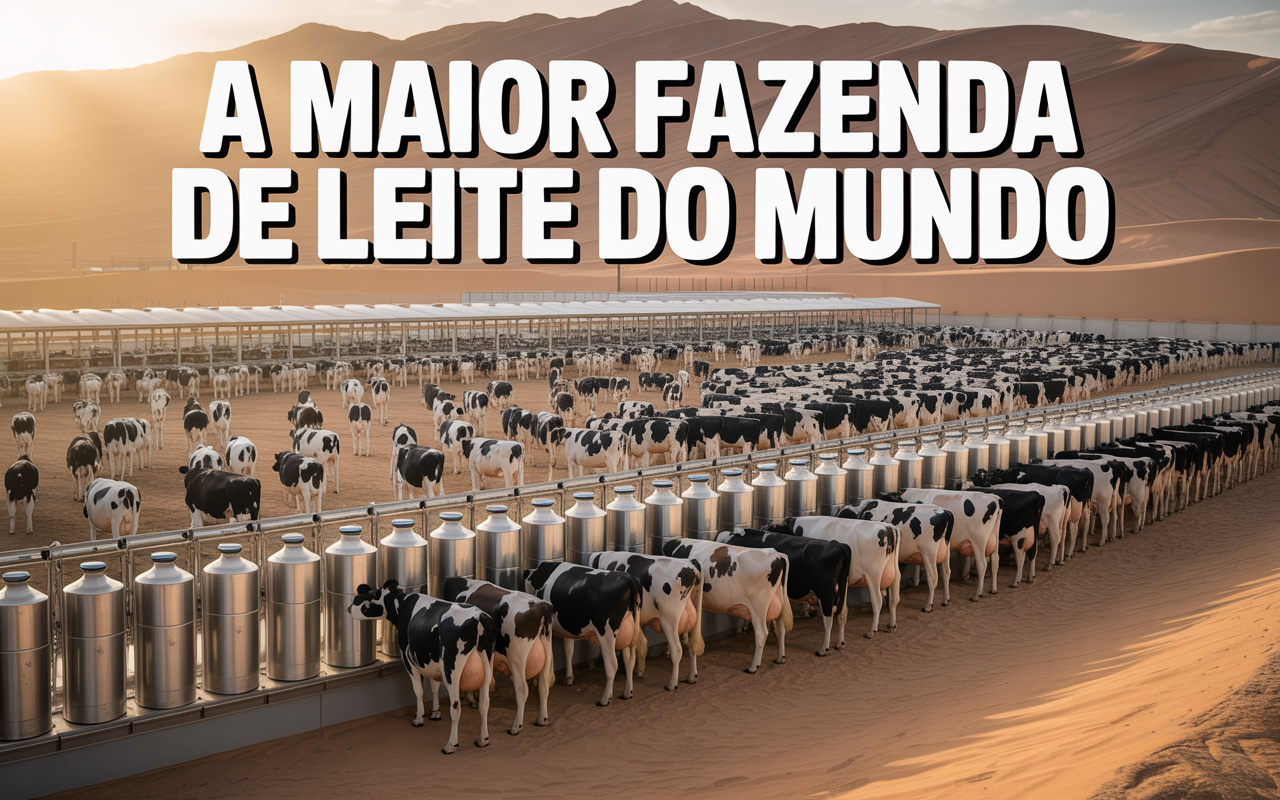


With 50,000 Cows and 170 Million Liters Per Year, Al Safi Farm in Saudi Arabia Is the Largest in the World and a Symbol of Self-Sufficiency in the Desert.
Amid the arid desert of Saudi Arabia, where temperatures often exceed 45 °C, stands one of the greatest achievements of modern agricultural engineering: Al Safi Dairy Farm. Officially recognized as the largest integrated dairy farm in the world, it houses around 50,000 Holstein cows, responsible for an impressive production of 170 million liters of milk per year. The scale is so monumental that the complex operates as a true self-sufficient city in the heart of the desert, with its own energy, irrigation, industrial processing, and logistics systems.
Located in Al-Kharj, approximately 100 kilometers from Riyadh, the farm belongs to Almarai Company, one of the largest dairy companies on the planet and an absolute leader in the Middle East. The story of Al Safi begins in the 1970s, when Saudi Prince Mohammed bin Abdullah Al Faisal dreamed of creating an operation capable of ensuring food self-sufficiency for a country dependent on imports. The result was a project that combined Western technology, cutting-edge cattle genetics, and irrigation solutions developed specifically for the desert climate.
Engineering and Technology at the Service of Milk
The scale of Al Safi is so vast that it demands a logistical structure comparable to that of a small city. The farm occupies hundreds of hectares and has a pressurized underground irrigation system fed by deep wells, providing water for both animal consumption and feed cultivation.
-
Low-Demand Brazilian Beef Offal Gains Popularity Abroad: Indonesia Purchases $19.5 Million, Boosting Revenue and Reducing Waste

-
Soy Expansion in Former Brazilian Savanna Sparks Water and Land Conflicts in Major Agricultural Frontier
-
Mexican Pest Threatens U.S. Cattle Herds at Historic Lows, Potentially Boosting Brazilian Beef Exports as Burger Prices Soar

-
Avocado Boom for European and U.S. Markets Fuels Water Crisis in Drought-Stricken Chilean Region


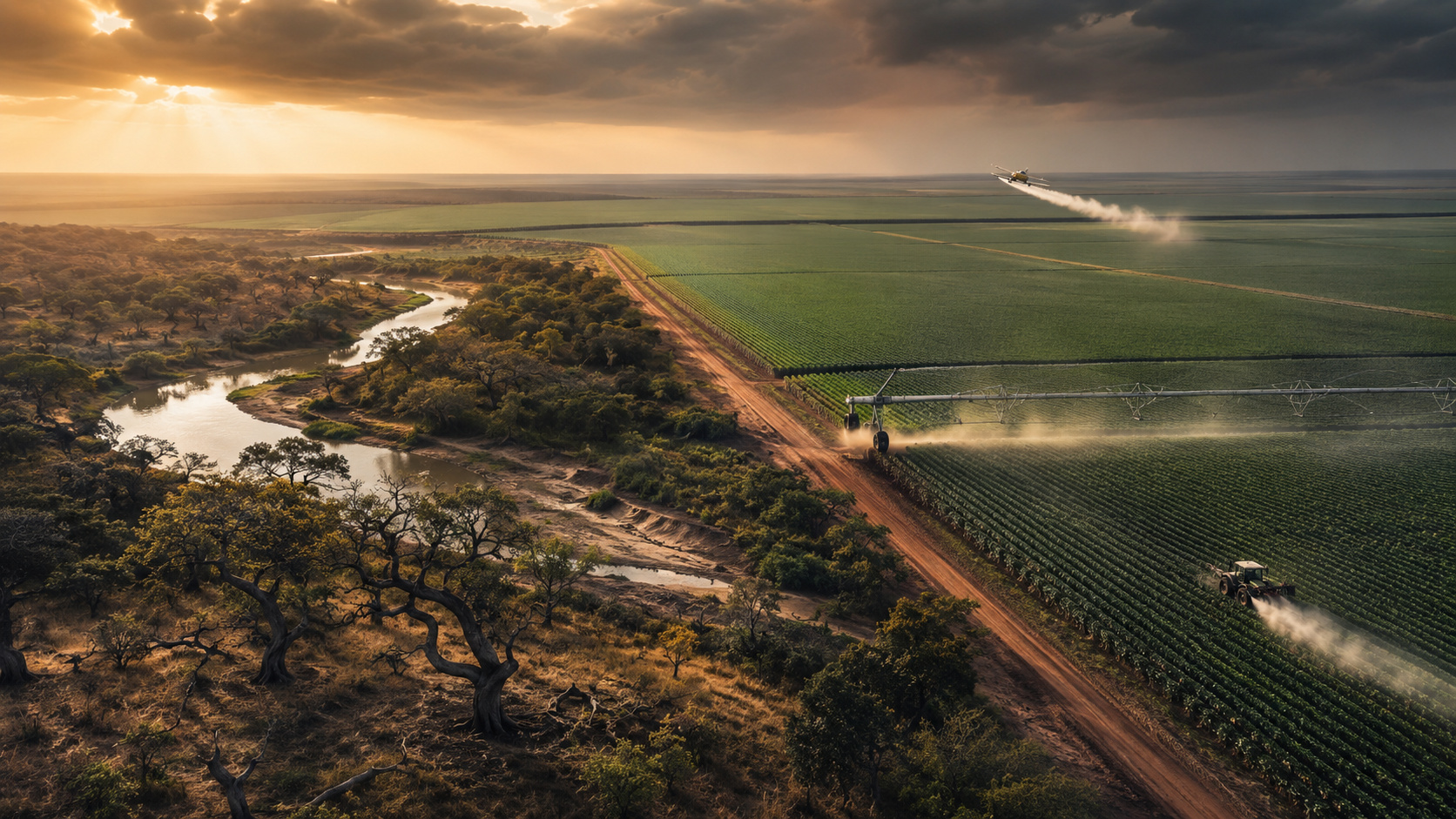


All feed production is internal—the farm grows forages such as alfalfa, corn, and barley in designated areas, ensuring total control over the herd’s diet.

The cows live in climate-controlled barns equipped with automated ventilation and mist cooling systems, which reduce heat stress and maintain consistent milk production even during the hottest months.
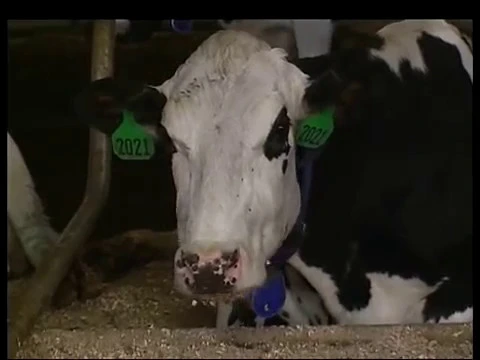
Each animal is monitored by individual sensors that record body temperature, food intake, and milk production, with data sent in real time to a control center.
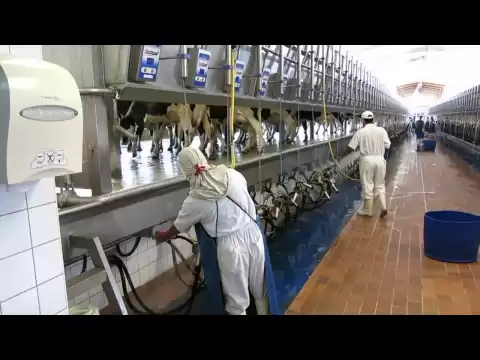
Milking is fully automated, operating in continuous 24-hour shifts, allowing thousands of cows to be milked simultaneously.
An Agro-Industrial Empire in the Desert
The milk produced by Al Safi does not leave the farm raw: the complex has an integrated industrial plant that processes, pasteurizes, and packages the product on-site.
This industrial structure is part of the “farm-to-shelf” model, where production, processing, and distribution occur within the same controlled ecosystem.
The factory processes not only fluid milk but also yogurts, cheeses, and dairy products that supply supermarkets across the Arabian Peninsula.
The company’s logistics fleet is another spectacle in itself. Hundreds of refrigerated trucks depart daily to the main Saudi cities, maintaining a continuous cold chain in the heart of the desert. This level of efficiency is rare even in temperate climate countries and represents a milestone for agro-industry in the Middle East.
Comparisons and Global Impact
Al Safi surpasses in scale any similar operation on other continents. Even giants like Bengbu Farm from Modern Dairy in China—with around 38,000 cattle—or intensive production complexes in Australia and New Zealand, fall short of the size and integration of the Saudi structure.
In terms of annual volume, Al Safi’s production would be sufficient to provide more than 460,000 liters of milk per day, enough to supply a city of 2 million inhabitants.
Furthermore, the Saudi self-sufficiency model has inspired other arid countries to invest in agro-industrial technology.
The United Arab Emirates and Qatar, for example, began replicating Al Safi’s model after the 2017 embargo, when regional isolation exposed the need to reduce external food dependence.
Sustainability Amid Scarcity
Despite its grandeur, Al Safi’s operation faces the constant challenge of water resource management. Each cow consumes between 100 and 150 liters of water per day, representing daily consumption in the millions of liters.
To reduce environmental impact, the farm employs closed-loop recirculation systems, waste reuse, and precision irrigation controlled by soil moisture sensors. Part of the energy used comes from solar panels and a biogas plant fed by the organic waste from the herd.
These measures place Al Safi among the most energy and environmentally efficient operations in arid regions, and the project is frequently cited by the FAO (Food and Agriculture Organization) as an example of technology applied to food security in extreme climates.
The Symbol of Saudi Food Self-Sufficiency
More than a farm, Al Safi represents the effort of an entire nation to transform desert into productivity.
Saudi Arabia, a country that imported almost all the milk consumed until the 1970s, now exports part of its production to neighbors like Bahrain, Oman, and Kuwait. The complex is a source of national pride and a symbol of innovation capacity in the agro-industrial sector.
The aerial image of Al Safi is impressive: symmetrical barns stretch for miles, forming a true “white and green mosaic” amid the golden sand. It is a scene that encapsulates the economic and technological power of a monarchy that has turned oil into food—and desert into prosperity.





I loved as much as you will receive carried out right here The sketch is attractive your authored material stylish nonetheless you command get got an impatience over that you wish be delivering the following unwell unquestionably come more formerly again since exactly the same nearly a lot often inside case you shield this hike