






 Portuguese
  Spanish
  7 min of reading
  0 comments


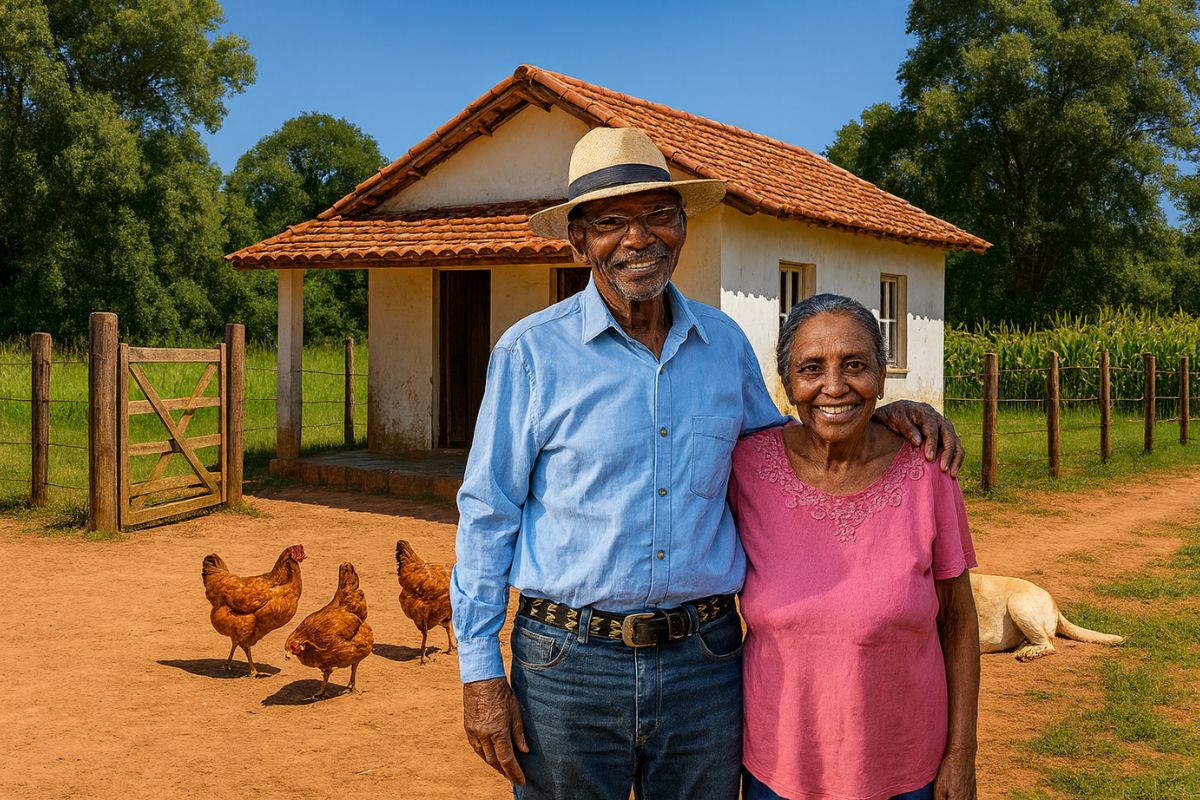
While Many Young People Complain Of Fatigue, A Simple Man From The Country Keeps Waking Up Early, Making Rapadura, Taking Care Of Chickens, Planting, Walking Around The Farm And Thanking God, Next To His Wife, After More Than Six Decades Of Marriage, In A Hard, Serene Routine Filled With Stories To Enchant Brazil.
The 91-year-old man who became a legend in the countryside is not in history books or on monument plaques. He is there, in the yard, in the garden, in the sugarcane mill, going up and down stairs several times a day, taking care of chickens, sugarcane, firewood, and rapadura, as if time had decided to walk more slowly at the door of his clay house.
While many people in the city talk about fatigue, lack of energy, and a hectic life, this man follows his own pace: he wakes up early, checks the weather, looks after the livestock, thanks God, chats with his wife, and organizes the day. In the countryside, he has become a living reference of work, discipline, and simplicity, surrounded by his grandchildren and the routine he helped build over nearly a century.
A Man Who Did Not Stop Working At 91 Years Old

At an age when many imagine complete rest, this man from the countryside still speaks about work naturally.
-
Egypt wants to divert 10 million m³ of Nile water per day, equivalent to 4,000 Olympic swimming pools, to build a glass city in the desert and irrigate 2.28 million acres, in a project that attempts to push life out of the country’s most contested valley.

-
Brazilian military personnel spend weeks in extreme training in the Amazon and receive a badge reserved for Jungle Warriors during the celebration of the 60th anniversary of one of the most demanding and respected courses in the world.

-
After the divorce, a woman spent four years building a studio apartment with skylights, mirrors, a bathtub hidden under the sofa, and family mementos for a fresh start.

-
The “Rei do Bolão” of Fortaleza made 100 people millionaires at once in the Mega-Sena: the lottery office in Aldeota divided R$ 168 million in a pool and delivers a bet from São Paulo to Dubai.




He no longer faces the weight he used to when he was young, but he continues to chop wood, use a chainsaw, handle a brush cutter, cut wood, care for the sugarcane, and climb a tall ladder, more than fifty times a day, without drama and without victimization.

He himself admits that his body no longer responds like before, that he cannot lift heavy loads like in the past. However, instead of giving up, he adjusted his pace.
On days when his body aches, the man rests. On days when he feels better, he “takes on work until it hurts,” as he has learned throughout his life. The logic is simple: if he stops completely, he rusts.
For many, seeing a 91-year-old man going up and down stairs with ease is astonishing. For him, it’s just another normal day in the countryside.
The secret he repeats lies in a tripod that accompanies his story: constant work, simple food, and faith without showiness.
Hard Childhood, Strict Upbringing And Absolute Respect For Parents

The story of this man begins in a time when childhood in the countryside meant early responsibility. His mother had twelve children, but only four survived to adulthood. He is the youngest among them.
From a young age, he saw that “many were born, but many died” due to lack of treatment and medicine. What saved many children was garden tea, faith, and resilience.
The upbringing was strict. He remembers that when visitors arrived, the children stayed quietly in the corner, speaking softly and not interrupting adults.
It was enough for his father or mother to call out their name in a firm voice for the message to be understood, without repetition, speech, or negotiation. If a sibling misbehaved, often “everyone would get punished together,” because the lesson was clear: collective responsibility, respect, and limits.
Today, the man observes the generational difference. He mentions that he hears children respond “I won’t” to their parents, something that was unthinkable in his time. He doesn’t speak with anger, but with serene astonishment as he compares two worlds.
He did not have formal education, having attended school for only “eight days” and learned very little to sign his own name. Yet, he claims to have gained something that no college can deliver ready-made: a vast repertoire of practical knowledge, intuition, understanding of people, and life experience.
Rapadura, Sugarcane Mill And The Tradition That The Man Refuses To Let Die
Even retired, this 91-year-old man remains connected to rapadura as if it were an extension of his own story. The sugarcane mill has been with him for decades.
He remembers the times when the horse turned the old mill and the effort it took to produce hundreds of rapaduras a week, with a large team, heavy firewood, and thick sugarcane coming from the farm.
Today the pace has slowed, but the tradition remains. He wakes up at dawn to grind sugarcane, stirs the pot, and checks the point of the rapadura just by looking at the syrup, without needing a test in a glass of water.
He says that many people check in cold water, but he already knows if the point is right by its consistency and shine. He makes milk, pumpkin, peanut, and other flavored rapaduras, always prioritizing the most natural form possible.
The man also takes care of his own sugarcane field. He learns the sugarcane cycle, calculates the cuts, and knows how many years the plant can produce.
Even with less strength, he organizes the management to have quality raw material. Customers order rapadura in advance, people from other cities take the sweet home, and the name of this man has crossed borders in stories and videos recorded by his grandchildren.
For him, continuing to make rapadura is more than just a source of extra income. It is identity, it is root, it is the thread that connects the past of hard work to the current reality.
What sustains the tradition, however, is not just the technique, but his insistence on not letting the craft disappear.
Abundant Garden, Free-Range Animals And A Clay House That Preserves Time

On the small property, of a few acres, almost everything resonates with the idea of simple and well-lived life. The clay house, built by his father, has stood for about seventy years.
There he grew up, there he got married, there he established a routine with his wife, there he welcomes grandchildren, children, friends, and curious visitors who come to hear tales, buy rapadura, and see up close a way of living that rarely appears in advertisements.
The garden, cared for with affection by his wife, yields more vegetables than the couple can consume. They plant, harvest and distribute, because there’s no sense in letting it spoil.
Chickens peck freely, chicks run around the yard and are protected from hawks and other animals.
The diet complements the simplicity of the place: lots of vegetables, pork raised at home, pork fat instead of industrialized oil and little fuss.
Besides working the land, the man also had a strong phase of fishing and hunting. He recalls afternoons when he returned with several pounds of pike, days when he caught hundreds of minnows, stories of giant fish that nearly pulled the hook from the rod and made a friend turn into a fishing fanatic.
Today he avoids riverbanks, due to concern over dizziness and family worries, but he carries these stories as a treasure of memory.
A Man, A Wife And More Than 60 Years Of Partnership

Next to him is his wife, about 82 years old, companion of more than six decades of marriage. Together, they have a story of 62 or 63 years living in the same house, going through droughts, floods, government changes, price changes, technology changes, and world changes, always keeping the focus on work and respect.
She takes care of the kitchen, the garden, helps with the rapadura, welcomes guests, makes coffee fresh on the spot, and participates in the lives of their grandchildren and great-grandchildren.

They raised children in a time of little money and a lot of effort, went through the time of handwritten letters, and now see their daily lives appearing in internet videos recorded by their granddaughter and grandson living nearby.
This man who built a life in the countryside does not see himself as a hero. He speaks of his own story naturally, between a sip of coffee and a piece of rapadura.
He says he has already turned day into night, that he has worked to the limit, that today he respects his body’s signals more, but he cannot and does not want to abandon work completely.
From The Wood Stove To The Video On The Cell Phone: The Man Who Became Living Memory
The contrast between past and present appears in details. He recalls a time when taking a photograph was a rare and complicated event.
Today, a simple cell phone captures everything: the ladder he climbs, the mill that still works, the lamp saved for when the power goes out, the wood stove connected to the coil that heats the water for bathing, the firewood stacked, the yard full of chickens, the green garden.
While many talk about productivity only in spreadsheets, this man measures his day in simple tasks done with care: chopping sugarcane, gathering firewood, tending to animals, caring for the garden, organizing the mill, chatting with his grandchildren, welcoming guests, and telling stories.
He has no rush to become a symbol, but in practice, he has already transformed into something very much like it: a living memory of a rural Brazil that persists, where work, faith, family, and simplicity are still the foundation of life.
In the end, what impresses the most is not just the fact that a 91-year-old man still works. It is the way he faces it all: with gratitude, without complaining about what has passed, and with the willingness to continue as long as he has strength.
After learning about the story of this man and his wife, who continue steadfast in the countryside after more than six decades together, do you think a simple life is still a possible dream in today’s Brazil?







-

-

-

5 people reacted to this.