






 Portuguese
  Spanish


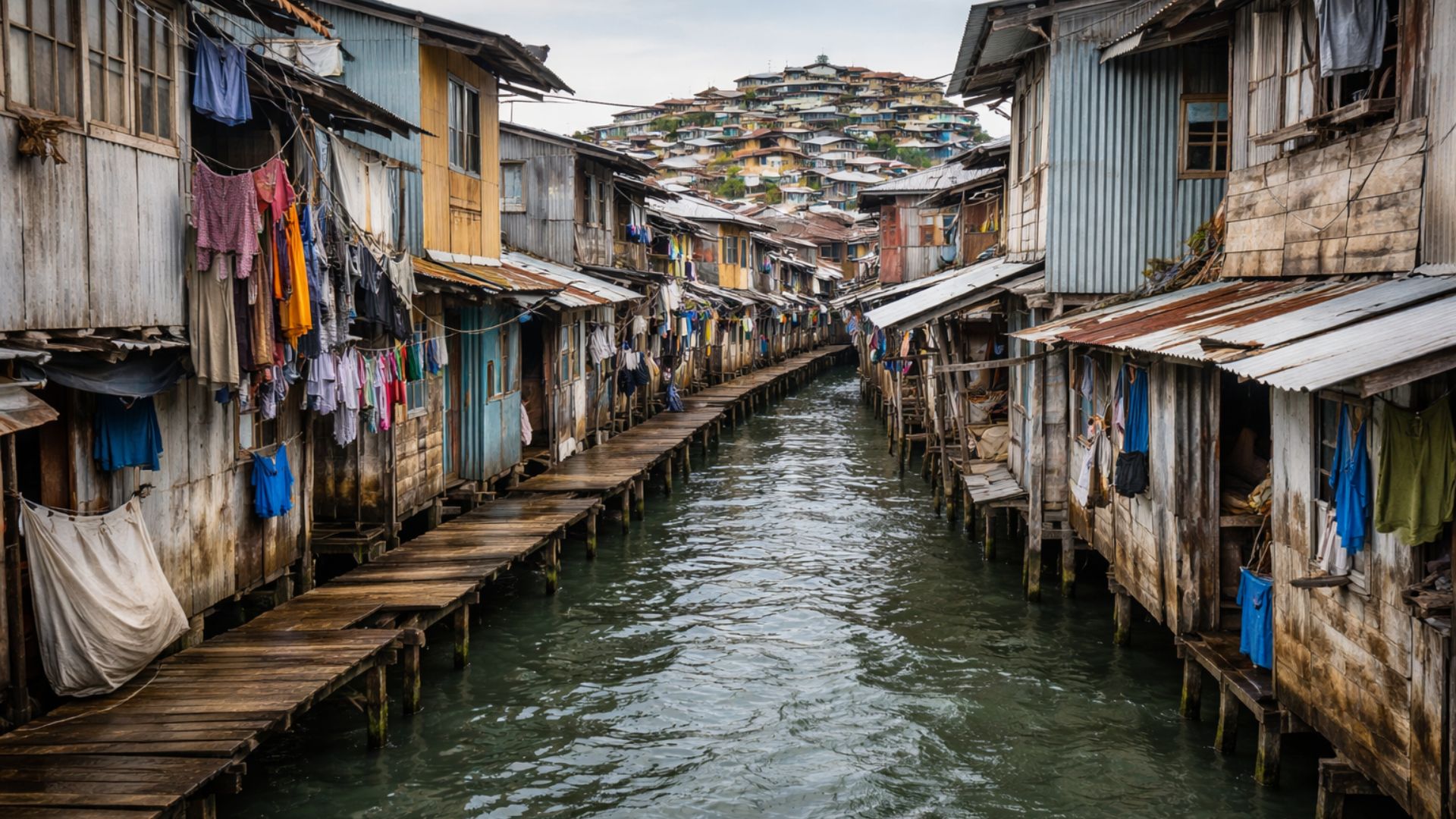


Water Advancing Through Doors During High Tide Transforms Pugad Island Into an Extreme Case of Human Adaptation, Where Housing, Local Economy, and Basic Services Coexist With Frequent Flooding and the Gradual Subsidence of the Soil in Manila Bay.
With water advancing through doors during high tide and turning streets into extensions of the sea, Pugad Island, in Manila Bay, has become an extreme example of how geographical and structural factors shape the daily lives of an entire community.
Administratively linked to the municipality of Hagonoy in the province of Bulacan, the island concentrates housing and small businesses in a limited space, where daily life occurs under the constant threat of flooding and gradual subsidence of the soil.
Compact Occupation and Limited Circulation
Viewed from above, Pugad appears as a compact block of adjoining roofs, narrow passages, and compressed common areas between houses.
-
Billionaire says the most valuable skill will help overcome job elimination caused by AI, following Bill Gates’ fears

-
A Dutchman created a ‘box’ that makes trees grow in the desert almost without water and without irrigation: the invention has already brought seedlings to dozens of countries and achieves up to 90% survival where common planting did not exceed 10%.

-
Abandoned warehouse hid a giant collection of rare computers, with over 2,000 artifacts from the 1930s to the 1980s.
-
Scientists warn that melting ice is triggering an alarming chemical transformation in preserved areas, and the first signs are already concerning researchers worldwide.




There are no conventional streets, just paths that, at certain times of the day, become partially submerged.
When the tide rises, circulation relies on elevated walkways, makeshift paths, and small boats, completely altering the dynamics of the place.
Flooding as a Part of Daily Life
The advance of water is not an occasional event but a part of the routine.
International reports have recorded residents removing water from inside their homes with buckets and simple containers, repeating the process whenever sea levels rise.
In an environment already limited by physical space and financial resources, the need to constantly manage flooding redefines the use of each room and imposes permanent adaptations to residences.

Direct Impact on Essential Services
The interference of the tide also affects essential services.
The local school, for instance, needs to adjust its schedule according to water level forecasts to reduce children’s exposure to recurring flooding.
The organization of daily life depends not only on commitments and work but also on the behavior of the sea, which dictates when it is possible to move safely around the island.
Improvised Strategies to Contain the Water
The most common response from residents to the advancing water is to <strong:elevate what is possible.
Houses built on stilts, elevated floors made from reused materials, and furniture positioned at higher levels have become frequent solutions.
Small traders improvise elevated counters to protect goods when water invades their spaces.
In outdoor areas, sandbags and temporary barriers attempt to hold back the tide, albeit only partially.
Soil Subsidence Aggravates Vulnerability
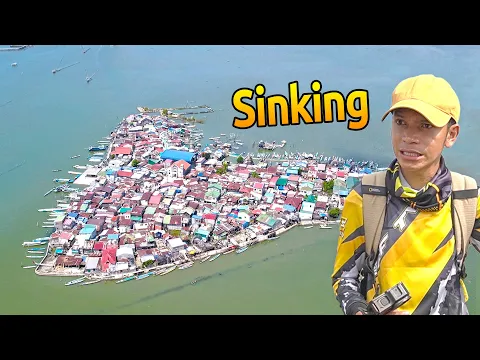

In addition to the rising sea level, Pugad faces a less visible but equally decisive problem: soil subsidence.
Studies cited by international outlets indicate that parts of the Bulacan province have high subsidence rates, a phenomenon associated with intensive groundwater extraction and sediment compaction.
In some areas, ground level drops by nearly 11 centimeters per year, a pace considered high for a densely populated coastal region.
Academic Data Confirms Subsidence
Researchers from the University of the Philippines in Diliman, based on monitoring analyses between 2014 and 2020, identified Bulacan as the area with the highest subsidence rate among various regions studied in the country.
According to the university, factors such as accelerated urbanization, excessive groundwater consumption, local geological characteristics, and natural compaction processes contribute to soil subsidence, increasing vulnerability to flooding.
Every Centimeter Makes a Difference on a Low Island
On a low island like Pugad, every centimeter lost from the ground makes a difference.
The lowering of the soil facilitates the infiltration of seawater into areas that previously remained dry and diminishes the effectiveness of elevations made by the residents themselves.
What was once a temporary solution now requires constant adjustments, creating a cycle of makeshift works and new flooding.
Regional Pressure and Intensive Resource Use
The regional context amplifies the challenge.
Bulacan houses residential and industrial zones that demand large volumes of water, according to academic assessments.

Even with official restrictions on groundwater extraction, in place for years in parts of the province, the accumulated effects continue to be felt, especially in areas close to the coast, where the tide already exerts continuous pressure on the territory.
Local Economy Limits Exit Alternatives
The economic dimension helps explain why many residents remain on the island.
Pugad is part of a region where fishing and activities related to the coastal environment support a large part of the population.
Leaving the area would mean breaking ties with work and income networks built over time, in addition to facing high costs to establish oneself in other areas.
For many families, the choice is not simply to stay or leave, but to try to adapt to an increasingly unstable scenario.
Official Recognition of Sea Advancement
Philippine environmental authorities have already publicly acknowledged that sea level rise affects various regions of the country, and official assessments indicate that this process may intensify.
In Pugad, these projections translate into water inside homes, redefined routines, and a constant effort to keep basic activities functioning in an increasingly vulnerable space.





