





 Portuguese
  English
  Spanish
  3 min of reading
  0 comments


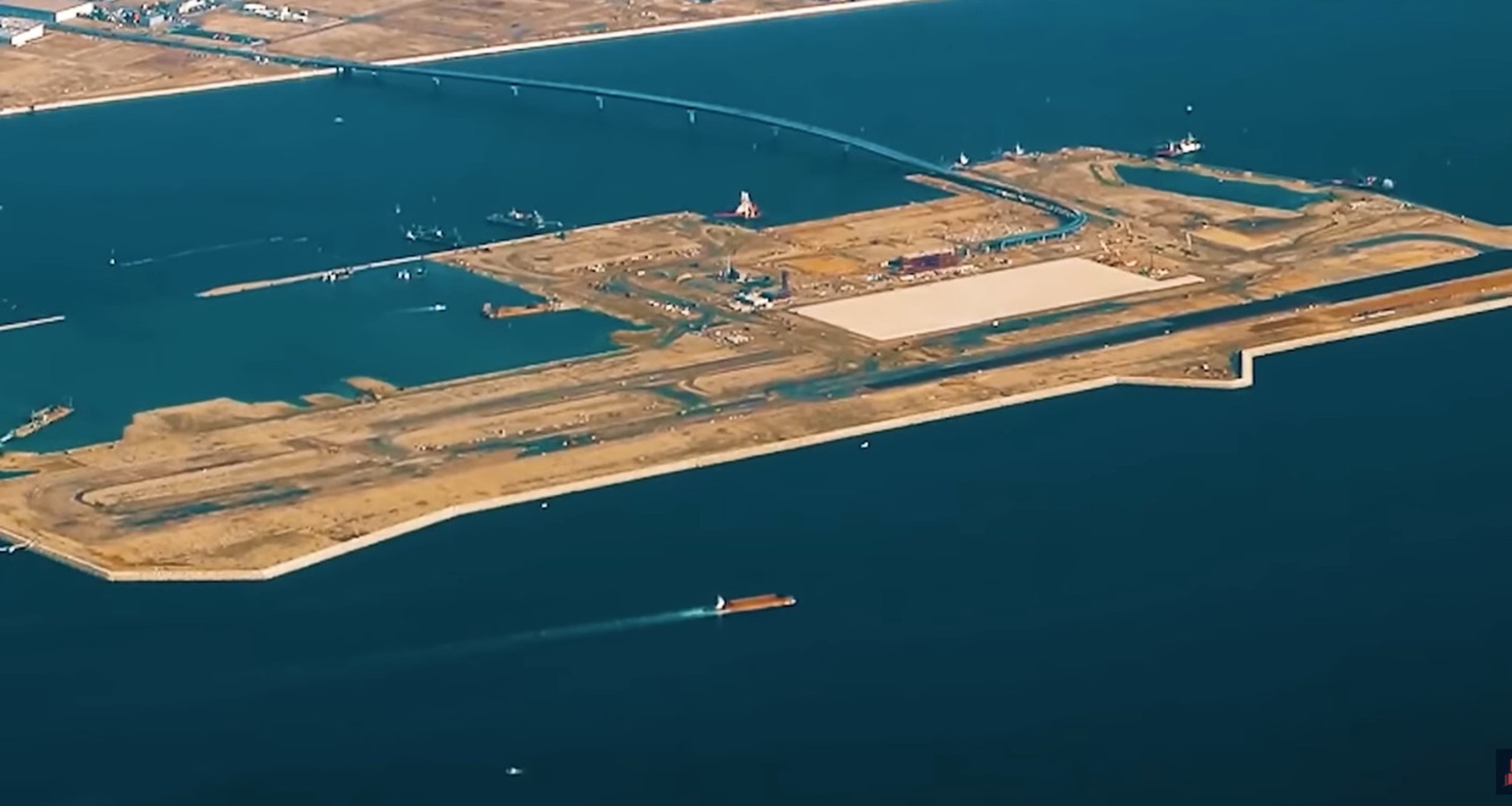
Kansai International Airport in Osaka: 10.68 Sq Km Artificial Island Built Since 1987 with Over 180 Million Cubic Meters of Rock, 1,700-Meter Terminal and 20 Billion Investment
Kansai International Airport in Osaka was built entirely on an artificial island of 10.68 sq km initiated in 1987, with over 180 million cubic meters of rock, a $20 billion investment and a 1,700-meter terminal.
Kansai International Airport Born as Solution to Overcrowding and Urban Restrictions
Kansai International Airport was the first on the planet built entirely on an artificial island.
The decision addressed the overcrowding of the old Itami Airport and local residents’ complaints about noise pollution.
-
The country records its first surplus in six months and hits an all-time export record, with oil and gold sharply rising, while the Middle East crisis triggers inflation in the United States and redraws the map of global energy trade.

-
Coinbase announces mass layoff of 700 employees, cuts 14% of staff amid AI wave and leads the crypto giant with operations in Brazil to a billion-dollar restructuring.

-
New import rule raises the quota to 50% in Dionísio Cerqueira, draws more trucks to the border with Argentina, and could unlock R$ 650 million in the Far West of SC
-
Social programs are shrinking in Brazil and reveal a curious fact in 2025: even at their lowest level since 2022, benefits still contribute to the income of 18 million households, demonstrating the silent strength of aid in family budgets and exposing a new portrait of social dependence in the country.


In Japan, expropriations face strong protests, making expansion in urban areas unviable.
Building in the sea allowed for 24-hour operations, away from residential areas, turning the airport into a vital hub for commerce and tourism.
The measure connected the Kansai region to the rest of the world, consolidating the airport as a logistical and strategic pillar for Osaka and surrounding areas.
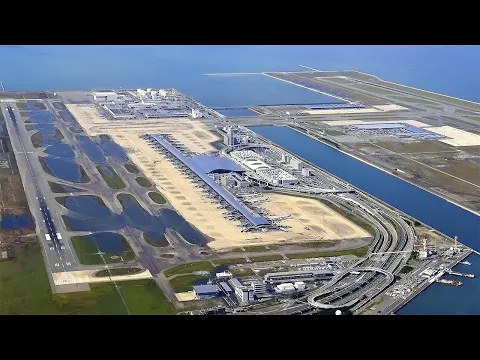

10.68 Sq Km Artificial Island Required Millions of Cubic Meters of Clay and Over 180 Million Cubic Meters of Rock
The construction of the island began in 1987 in Osaka Bay. The project required the extraction of millions of cubic meters of clay and the installation of sand columns to stabilize the seabed.
On this base, more than 180 million cubic meters of rock were deposited. The scale is considered massive, making the 10.68 sq km island visible from space.
The main terminal, designed by Renzo Piano, is 1,700 meters long, ranking among the largest and most modern passenger terminals in the world.
Structural System Faces Unstable Ground and Sinking with Millimeter Adjustment Solutions
The structural challenge involved unstable ground, sinking, and vibration. To stabilize the clay layer, sand columns and drainage systems were adopted.
To deal with sinking, hydraulic jacks installed in the columns allow for millimeter adjustments of the building’s level. This feature keeps Kansai International Airport level despite settlement.
Special expansion joints protect against earthquakes and winds, reinforcing structural safety in a maritime environment.
Sky Gate Bridge R of 3.7 Km is the Only Access and Vulnerable Point of the Structure
Access to Kansai International Airport occurs exclusively via Sky Gate Bridge R, a two-level bridge with over 3.7 km in length.
The upper level accommodates road vehicles, while the lower level houses the railway line connecting the island to the mainland. The bridge is described as a vital artery for operations.
In 2018, during Typhoon Jebi, a ship was hurled against the structure, isolating thousands of passengers on the island and exposing the risks of operating in extreme maritime environments.
Official Indicators Highlight 10.68 Sq Km Area, Connection to Shinkansen and Intense Movement
Official data from Kansai International Airport and the Visit Japan portal indicate an area of 10.68 sq km of artificial engineering.
Movement is described as one of the most intense in Asia. The complex was designed to withstand typhoons and tidal waves.
Access is directly connected to the Shinkansen bullet train network, reinforcing regional integration and the airport’s role as a gateway to cities such as Kyoto and Nara.
With information from BMC News.






-

-

-

-

-

-

37 people reacted to this.