






 Portuguese
  Spanish
  3 min of reading
  0 comments



With Over 650 Million Tons of Sugar Cane Processed Per Crop and Record Sugar Production, Brazil Houses the World’s Largest Sugar-Ethanol Complex, Driving Economy and Energy.
Brazil has again consolidated itself as the largest producer and exporter of cane sugar, cementing its status as an agro-energy powerhouse. In the 2023/24 crop year, the country processed over 654 million tons of sugarcane—a historic production record—and generated around 42.42 million tons of sugar, an increase of 25.7% compared to the previous cycle.
This monumental volume translates into industrial scale: the Brazilian sugar and ethanol sector already rivals energy complexes, operating with integrated plants that produce sugar, ethanol, and bioelectricity from bagasse. The diversity of products and logistical reach solidify Brazil as a national mega-production regime with global reach.
An Economic Engine that Fuels Exports
In 2024, raw sugar exports totaled around 38.24 million tons, representing a 9% jump compared to the previous year, according to Novacana data. This movement reinforces Brazil’s prominence in the external market, especially after restrictions imposed by countries like India.
-
Low-Demand Brazilian Beef Offal Gains Popularity Abroad: Indonesia Purchases $19.5 Million, Boosting Revenue and Reducing Waste

-
Soy Expansion in Former Brazilian Savanna Sparks Water and Land Conflicts in Major Agricultural Frontier
-
Mexican Pest Threatens U.S. Cattle Herds at Historic Lows, Potentially Boosting Brazilian Beef Exports as Burger Prices Soar

-
Avocado Boom for European and U.S. Markets Fuels Water Crisis in Drought-Stricken Chilean Region


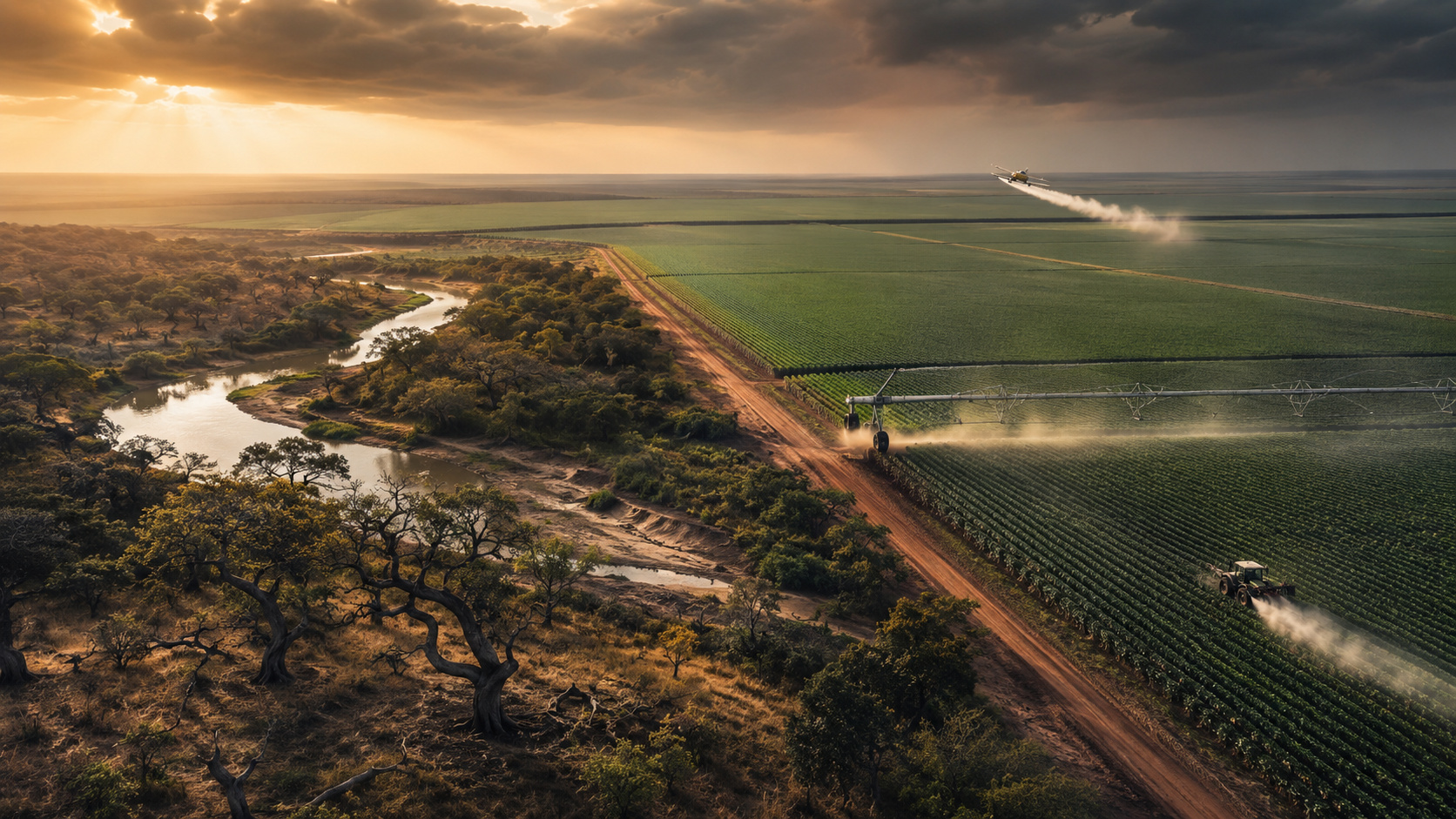


In financial terms, Brazil achieved billion-dollar revenues from sugar exports, establishing itself as a strategic global supplier. In 2024, raw exports exceeded US$ 8.69 billion, a record value for the segment.
Additionally, the country is on track to harvest around 663.4 million tons of sugarcane in the 2025/26 crop year, according to estimates from Conab for the cycle, showing that even with climatic challenges, the production base remains solid and expansive.
The Technological and Energy Integration of the Sector
The Brazilian sugarcane agribusiness is a model of integrated efficiency: from autonomous harvesters to moisture monitoring sensors and ATR (Recoverable Total Sugar) index, everything converges to optimize results.
The mills operate continuously, with cogeneration plants that convert bagasse and straw into electricity—providing energy for their own operations and even injecting excess into the local electricity grid.
This synergy between agricultural production and energy generation positions the Brazilian sugar and ethanol complex as an example of hybrid rural-energy industry.
Global Comparisons and Consolidated Domination
Although there are large sugarcane and sugar hubs in countries like India, Thailand, and Australia, none can rival the Brazilian national ecosystem, which combines territorial extension, favorable climatic conditions, streamlined logistics, and consolidated know-how.
Brazil’s share in the global sugar market exceeds 30%, being an absolute leader in the net export of the product. The relevance is strengthened not only in sugar itself but also in the production of cane ethanol, which supplies the domestic market and reduces reliance on fossil fuels.
Within this scenario, companies like Raízen, which processes large volumes of cane annually, reinforce national prominence with integrated operations of sugar, ethanol, and energy.
Climatic Challenges and Production Adjustments
Even with records, the sector faces challenges. The 2024/25 crop ended with an estimate of 676.96 million tons of cane, slightly lower than the previous one due to adverse climatic conditions.
In 2025, there is already a decline in productivity in the Southeast, with averages of 77.5 tons per hectare in August—a decrease of 1.65% compared to the same period in 2024. This could directly affect sugar and ethanol production in the following months.
Another point of attention is the ATR rate—an indicator of cane quality—which showed a regression in some regions, requiring fine adjustments in agricultural management.
The Agro-Industrial That Shapes Brazil
More than an agricultural culture, the Brazilian sugar and ethanol complex represents a continental-scale economic and logistical arrangement: silos, mills, thermal power plants, road fleets, and interconnected ports, all converging for export and domestic supply.
The sector also exerts strong socioeconomic influence: it employs tens of thousands of direct and indirect workers, drives supplier chains, and finances innovations in cane genetics, biotechnology, and sustainable processes.
In this sense, the title comparing it to a dairy farm is no exaggeration: Brazil operates one of the largest agricultural factories on the planet, whose main product—sugarcane—transforms into sugar, biofuel, and energy.
To understand Brazil’s future, just look at its sugarcane fields.





Be the first to react!