Portuguese
  Spanish


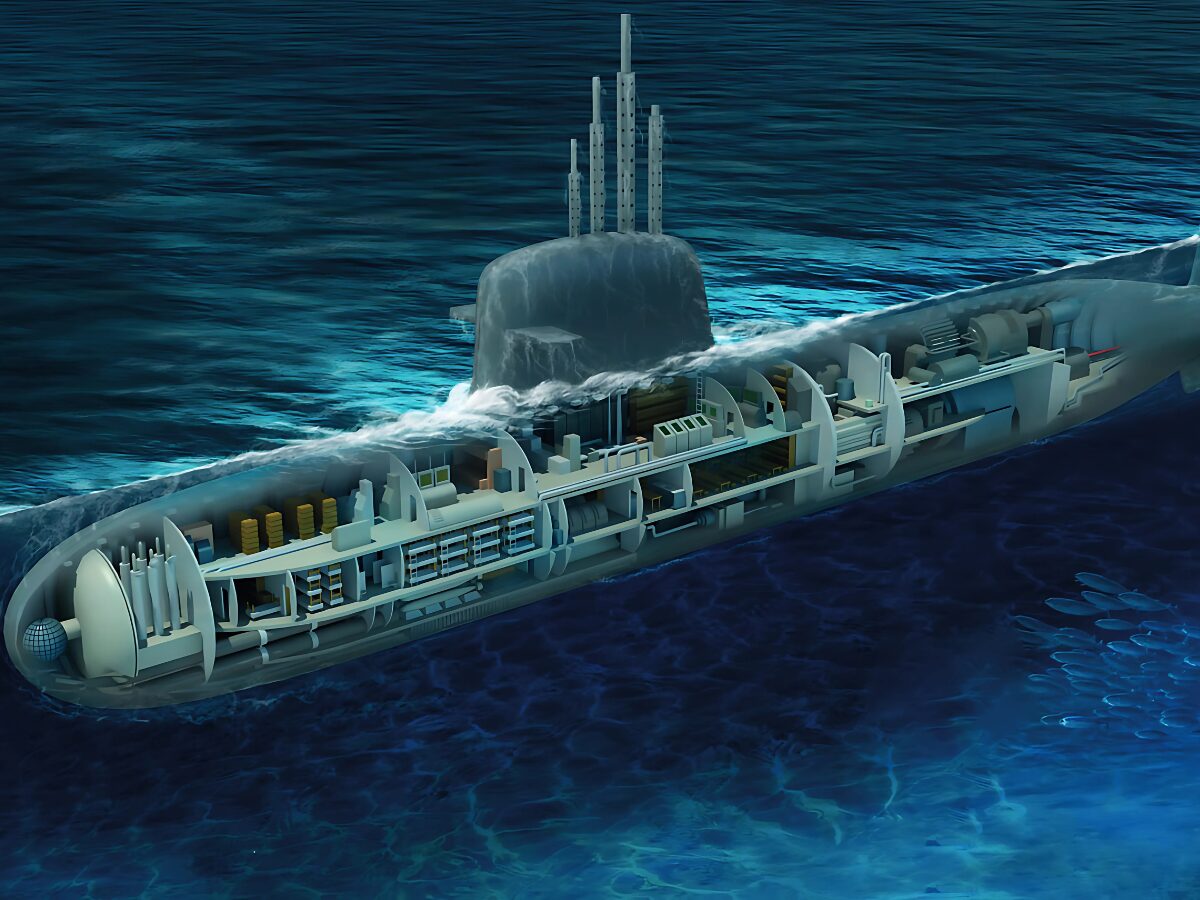


Discover How The Brazilian Nuclear Submarine SN-10 Admiral Álvaro Alberto Will Transform National Defense And Position Brazil Among The Largest Naval Powers In The World.
Brazil is making decisive progress in the military technological race with the construction of its first nuclear submarine, the SN-10 Admiral Álvaro Alberto. The project, led by the Brazilian Navy, is being developed at the ICN Shipyard in Itaguaí, in the state of Rio de Janeiro, and promises to position the country among the nations with the greatest strategic deterrence power in the world.
The submarine is expected to begin operations in the next decade, consolidating a historic turning point in national defense.
What Is The Brazilian Nuclear Submarine?
It is a warship with nuclear propulsion, capable of operating for up to seven years without refueling, submerging up to 350 meters deep, and launching cruise missiles with a range of 1,000 km.
-
The U.S. Navy Conducts Submarine Tests in Idaho Lake to Detect Underwater Noises Hidden by the Ocean

-
Nuclear Submarine USS Alexandria Retired After 35 Years, Having Completed Over 1 Million Miles in Missions

-
MODEC Introduces New Hull Design for FPSO Gato do Mato to Produce Up to 120,000 Barrels of Oil Per Day in Brazil’s Pre-Salt Region
-
This Massive 12-Meter, 21-Ton Underwater Drone Can Operate Autonomously for Up to Five Days


The SN-10 is part of the Submarine Development Program (Prosub), initiated in partnership with France in 2009.
With a displacement of 6,000 tons and over 100 meters in length, it will be the most robust ever built in the Southern Hemisphere.

Why Is The Brazilian Nuclear Submarine So Strategic?
The construction of the SN-10 marks a strategic turning point in South American naval power. Submarines with nuclear propulsion are considered the most powerful weapon in maritime environments due to their:
- Nearly Unlimited Autonomy
- Advanced Stealth
- Ability to Attack From Any Point in the Ocean
This combination makes the Brazilian submarine a key asset for national sovereignty and defense.
According to experts, a vessel with this profile can maintain a retaliatory capability even in the event of occupation of national territory.
Submarine SN-10 Admiral Álvaro Alberto: Weapons And Technologies
The arsenal of the Brazilian nuclear submarine is highly sophisticated and includes:
- 6 Torpedo and Missile Launch Tubes
- Capacity for 21 Weapons On Board
- Mines MFC-01, Produced in Brazil
- Anti-Ship Missile Mansup, Under National Development
- Submarine Cruise Missile AV-TM 300 (X-300), Naval Version of an Army Project
- Cruise Missile MDCN/Scalp, With a Range of Up To 1,000 km
- Anti-Ship Missiles Exocet SM39
- Next-Generation Torpedoes F21 (France)
These systems allow the SN-10 to strike critical infrastructure of potential adversaries directly from the sea, such as:
- Military Command Centers
- Hydroelectric Plants
- Strategic Industrial Facilities
- Nuclear Power Plants
The Origin Of The Technology: National Dominance With International Support
Brazil has mastered uranium enrichment technology since the 1980s, with the construction of the Angra 1 Nuclear Plant.
This knowledge enabled the development of a compact nuclear reactor, which will be used to power the submarine.
Experience in submarine construction began in the 1990s, with the S-31 Tamoio, manufactured at the Navy Arsenal in Rio de Janeiro.
Since then, the Navy has been investing in forming an elite submarine force, recognized for its efficiency in simulated warfare exercises.
Partnership With France And The Construction In Itaguaí
In 2009, an agreement was signed with France for technology transfer and the construction of five submarines:
- Four Diesel-Electric Propulsion, Riachuelo Class
- One Nuclear, the SN-10 Admiral Álvaro Alberto
This partnership resulted in the creation of a modern naval industrial complex in the municipality of Itaguaí, essential to ensure national autonomy in the construction of large military vessels.
Classes Of Nuclear Submarines In The World
To understand where the Brazilian submarine fits, see the main international classifications:
- SSN — Attack Submarine with Torpedoes
- SSGN — Attack Submarine with Cruise Missiles (SN-10 Category)
- SSBN — Submarine with Intercontinental Ballistic Missiles
The SN-10 will be classified as SSGN, focused on precision attacks against strategic targets on land and at sea.
Comparison With French Classes
The Brazilian nuclear submarine will be based on the Barracuda class of the French Navy. See how it compares:
| Class | Type | Displacement | Main Armament |
| Rubis | Conventional Attack | 2,500 t | Torpedoes |
| Barracuda | Cruise Missiles | 5,300 t | Torpedoes + MDCN Missiles |
| Álvaro Alberto | Cruise Missiles | 6,000 t | Missiles, Torpedoes, and Mines |
| Triomphant | Ballistic Missiles | 14,000 t | Nuclear Warheads |
The Future Of Brazilian Naval Defense
With the launch of the SN-10, Brazil joins a select group of countries with full maritime deterrence capability.
The nuclear submarine represents not only a military achievement but also a symbol of technological autonomy and international power projection.
Moreover, it strengthens Brazil’s position as a strategic leader in South America, providing a concrete response to any threat to its sovereignty.
With information from Sociedade Militar