Portuguese
  Spanish


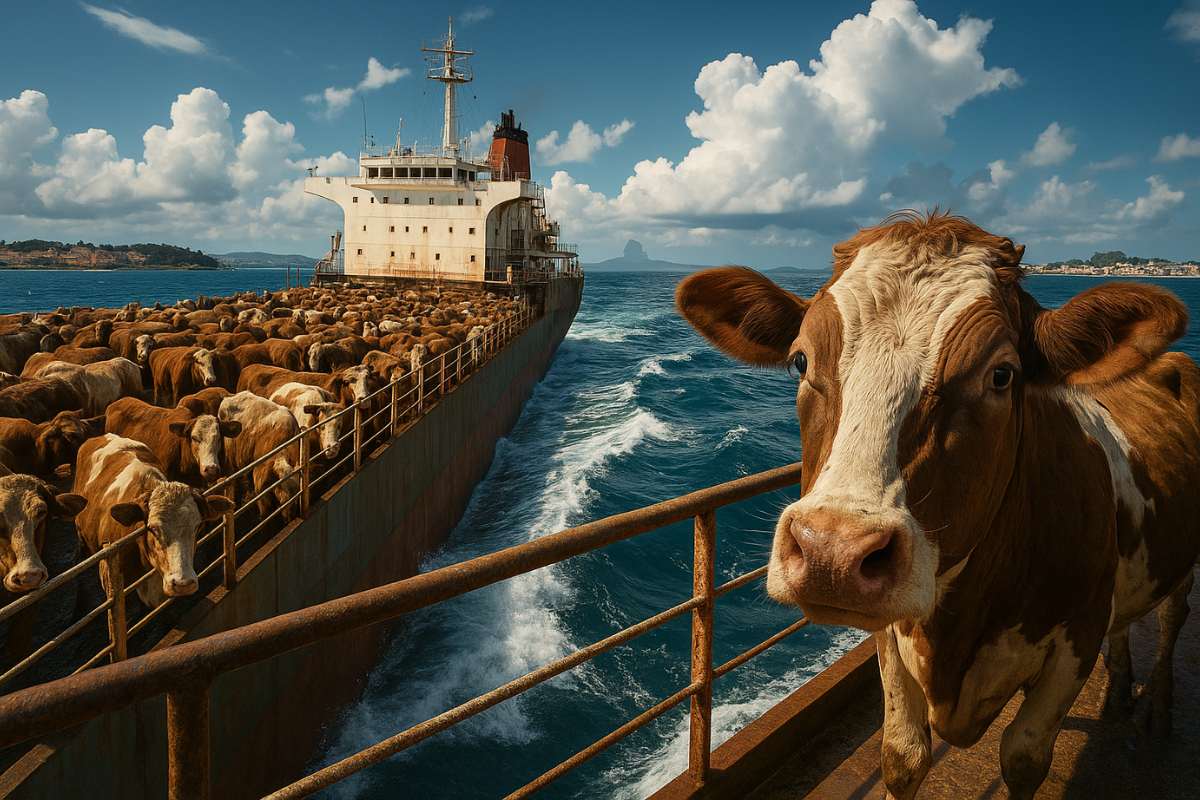


With Almost 3,000 Cows Trapped Without Food and Water on an Old Ship Wandering the Mediterranean for Months, Activists Warn of Serious Failures, Risk of Mass Deaths, Abortions, Fragile Calves, and Growing Pressure on Europe and Uruguay to Avoid an Announced Death Trip Exposed Worldwide Today.
Nearly 3,000 cows trapped without food and sufficient water are living an emergency routine aboard the cargo ship Spiridon II, an old vessel that left Montevideo in September, sat for weeks off the coast of Turkey, and is now trying to return to Uruguay by crossing the Mediterranean again. Onboard, the scenario described by animal protection entities is one of overcrowding, heat, lack of proper ventilation, and continuous stress that threatens to turn the trip into a silent tragedy.
As the Spiridon II sails near the coast of Libya, animal welfare organizations warn that this may be the last chance to avoid a catastrophic outcome. Activists are urging European countries to allow the emergency disembarkation of the animals, stating that the vessel was not built for such a long journey and classify the return to Montevideo as a true “death trip,” especially for pregnant females and newborn calves.
How the Spiridon II Became Synonymous with Cows Trapped Without Food

The story began on September 19, when the Spiridon II left Montevideo carrying 2,901 animals destined for fattening and breeding in Turkey.
-
Study of Brazil’s Tietê River Finds 25 Pesticides in Water, Including Cancer-Linked Substance Near Source

-
Young Entrepreneur Expands from 50 to 1,400 Chickens, Proving “Happy Hens” Can Be a Viable Business
-
Small Farm in Brazil’s Minas Gerais Produces 403 Liters of Milk Daily, Sets Benchmark for Rural Producers
-
Man Revives 1930s Abandoned Trout Farm, Learns from Scratch, and Earns $1.1 Million Annually Selling Fish to Michelin-Starred Restaurants


After about a month of travel, the vessel arrived at the port of Bandirma but had disembarkation denied by Turkish authorities. The reason was bureaucratic and cruel in practice: hundreds of animals were without mandatory ear tags or electronic chips, which stalled the release of the entire cargo.
Without a quick solution to the impasse, the Spiridon II remained anchored for more than three weeks. During this time, onboard conditions worsened. The food planned for a standard journey began to run out, water had to be rationed, and the nearly 3,000 cows trapped without food began to depend on emergency measures to stay alive.
Animal welfare organizations reported overcrowding, ventilation problems, and rapid deterioration of hygiene, with a direct impact on the health of the herd.
Overcrowding, Pregnancy, and Calves Being Born at Sea

Half of the herd consists of pregnant females, which makes the situation even more dramatic. In a tight, hot, and unhygienic environment, abortions are considered practically inevitable by veterinarians monitoring the case from afar.
More than 140 calves have already been born on board, but the chance of survival for these animals is low given the lack of proper facilities for birth, rest, and basic care.
As the cows trapped without food in adequate quantities fight for space, the newborn calves face a gauntlet of risks: slippery floors, accumulated waste, poor ventilation, and lack of specialized veterinary support.
Activists warn that, on such long journeys, the fragility of the newborns combined with the exhaustion of the mothers increases mortality and opens the door to diseases that can spread rapidly within the ship.
Structural Failures and Risk of a Death Trip
The Spiridon II, built in 1973 and registered under the Togolese flag, has already accumulated more than 80 technical deficiencies in previous inspections.
Animal protection organizations claim that the ship operates on the edge, with failures ranging from structural problems to safety and hygiene issues, completely incompatible with such a long transport of live animals.
Even after an emergency stop to replenish water and feed, the evaluation by independent entities is harsh: there are no guarantees that the supplies will be enough to ensure the survival of nearly 3,000 cows trapped without adequate food and under extreme stress until arrival in Uruguay.
Initial estimates already indicate dozens of deaths onboard, and the fear is that the bodies will be thrown overboard, creating an environmental impact that is difficult to monitor.
Exhausted Crew, Little Training, and Ocean Full of Uncertainties
The crisis affects not only the animals. The crew also lives in precarious conditions, on an old ship, with limited structure and enormous responsibility over thousands of lives.
Reports indicate that workers do not have specific training to deal with severely ill or intensely suffering animals, much less in a scenario where there may be mass deaths within a few days.
Without a permanent veterinary team and with reduced resources, any failure has a chain effect. Ventilation problems, excessive heat, or delays in water supply can quickly turn into a sanitary crisis.
For the organizations monitoring the case, the fact that so many cows trapped without food are dependent on an overloaded crew highlights a systemic failure in the maritime export of live animals.
Pressure on Europe and Uruguay Increases with Every Nautical Mile Traveled
As the ship continues to sail in European waters, the Animal Welfare Foundation and other protection entities intensify public campaigns and petitions for any country to allow the emergency disembarkation of the herd.
The NGO claims that the window of opportunity is minimal and that every day at sea reduces the chances of survival for the animals that are still holding on.
On the other side, Uruguay is preparing to receive back the cargo that originally departed for Turkey. The expected arrival around mid-December is already described by activists as the final chapter of a “death trip.”
For them, it is no longer just about international cattle trade, but an ethical and logistical crisis that highlights the plight of cows trapped without adequate food in a system that prioritizes cargo over lives.
Animal protection entities emphasize that the Spiridon II case is not an isolated incident, but rather the most visible symptom of a transportation model based on long journeys with live animals.
International organizations advocate for a total ban on maritime export of animals, replacing such operations with alternatives that reduce suffering, such as the trade of already processed meat in the countries of origin.
For these groups, every new ship with cows trapped without sufficient food, limited water, and precarious structure represents an announced risk of humanitarian and environmental disaster.
The situation in the Mediterranean starkly exposes the clash between economic interests and the minimum requirements for animal welfare, opening a debate that should gain momentum in Europe, South America, and any country involved in this chain.
In light of all this, one question becomes impossible to ignore: do you think it still makes sense for the world to accept long maritime journeys with thousands of live animals onboard under such extreme conditions?