





 Portuguese
  English
  Spanish
  4 min of reading
  0 comments


Event In Beijing Gathers Humanoid Robots Playing Soccer On Their Own, With High-Precision Sensors And Decisions Guided By Advanced Artificial Intelligence.
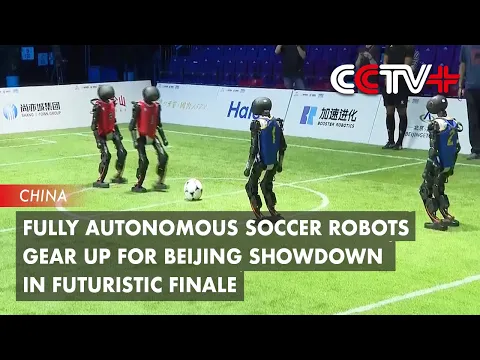
Beijing will be the stage for a historic match this weekend. Three against three. No referees, no coaches, and, most importantly, no human players. Autonomous humanoid robots will take the field on June 28 to compete in the final of the RoBoLeague World Robot Soccer League.
The event will take place in the Yizhuang Development Zone, in the Chinese capital.
This will be the world’s first match with robots playing soccer completely independently. They will walk, run, dribble, kick, and decide strategies in real time.
-
American company drills a 1,830-meter hole in Kansas using oil well technology, places a nuclear reactor inside, and claims it will generate electricity without any cooling tower.

-
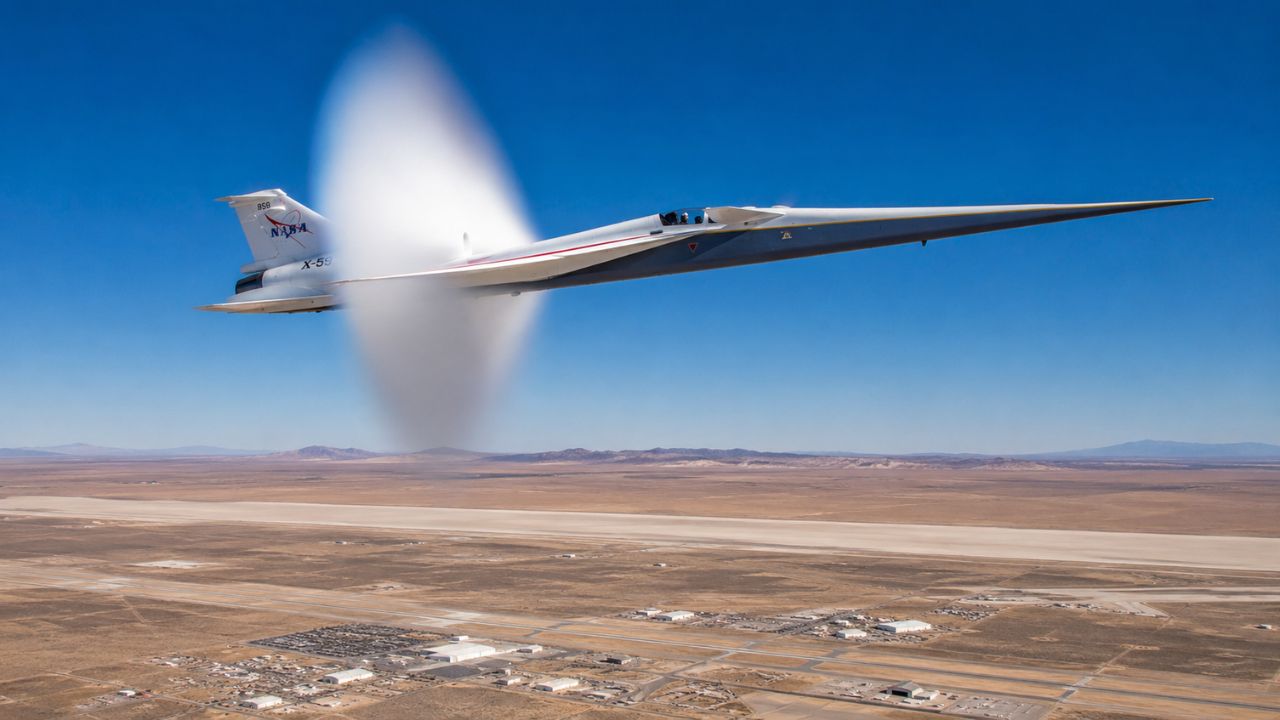
NASA breaks the sound barrier with the X-59 for the first time: jet reaches Mach 1.1, 713 mph, and 43,400 feet with technology designed to eliminate sonic booms.
-
Airbus removes the pilot from the cockpit and presents a drone version of the H145, a 3,800 kg autonomous helicopter designed to carry large loads, fight fires, monitor areas, and even launch drones in mid-flight.

-
Colombian creates a machine that mimics human lungs, captures CO₂, nitrogen dioxide, and sulfur dioxide from the air, and transforms pollution into biodegradable raw material for bags, packaging, and coatings.




All this without any human command. The confrontation is also a preview of the World Humanoid Robot Games, scheduled for 2025.
Game Between Smart Machines
Four Chinese teams advanced from the previous rounds and secured a spot in the final. The teams come from prominent universities, such as Tsinghua and Beijing University of Science and Technology.
Each team will have three players and one substitute. The match will be divided into two halves of 10 minutes, with a 5-minute break.
During the game, the robots move in a surprising manner. They walk with a slight wobble, but run, kick, and chase the ball quickly. They also make decisions in fractions of a second, always completely autonomously.
According to the Bastille Post Global portal, the robots are equipped with advanced camera and optical sensor systems.
They can detect the white ball from up to 20 meters away, with over 90% accuracy. They also identify field lines, goals, teammates, and opponents with precision.
Artificial Intelligence As Technique And Brain
The performance of the robots is the result of training based on deep reinforcement learning.
This means they learn by trial and error, adjusting their behavior over time. The technology allows robots to decide in real time whether to dribble, pass, or kick the ball.
Companies like Booster Robotics and universities like Tsinghua are behind the development of these machines. For the organizers, the event serves as a test for what is to come in 2025.
“The World Robot Soccer League will be the first test competition for the 2025 World Humanoid Robot Games… putting the endurance and agility of the participating robots to the test,” said Dou Jing, the tournament organizer, in an interview with the state broadcaster CCTV.

Beijing At The Center Of The Robotics Revolution
The Chinese capital is preparing to host the World Humanoid Robot Sports Games from August 15 to 17, 2025.
The event will bring together the most advanced robots on the planet in competitions that go far beyond soccer. There will be 11 competitions inspired by traditional sports, such as athletics, gymnastics, and synchronized dance.
According to CCTV, the events were planned by experts in sports and robotics. The goal is to test the robots’ motor coordination, agility, and decision-making ability.
Some events will measure the speed and balance of the competitors. Others, like small team soccer, will evaluate collective performance.
In addition to the sports, the games will also include practical challenges. The robots will need to simulate tasks in areas such as healthcare, hospitality, and logistics. Examples include medication sorting and concierge services.
More Robots And More Sports
The games’ schedule will also feature events with non-humanoid robots. They will compete in basketball, table tennis, and badminton matches. The inclusion of these robots will expand the event’s reach and attract more audience and attention.
Alongside the games, the 2025 World Robotics Conference will take place. From August 8 to 12, the event will celebrate its 10th edition, with over 200 participating companies and nearly 100 new products on display.
According to Chen Ying from the Chinese Institute of Electronics, the conference will receive support from 20 international organizations. The global presence reinforces China’s ambition to lead the robotics innovation sector.
The success of the robot half marathon in April served as a warm-up. Now, the fully autonomous soccer competition marks a new step. With machines making decisions on their own, the sport gains a new dimension.
The RoBoLeague final, with high-precision sensors and artificial intelligence at the helm, is just the beginning. In 2025, the World Humanoid Robot Games are expected to usher in a new era at the intersection of sports and technology.







Be the first to react!