






 Portuguese
  Spanish


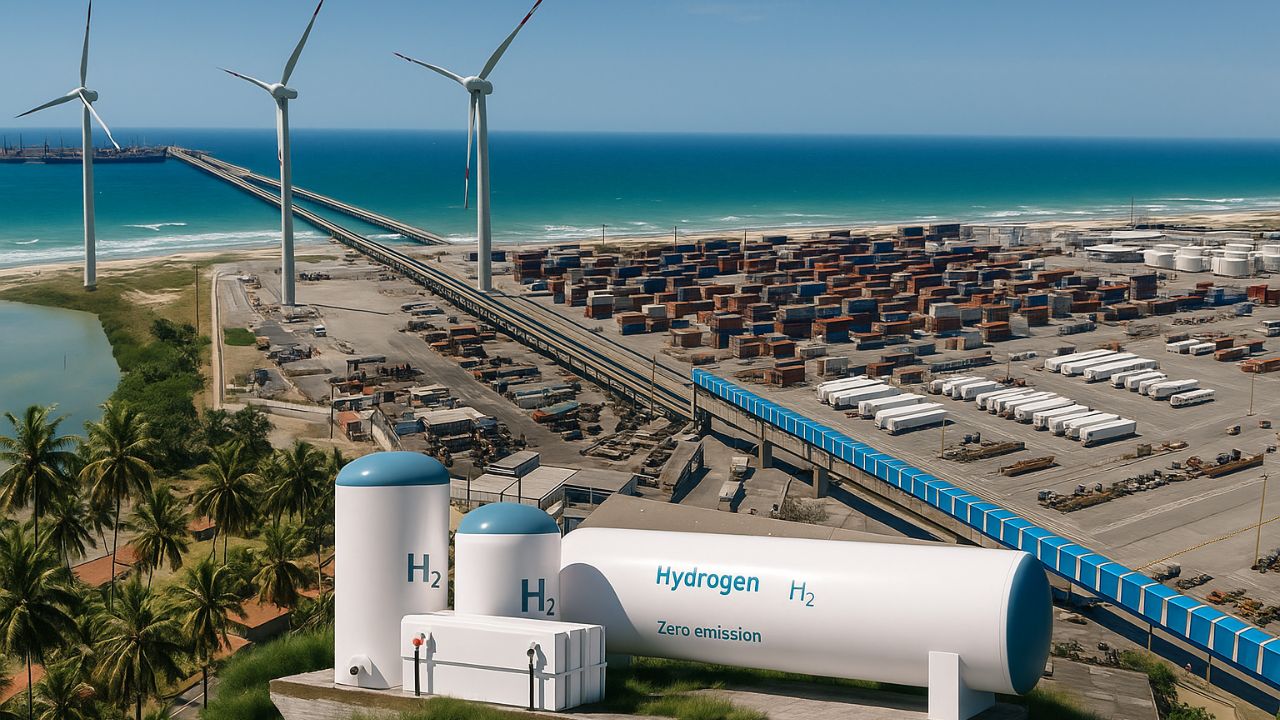

With consolidated investments exceeding US$ 24 billion, the Pecém Complex advances to become a global hub in clean energy production, with a strategic focus on exporting green hydrogen and ammonia to Europe and Asia.
The state of Ceará is at the center of an energy revolution. The region attracts billion-dollar investments to develop what is projected to be the hub of the largest green hydrogen plant in the world. The initiative, concentrated in the Pecém Industrial and Port Complex (CIPP), has evolved from a single project to a robust industrial ecosystem, attracting global giants and promising to transform the state’s economic and social matrix.
From a Unique Project to a Robust Industrial Hub for Clean Energy
Global attention turned to Ceará with the announcement of the “Base One” project. It anticipated the construction of the world’s largest H2V center, with the capacity to produce over 600,000 tons per year. The initial investment would be US$ 5.4 billion.
However, the strategy matured. The focus shifted from a single mega-project to fostering a diversified ecosystem. This approach, with multiple investors, increases resilience and the likelihood of success. The current narrative is not of a lost project, but of a strategy that has become more pragmatic and solid, focused on the production and export of green ammonia as an efficient energy vector.
-
France Revamps 530 Social Housing Units with Large Balconies and Glass Facades Without Demolishing Existing Buildings

-
10-Year-Old Max Makes History with Paris Fashion Show, Launches Own Brand, Hires Staff, and Sets World Record as Youngest Runway Designer

-
Bolivian Female Construction Workers Form Association to Combat Discrimination and 38% Pay Gap in the Industry
-
Near Amsterdam, residents buy land and discover they must also build streets, manage drainage, handle waste, and grow food on half their plot.




The Global Giants Driving Billion-Dollar Investment
The true progress of the Green Hydrogen Hub is measured by the pre-contracts signed. These binding agreements involve land reservation and signal real financial commitment. Currently, seven global companies lead this movement, with investments that already exceed US$ 24 billion.
Among the key players are:
- Fortescue: The Australian giant plans to invest between US$ 5 billion and US$ 6 billion. Its goal is to produce about 182,500 tons of green hydrogen per year.
- FRV (Fotowatio Renewable Ventures): With an investment of approximately US$ 5 billion, the Spanish company will focus on producing 1.6 million tons of green ammonia annually.
- Other Strategic Players: The list also includes Auren Energia (formerly AES Brasil), Cactus Energia Verde, the Norwegian Fuella AS, the French giant EDF, and the companies Casa dos Ventos and Voltalia.
The Strategic Advantages That Make Ceará an Energy Powerhouse
The success of the Ceará hub is based on three fundamental pillars. The first is the unmatched renewable energy potential. The state has exceptional conditions for generating wind and solar energy, with a combined potential that exceeds 850 GW.
The second pillar is the infrastructure of the Pecém Complex. The CIPP combines a deep-water port with a privileged location, the first Export Processing Zone (ZPE) in Brazil, and an integrated industrial area. This structure offers decisive logistical and tax advantages.
Finally, international partnerships are crucial. The agreement establishing a “Green Corridor” with the Port of Rotterdam, the largest in Europe, ensures optimized and secure access for Ceará’s products to the continent’s main consumer market.
Economic Impact: Projection of 80 Thousand Jobs and Jump in GDP
The implementation of the Green Hydrogen Hub is expected to be the largest catalyst for development in Ceará’s history. Studies project a 24.2% accumulated increase in the state’s Gross Domestic Product (GDP) during the construction phase (2025-2032).
Job creation is also significant. The hub has the potential to create up to 80,000 new direct and indirect jobs, doubling the number of jobs currently generated by the CIPP. Many of these positions are expected to be highly skilled, requiring significant workforce training efforts.
Challenges and the Path to Leadership in the Hydrogen Economy
To establish itself as the site of the largest green hydrogen plant in the world, Ceará needs to overcome critical challenges. The main bottleneck is the energy transmission infrastructure, which requires massive investments to support the unprecedented demand from projects.
Moreover, the establishment of a clear and stable national regulatory framework is essential to ensure the legal security needed for billion-dollar investments. Overcoming these obstacles, combined with the low cost of hydrogen production in Brazil, almost half the European average, will be crucial to position Ceará and the country as a dominant superpower in the clean energy economy of the 21st century.


