






 Portuguese
  Spanish


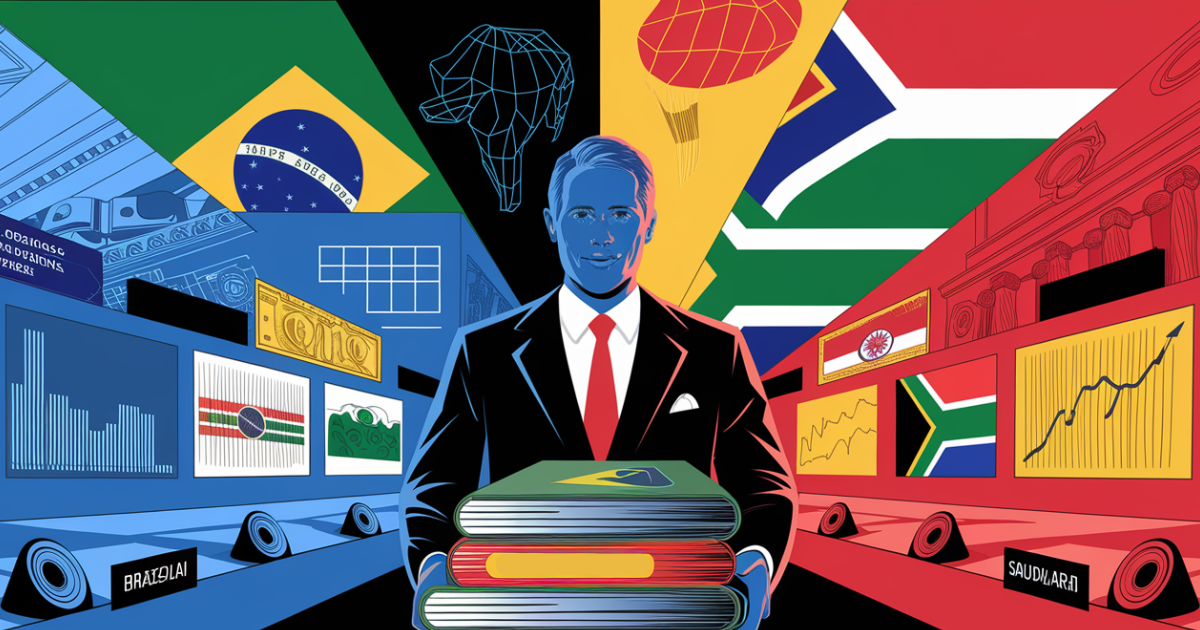


BRICS Is Changing The Rules Of The Global Economic Game. With The Inclusion Of New Members, The Block Challenges Dollar Hegemony And Promotes A Multipolar Financial Order, Putting Brazil In The Spotlight.
The world is witnessing an unprecedented economic transformation. Behind the scenes of a new financial order, a block of emerging countries is gaining prominence and shaking the foundations of the global system.
A question hangs in the air: Is it the end of dollar hegemony? At the epicenter of this movement is BRICS, a group formed by Brazil, Russia, India, China, and South Africa, which has recently expanded its influence by incorporating new nations such as Saudi Arabia, United Arab Emirates, and Iran.
With ambitious proposals such as dedollarization and strengthening local currencies, the block is shaping the future of international relations. But how far can BRICS go?
-
At 14 years old, she worked in a factory in Hong Kong, studied economics abroad, and then entered the Chinese real estate market, which helped change the landscape of Beijing.

-
While NATO secured more than $10 billion in missiles and space surveillance at a single forum, Brazil still spends 1.1% of its GDP on defense and is stalling its own anti-aircraft system.

-
Corn ethanol attracts R$ 23 billion in 21 new plants and prepares for a nearly 50% jump in Brazilian production by 2027, even with high interest rates.
-
A newly opened terminal in the middle of the Amazon has begun transporting soy and corn through Amapá, eyeing the queue of ships that is congesting the ports in the South.


The New BRICS: Historic Expansion And Challenges
BRICS, officially created in 2009, aimed to promote sustainable economic growth among its founding members: Brazil, Russia, India, and China. In 2010, South Africa joined the group, consolidating the name BRICS.
Starting in January 2024, new memberships expanded the block, including Saudi Arabia, United Arab Emirates, Iran, Egypt, Ethiopia, and Argentina (which later declined membership). This expansion has placed BRICS at the center of global discussions on economic governance.
Currently, BRICS members represent about 31.5% of global GDP and over 40% of the world population, according to CNN Brasil. This puts the group in a strategic position to challenge traditional institutions like the IMF and World Bank.
However, the diversity of interests among member countries still presents a significant obstacle to coordinating joint policies.
Dedollarization: The Boldest Movement Of BRICS
Among the most debated initiatives of BRICS is dedollarization, which seeks to reduce dependence on the US dollar in international trade.
Today, the dollar dominates about 88% of global transactions, according to the Bank for International Settlements (BIS).
This hegemony gives the United States disproportionate influence, allowing sanctions that deeply affect other nations.
In response, BRICS has encouraged the use of local currencies in bilateral transactions. For example, Brazil and China already use the yuan in a significant portion of their trade agreements, especially in the commodities sector.
Additionally, the New Development Bank (NDB), also known as the BRICS Bank, provides financing for infrastructure projects without relying solely on the dollar.
Dilma Rousseff, president of the NDB, stated during the Johannesburg summit in 2023: “We need a new global financial governance. The use of the dollar as a weapon is unacceptable.” Despite this, studies like the one from the Atlantic Council in June 2024 show that progress in dedollarization is still limited.
Brazil Center Stage
For Brazil, BRICS represents a chance to strengthen its global position and diversify its economic relations.
In 2023, China solidified its position as Brazil’s main trading partner, absorbing over US$ 70 billion in exports. This relationship has been vital for agribusiness and other sectors of the economy.
However, Brazil faces the challenge of balancing its participation in BRICS with its relations with the West. Robson Gonçalves, an economist from FGV, warns: “Being in BRICS does not mean antagonizing the West. Brazil needs to position itself as a diplomatic mediator.”
New Members: Strength Or Fragmentation?
The inclusion of countries like Saudi Arabia and Iran has brought robust economies into the block, particularly in the energy sector. However, the diversity of national agendas may complicate BRICS governance.
According to Roberto Dumas, a professor at Insper, the “success of the group will depend on its ability to align distinct interests.”
Geopolitics And The New Global Order
The BRICS also plays a crucial geopolitical role. Russia seeks to escape Western sanctions, while China uses the block to strengthen its Belt and Road initiative. Brazil, in turn, attempts to adopt a pacifist and multilateral foreign policy, seeking favorable bilateral agreements.
Future Of BRICS: Limitations And Possibilities
The future of BRICS will depend on its ability to overcome internal challenges such as economic inequalities and geopolitical tensions.
However, the opportunities are immense, including the development of an alternative to SWIFT and investment in technology.
Will BRICS be able to consolidate a new global economic order or will it be hindered by its own divergences?


É engraçado de ver as pessoas falando Brasil nação escravizada pelos EUA e nada verdade sempre foi escravizada pela esquerda e agora muito mais forte com Lula PT STF o povo sem caráter
Uma matéria que fala de um banco chamado Brics onde a presidenta é a Dilma 🤡 não é possível que tenha alguma vantagem ou benefícios para o país a não ser enganar e fooder tudo
Estados Unidos , ninguém merece , escravidão a todas as nações, é o que eles querem e fazem