Portuguese
  Spanish


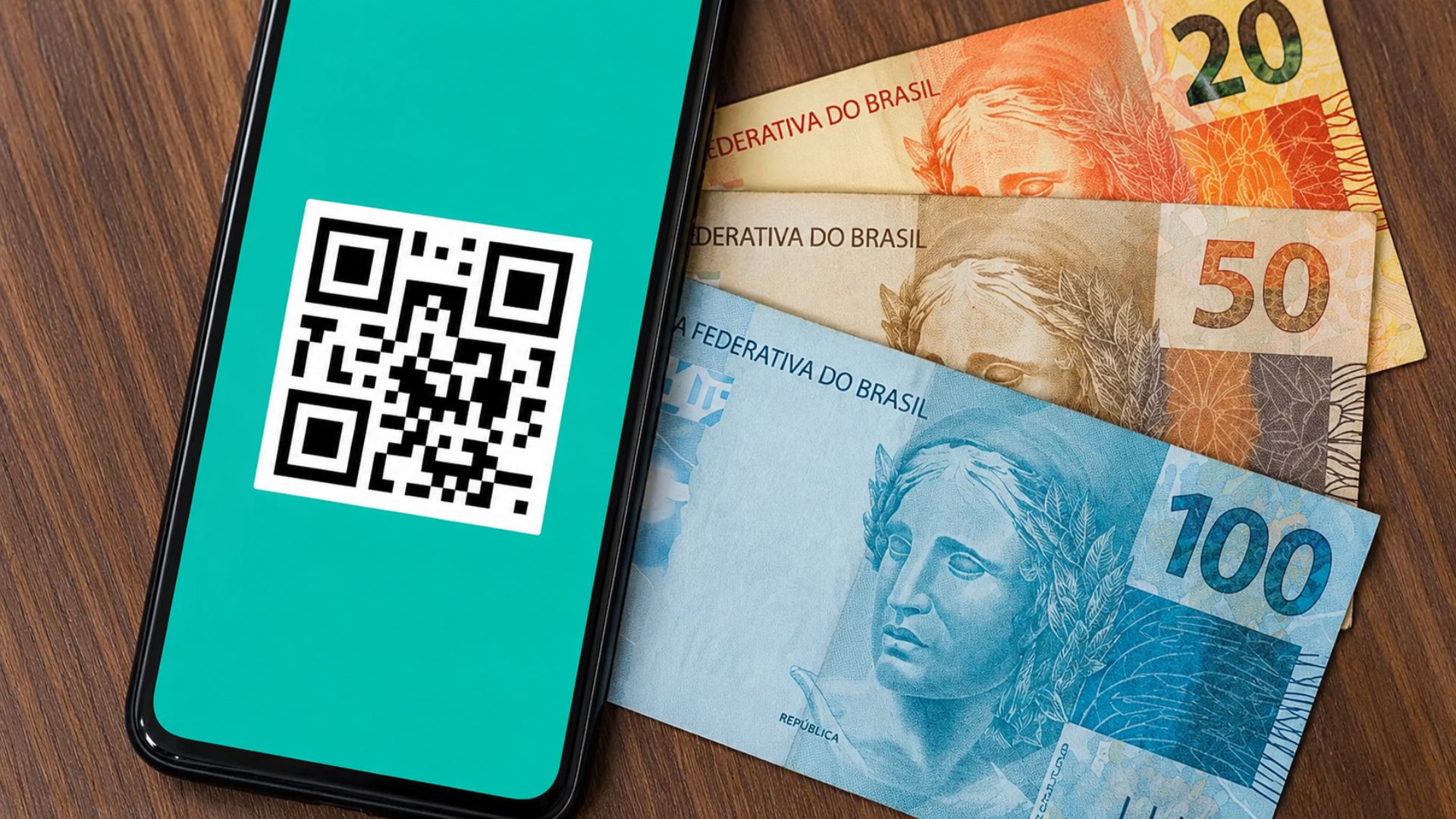

The Central Bank links the decline partly to Pix and electronic payments, but says the main factor is the exchange of worn-out banknotes. Issuance plummeted in 2021 and 2022 during the pandemic and then rose again, indicating that Pix only explains part of the movement.
Paper money is disappearing from Brazilians’ pockets, as the issuance of new banknotes fell by 31% from 2020 to 2025, amid the explosion of Pix, which became the most frequent payment method for 46% of the population, while cash plummeted from 42% to 22%. According to NSC Total, the Central Bank points to the rise of Pix and digital payments as one of the reasons for the reduction in the issuance of real banknotes.
However, the data needs context and cannot be attributed solely to Pix. According to the Central Bank, the issuance of new banknotes depends on the demand of the population and the need to replace notes that are no longer fit for circulation, and the reduced demand due to electronic means explains only part of the decline. The institution also considers that the pandemic affected issuance, with 2021 and 2022 among the years of lowest production in the period.
What Pix has to do with the issuance of banknotes
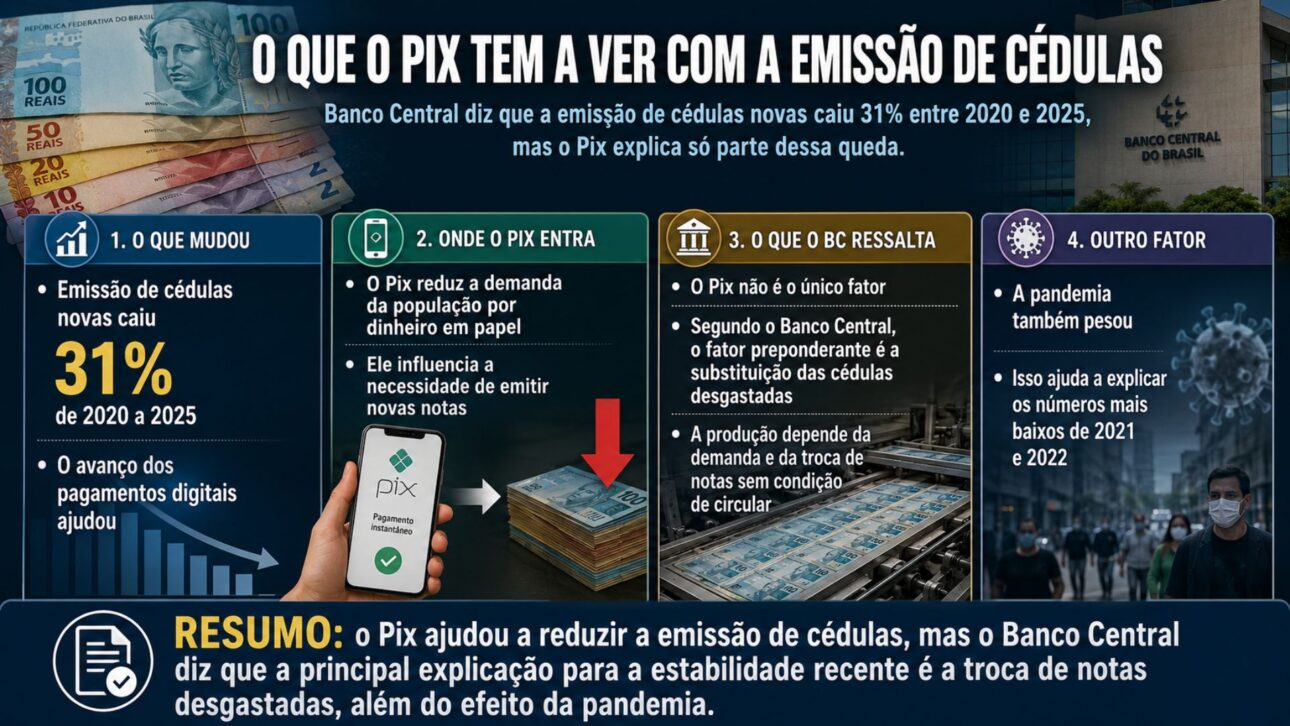
The advancement of digital payments is one of the factors, but not the only one. The Central Bank cites the rise of Pix as one of the reasons for the issuance of new banknotes to have fallen by 31% from 2020 to 2025. According to the institution, this production depends both on the demand of the population and the exchange of worn-out notes, and Pix only factors into the first part of this equation.
-
Brazilian Startup Turns Coffee Grounds into Plant-Based Leather, Cutting Water Use by Over 50 Times for High-Impact Sustainable Fashion

-
Eco Invest Auction Aims to Unlock $10 Billion in Investments, Focusing on Green Fertilizers, Critical Minerals, Batteries, and AI for Clean Industry in Brazil

-
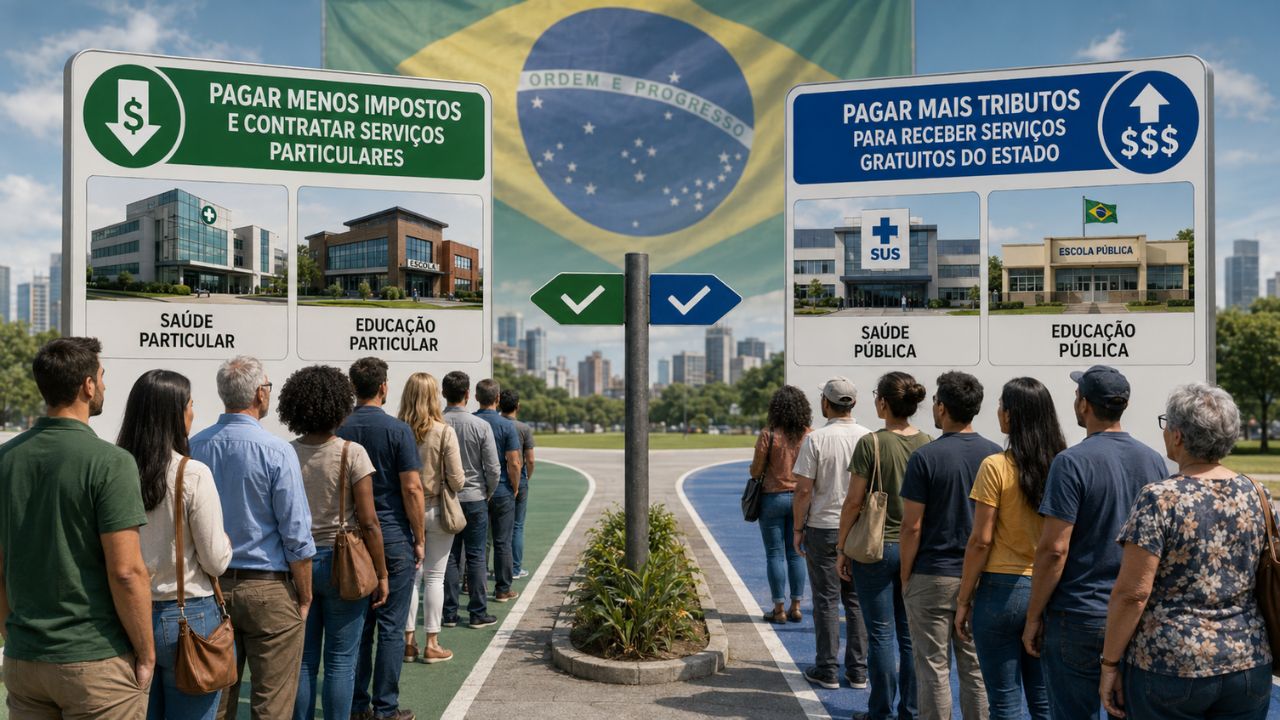
Half of Brazilians Prefer Lower Taxes with Private Health and Education, While 44% Opt for Higher Taxes for State-Provided Services, Datafolha Survey Reveals

-
Brazil’s Most Expensive Toll Rises to R$ 40.60 on Route from São Paulo to the Coast, Nearly Matching Bus Fare to Santos



The monetary authority itself downplays the weight of Pix. According to the Central Bank, the reduced demand due to electronic payment methods, especially Pix, explains part of a potential reduction, but the predominant factor in the stability of recent years is “the replacement of banknotes that are no longer fit for circulation.” According to the institution, the pandemic also played a role, helping to explain the lower numbers in 2021 and 2022.
The Irregular Trajectory of Banknote Issuance
The numbers show ups and downs, not a continuous decline. According to Central Bank data, issuance was high in 2020, with about 1.95 billion banknotes, plummeted to around 438 million in 2021 and about 782 million in 2022, the lowest volumes of the period, and then recovered, with about 1.33 billion in 2023, around 1.35 billion in 2024, and about 1.35 billion in 2025.
Therefore, the 31% depends on the comparison base. The 31% drop compares the high volume of 2020 with that of 2025, even though issuance has been rising and remaining stable since 2023, and not in collapse. The 2026 figure, of about 620 million banknotes, covers only up to May, meaning it is a partial figure and not directly comparable with full years, even in the scenario of Pix’s advancement.
Pix as the Most Frequent Payment Method
The change in habit was already evident in an official survey. In 2024, the Central Bank released the survey “The Brazilian and Their Relationship with Money,” which showed Pix as the most frequent payment method for 46% of the population, compared to 17% in 2021. According to the survey, in the same period, cash usage dropped from 42% to 22% as the most used method.
In commerce, the decline of cash was even stronger. According to the Central Bank, cash was the most frequent payment method in 52% of commercial establishments in 2018 and plummeted to 7% in 2024. According to the survey, these are based on different years, but the movement confirms the loss of space for cash in favor of Pix and cards.
How Pix Was Created, from 2014 to 2020
The idea began years before the launch. The first studies for a national instant payment system gained momentum in 2014, during Dilma Rousseff’s government, when the Central Bank began evaluating ways to modernize financial infrastructure and expand digital inclusion. According to the report, the project officially advanced in 2018, with a working group created by a Central Bank ordinance, already during Michel Temer’s government.
After that, came the rules and the debut. According to NSC Total, in the following years, the agency defined the operating rules, security standards, and mechanisms to allow transfers in a few seconds between different institutions. According to the report, Pix was officially launched at the end of 2020 and allows the transfer of funds 24 hours a day, which helped accelerate adoption.
The issuance of new banknotes fell 31% from 2020 to 2025, amid the explosion of Pix, which became the most frequent payment method for 46% of the population, while cash usage dropped from 42% to 22%. Even so, the Central Bank insists on putting it into perspective: Pix and electronic payments explain only part of the reduction, and the main factor for recent stability is the replacement of worn-out banknotes, with the pandemic also influencing.
The data shows that issuance plummeted in 2021 and 2022 and has stabilized around 1.35 billion notes since 2023, so the 31% reflects more the high base of 2020 than a continuous collapse of paper money.
And you, do you still carry paper money in your wallet or do you do almost everything with Pix? Share your opinion and exchange ideas with other readers about the future of cash in Brazil, respecting different views.