






 Portuguese
  Spanish


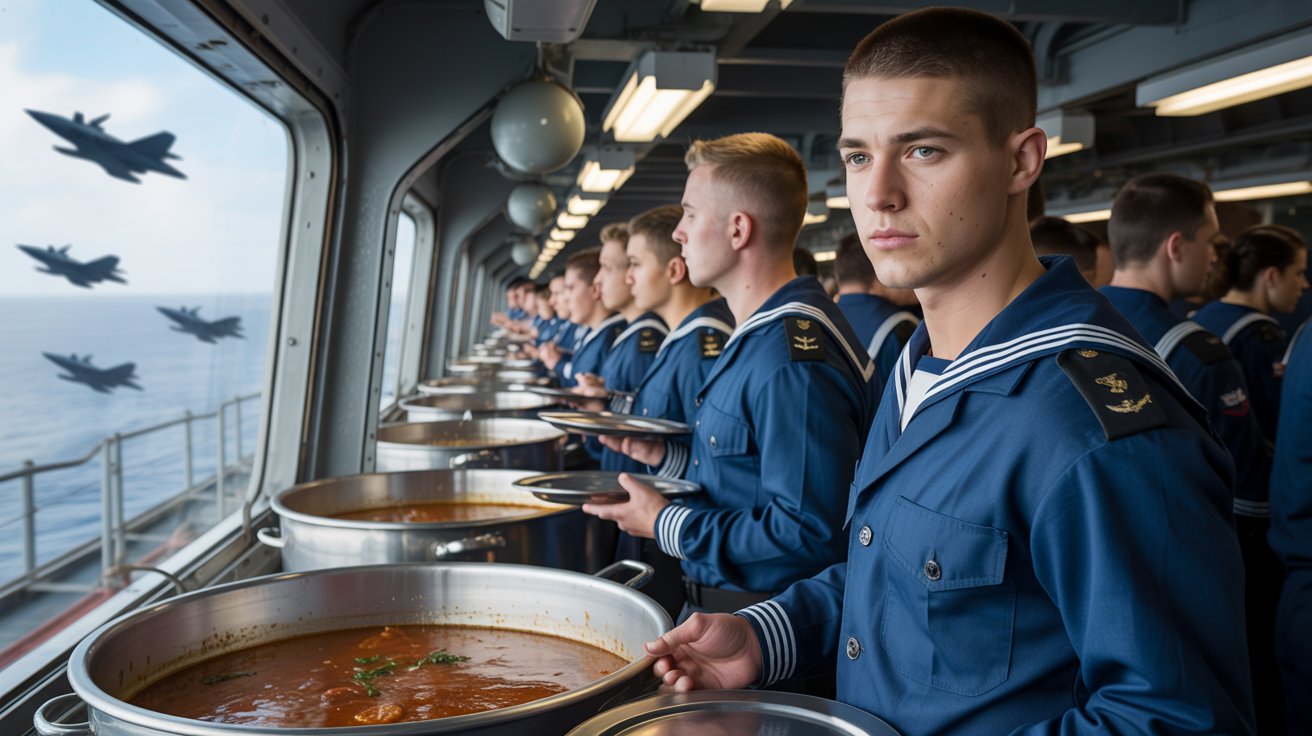

Military Chefs Work Continuously Aboard United States Warships, Ensuring Three Daily Meals and Precision Food Logistics for Thousands of Crew Members
An aircraft carrier of the United States Navy, such as those based at Naval Station Norfolk, can host around 5,100 active-duty military personnel. To feed this entire crew, over 17,300 meals are prepared daily, including breakfast, lunch, dinner, and “midrats,” the nighttime meal for those on alternate shifts. The kitchens operate 24 hours a day, with teams working in shifts to maintain continuous operations.
The food planning follows strict Navy guidelines, which set specific caloric targets: 2,850 calories for men and 2,100 for women. Military chefs must calculate nutrients, calories, fats, and sodium, while also considering food allergies and religious diets. Menus are programmed in 14 or 21-day cycles, focusing on variety and logistical efficiency.
During missions at sea, the ships are resupplied every 7 to 10 days by support vessels or specialized aircraft. Each operation delivers 400 to 700 thousand pounds of food, which is stored in separate compartments for dry, refrigerated, and frozen goods. Perishable products are consumed in the first days after resupply.
-
Man Disguises as His Own Mother to Collect €3,000 Monthly Pension, but Makeup and Beard Stubble Raise Suspicions at Registry Office

-
Brazilian Airport to Receive $2.8 Million Investment, Completion Expected Within a Year

-
UN Warns of AI’s Environmental Impact and Calls for Greater Corporate Transparency

-
Former Atacadão Employee Turns Online Cake-Baking Lessons into a Confectionery Brand with Factory, Store, Delivery, and Nearly $400,000 in Revenue




Industrial Kitchens and Complete Menus Keep Crew Morale High
The kitchens on aircraft carriers are equipped with industrial ovens, 80-gallon kettles, and powerful mixers. Sailors enjoy baked bread onboard, meats, steamed vegetables, mashed potatoes, soups, and desserts. Everything is prepared in large quantities and served in mess halls similar to school food courts.
The preparation is done in stages to keep the food hot and fresh. On holidays, such as Christmas and Thanksgiving, the menu is adapted with turkey, pies, and themed decorations, promoting a more welcoming atmosphere even during extended missions. The food routine reinforces well-being and cohesion among the crew members.
Even during military operations, the food service continues normally. The kitchen staff is also trained to respond in emergencies, ensuring that the crew remains fed in any scenario.
Mobile Kitchens Feed Troops in the Field with Up to 6,000 Daily Calories per Soldier
Off the ships, the Navy and Army also use mobile kitchens to feed soldiers in training or ground operations. These kitchens are transported in trailers and can prepare up to 2,400 meals per day, with energy-rich dishes catering to intense physical demands.
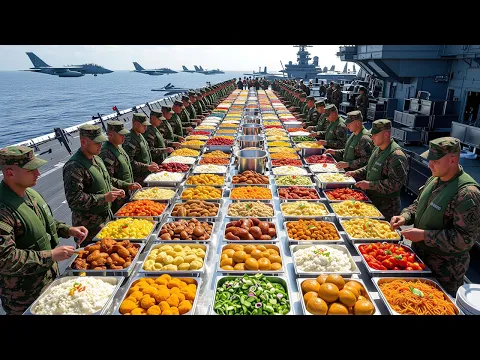

During large military exercises, four combined trailers can feed up to 10,000 soldiers. The menus are calorie-rich, featuring roasted meats, grilled vegetables, bacon, and bread. In remote locations, cold rations and ready-to-eat meals complement the nutrition.
The information was shared by the channel “Tony 98 – Discovery,” based on logistical data from the U.S. Navy, detailing the entire structure behind the daily food routine of the U.S. Armed Forces, both at sea and in land operations.
Food is a decisive factor in maintaining the health, discipline, and operational performance of military personnel. What other logistical structures would you like to see explained in detail?




