Portuguese
  Spanish


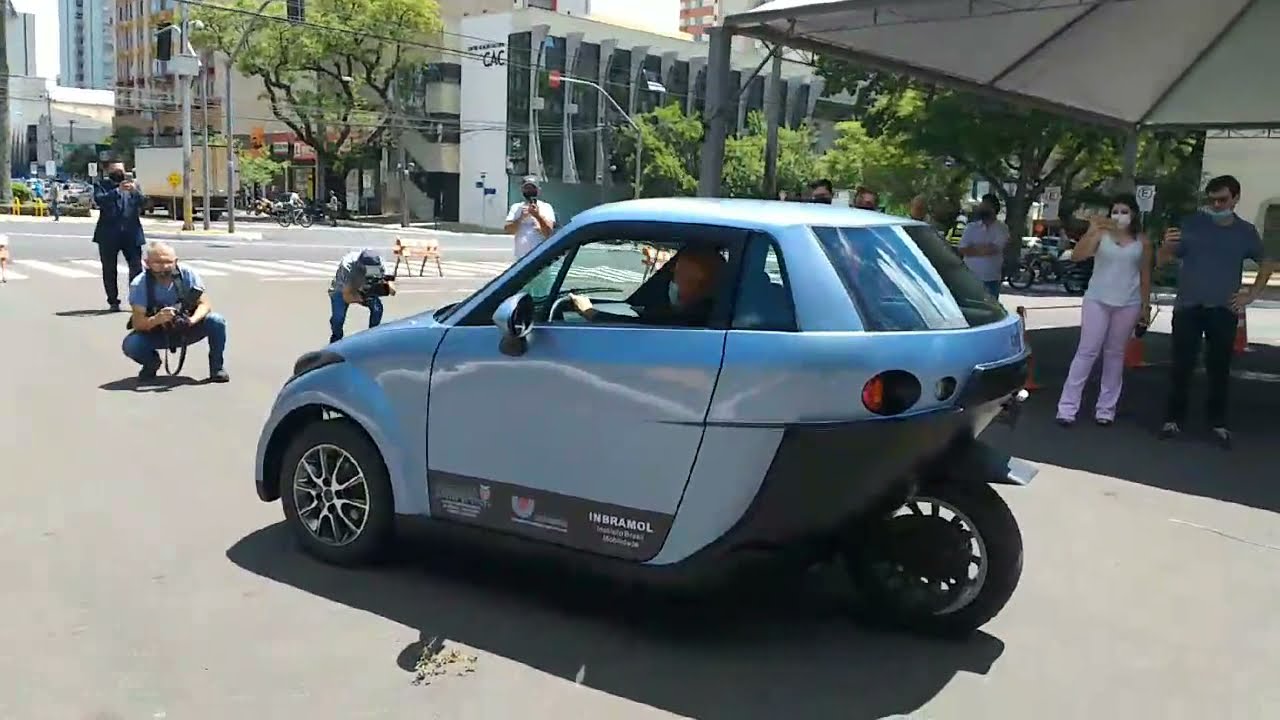


Compact And With Three Wheels, The National Electric Car Kers Wee Already Plans To Take The Place Of The Cheapest Electric Car In Brazil, A Place Currently Occupied By The JAC E-JS1, Costing R$ 165 Thousand.
The electric car, with an inverted tricycle shape, will have an estimated starting price between R$ 95 thousand and R$ 100 thousand, but it is possible that it will be sold for R$ 93 thousand. The Kers Wee is an ultracompact, capable of accommodating up to two passengers. The main focus of its creation is for this electric car to be exclusive for apps or even for rental, providing a solution to the chaos in large urban centers. Kers CEO, Carlos Motta, explained that there is no escaping the current situation of the planet, which demands healthy environmental solutions. He also stated that the Wee electric car, created by Kers, is what he called an “essential tool” for a correct evolution of environmental thinking to happen, and it will undoubtedly be the cheapest electric car in Brazil.
Read Also
Understand How The Manufacturer Kers Operates In The Country

Kers is a startup originating from Paraná, and the Wee model is its first created vehicle. According to Motta, Kers was founded with the aim of focusing on the search for sustainable environmental solutions, and the idea of developing an electric car within the startup has existed for about 15 years.
In the constant search for a sustainable environmental solution for the world, Kers bets high on developing products that can contribute to the ‘unfolding’ of these solutions.
-
1983 Chevrolet Runs Over 100,000 km Without Gasoline, Powered by Wood Chips, Reaches 125 km/h in Airport Test

-
Workshop Converts Giant Tractor Tire Tricycle into a Three-Wheel Drive Hybrid with 36,000-Watt Electric Motor Capable of Climbing Hills

-
Chery Offers Lifetime Battery Warranty and Car Replacement for Major Failures Under New Chinese Regulations
-
Sales of Brazil’s Cheapest Electric Car Halted Before First Deliveries: E-Motors Suspends Emova Easy Due to Import Tax Increase and Rising Freight Costs





The acronym Kers stands for Kinetic Energy Recovery System, which is the process of recovering energy when the car is braked. The name of the electric car, Wee, is related to its size, which in Scottish dialect means “tiny”. The cheapest electric car in Brazil currently will have a range of at least 200 km, with a maximum speed of 100 km/h and charges in a maximum of 8 hours.
Manufacturing Costs Of The National Electric Car From Kers
According to Kers, its electric car has a manufacturing cost 60% lower than its main rival, in addition to reducing refueling costs by up to 80%. The project for the creation of the Wee involved collaboration from the Superintendency of Science, Technology And Higher Education of Paraná (Seti), Unioeste, and Instituto Inbramol.
According to Motta, the electric car does not pollute precisely because it uses electric energy; however, throughout its construction, there are a series of processes that do pollute. Because of this, for every Wee model that is put on the streets, at least 50 trees will be planted in the environmental reserve Nascentes do Rio Açungui, in Campo Largo/PR, to neutralize carbon.
Additionally, a recycling plan will also be developed to be implemented when the Wee reaches the end of its life cycle. The State University of West Paraná (Unioeste) and the Brazil Institute of Mobility have joined this cause and remodeled Kers’ national electric car with 100% Brazilian technologies.
Development Of The Electrical Part Of The Wee
The researchers from Unioeste were responsible for the development of the electrical part and its automation, making it feasible to convert the Kers electric car Wee into a fully autonomous vehicle.
Master in Energy Engineering Cristiano Lewandoski had one of his doctoral projects applied in the automation and electric part of the car. According to Cristiano, the technologies applied are: automation 4.0 – which combines cloud technologies, internet, and artificial intelligence – which helps with battery savings, in addition to providing greater autonomy, autonomous navigation, and smart parking system.