Portuguese
  Spanish


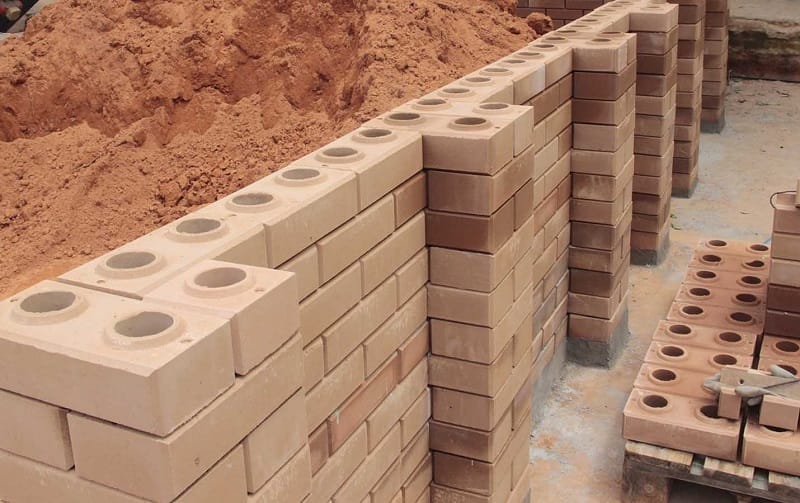

Improve The Efficiency Of Your Construction With Bricks That Offer Superior Thermal Insulation And High Resistance. Ideal For Projects Seeking Efficiency And Economy
The search for sustainable alternatives in civil construction has gained increasing prominence in Brazil. Among the innovations that stand out is the use of eco-friendly tiles known as soil-cement. This technology, which combines economy and respect for the environment, promises to transform the way we build our cities.
Soil-Cement: A New Era In Sustainable Construction
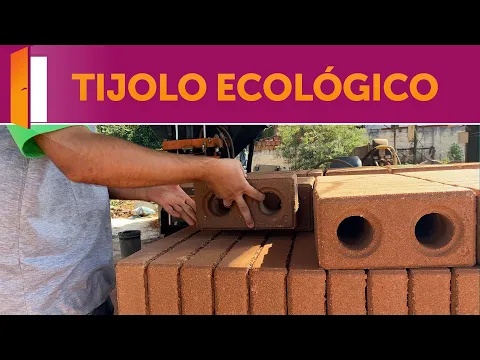
Soil-cement is a mixture of earth and cement that results in a durable and environmentally friendly construction material. Unlike traditional clay bricks, which require firing in kilns and generate significant carbon dioxide emissions, soil-cement bricks do not need firing. This characteristic not only reduces the carbon footprint but also lowers production costs.
The technique for manufacturing soil-cement bricks is relatively simple. The earth, usually sourced locally, is mixed with cement in a ratio of approximately 90% to 10%. This mixture is then compressed into molds using manual or mechanical presses. After compaction, the bricks are cured outdoors for a period that can range from a few days to several weeks.
-
U.S. City Builds Tiny Home Village on Water Company Land to House 136 Homeless People: Inside the Social Housing Units

-
Woman Turns Shipping Container into Home, Embraces Rural Life to Cut Monthly Expenses to Just Over $330
-
France Revamps 530 Social Housing Units with Large Balconies and Glass Facades Without Demolishing Existing Buildings

-
Facing high rent, couple transforms parents’ garage into a fully functional apartment, creating a complete home at a fraction of the market cost.





Advantages Of Soil-Cement In Civil Construction
Economy And Sustainability In Construction
One of the main advantages of soil-cement is the economy. The use of local materials reduces transportation and logistics costs, making construction more accessible, especially for low-income communities. In addition, the absence of firing processes saves energy and reduces operational expenses.
In terms of sustainability, soil-cement bricks are a smart choice. The production of these bricks consumes fewer natural resources and generates less waste. The use of local earth minimizes environmental degradation, preserving clay reserves and other materials. Thus, construction with soil-cement significantly contributes to environmental conservation.
Energy Efficiency And Thermal Comfort In Construction
Another important advantage of soil-cement bricks is their energy efficiency. Due to their thermal properties, these bricks help maintain a more stable indoor temperature, reducing the need for heating and cooling systems. This not only promotes the comfort of residents but also results in energy savings.
Furthermore, soil-cement bricks are highly durable and resistant to compression. This means that structures built with this material have a long lifespan and require less maintenance over time, providing excellent cost-effectiveness.
Applications And Challenges With Soil-Cement
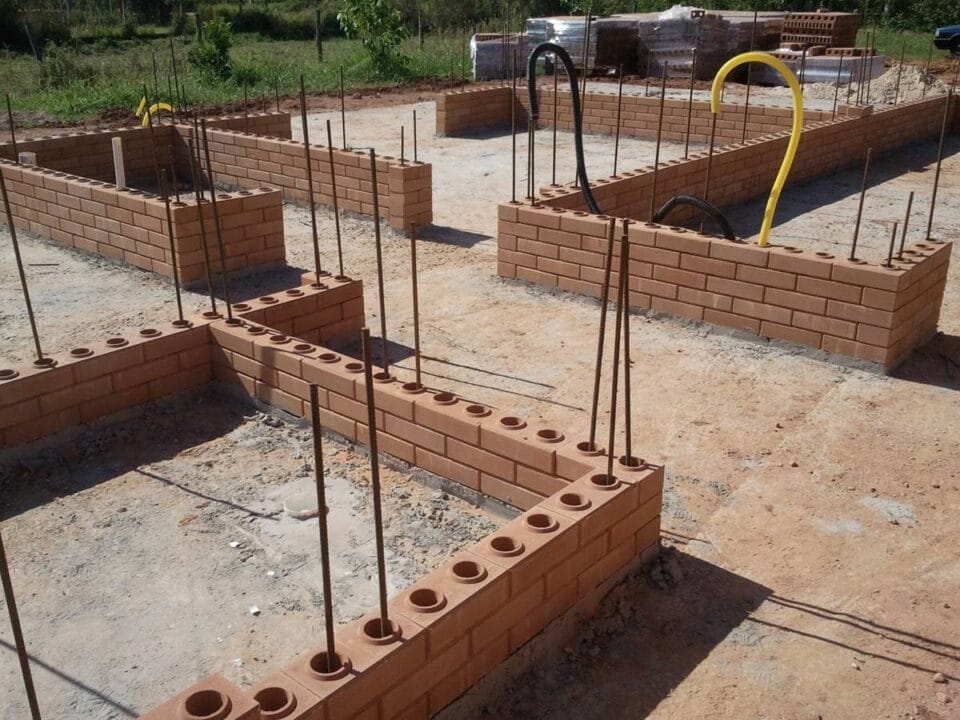
Soil-cement bricks have a wide range of applications in civil construction. They are ideal for building homes, especially in rural and peri-urban areas. Additionally, they are used in community infrastructure projects, such as schools, community centers, and other public buildings. In landscaping, these bricks are a popular choice for building paths, retaining walls, and other decorative elements.
Challenges In The Implementation Of Soil-Cement
Despite the numerous advantages, the implementation of soil-cement in construction faces some challenges. The quality of the soil is a crucial factor. Not all soil types are suitable for producing soil-cement bricks, and testing is needed to ensure the soil has the appropriate properties.
The training of workers is another important aspect. It is essential that the professionals involved are well-trained in mixing, molding, and curing techniques to ensure the quality and durability of the bricks. Moreover, it is important to comply with local regulations and specific standards that may exist for the use of soil-cement bricks.
Soil-cement bricks represent a significant innovation in Brazilian civil construction, combining sustainability, economy, and energy efficiency. Although there are challenges in implementation, the environmental and economic benefits make this technology an attractive option for the future of construction in Brazil. As the demand for more sustainable construction practices grows, soil-cement has the potential to become a fundamental pillar in building a greener and more sustainable future.