






 Portuguese
  Spanish
  4 min of reading
  0 comments


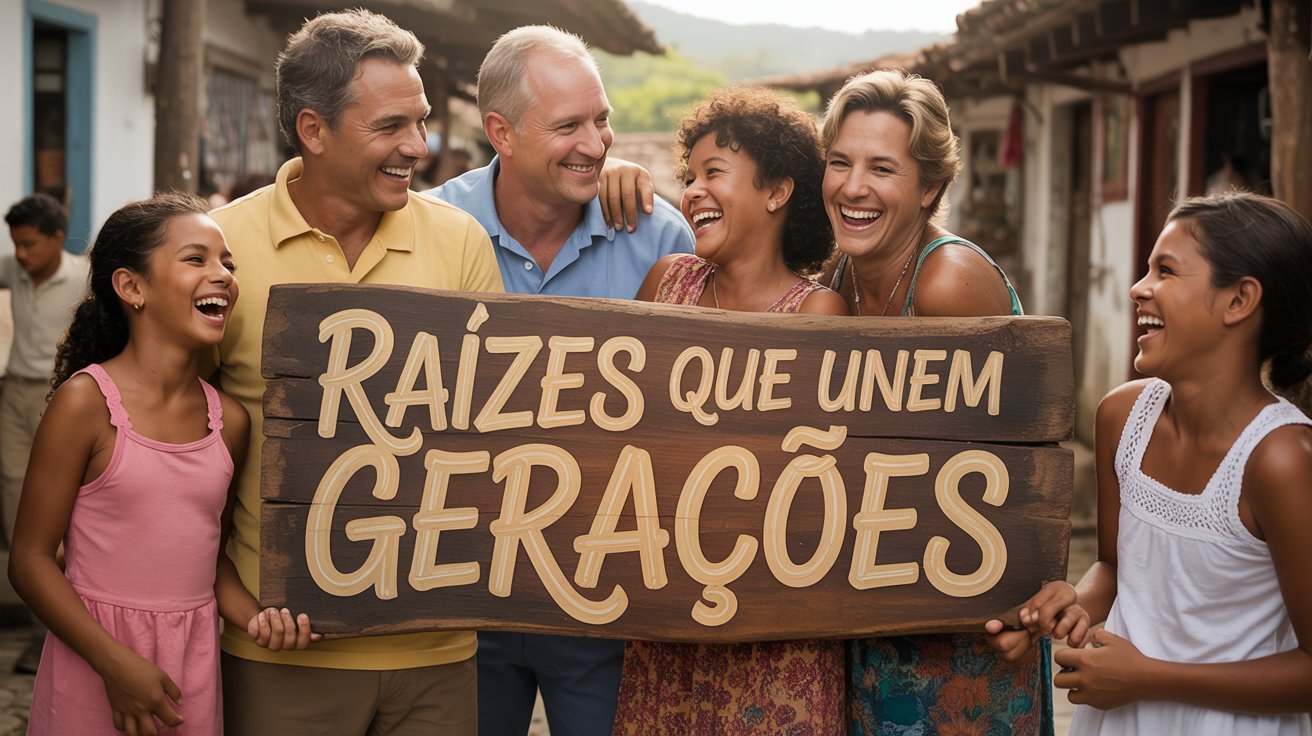
This Small Brazilian Community Holds an Amazing History of Almost Total Kinship, with Family Roots That Cross Generations, Influencing Local Culture, Politics, and Health in Ways Few Imagine and Shaping Its Unique Identity.
In Brazil, there are communities where most of the population descends from a single family, a phenomenon that goes far beyond a mere genealogical curiosity.
According to historical and genetic studies, these family lineages have shaped the social, cultural, and political structure of various regions of the country over generations.
This reality, still little known to the general public, reveals important aspects of Brazil’s history, from the colonial period to the present day.
-
Survivor of 1966 SS Daniel J. Morrell Shipwreck in Lake Huron Recounts 38-Hour Ordeal in Extreme Cold

-
The Greatest Hoax in World Cup History? The Film That Denied Brazil’s 1958 Victory and Exposed How Fake Evidence Can Seem Convincing on TV
-
Fake South Korean Online Stores Offer Shopping Thrill Without Spending Money or Receiving Products
-
The War of Jenkins’ Ear: How a Severed Ear Sparked One of the 18th Century’s Most Unusual Conflicts


Quilombola Communities and the Concentration of Kinship
One of the most emblematic examples is in the Ribeira Valley, a region that encompasses the south of São Paulo and the east of Paraná, where several quilombola communities maintain a strong kinship connection.
Research conducted by the Institute of Biosciences at the University of São Paulo (USP) analyzed the DNA of over 700 residents of these communities, proving an inbreeding rate three times higher than that observed in Brazilian urban areas.
This high degree of kinship is not a coincidence: it refers to the formation of these communities in the 19th century, when descendants of enslaved people escaped from farms and settled in isolated areas.
Among the founders of these localities, Bernardo Furquim de Campos stands out, who around 1830 helped establish the quilombola community of São Pedro in the Ribeira Valley.
Bernardo had several children with different women, which spread the surname Furquim throughout the region, creating a complex network of kinship that remains alive to this day.
This fact is documented in academic studies and specialized reports, such as those published by the UOL Ecology and Sustainability portal.
The Example of the City of Uauá and Familial Coronelismo
In addition to the Ribeira Valley, another region that well illustrates this reality is the city of Uauá, located in the arid region of Bahia.
There, some founding families have had a decisive influence on local politics and society for over a hundred years.
Among them, the Borges family stands out, descended from Jerônimo Rodrigues Ribeiro, one of the city’s first inhabitants and politicians.
According to historical records, families like Borges, Sá, Cordeiro de Matos, Damasceno, Rodrigues, and Ribeiro dominated the municipal political scene, perpetuating a model known as coronelismo, where a few families controlled public offices and local trade.
This concentration of power has profoundly influenced the lives of residents, many of whom share the same family origins to this day.
Benefits and Challenges of Family Concentration
The phenomenon of family concentration in Brazilian communities brings both benefits and challenges.
On one hand, it strengthens social ties and preserves unique cultural, religious, and festive traditions, which give identity to these places.
On the other hand, the high degree of kinship can lead to genetic problems, such as an increased risk of hereditary diseases, which has already been monitored by public health projects, especially in the quilombola communities of the Ribeira Valley.
It is worth noting that the influence of these families goes beyond the biological aspect.
In culture, these lineages are responsible for the transmission of customs and traditional celebrations that span generations.
In local politics and economics, they often maintain control over trade, public offices, and social networks, which can ensure stability but may also generate disputes and concentration of power, affecting regional development.
The Importance of Knowing These Stories for Brazil
Why does knowing these stories matter for Brazil?
In addition to enriching understanding of the social and cultural formation of the country, these narratives bring to light essential themes, such as the legacy of slavery, the role of traditional populations, and the challenges faced by isolated and underdeveloped areas.
Understanding the dynamics of families that shaped communities helps to reflect on the past and the challenges of present-day Brazil.
Other Examples of Family Communities in Brazil
Other interesting examples of this phenomenon can be found in different regions of the country.
In the Jequitinhonha Valley, in Minas Gerais, entire villages have been formed by families that have preserved the tradition of soapstone craftsmanship for generations.
In the Amazon, indigenous and riverine communities show a strong presence of traditional family lineages that define the local social organization.
In the interior of Rio Grande do Sul, descendants of European immigrants maintain century-old family and cultural ties.
For experts, the existence of Brazilian communities predominantly formed by descendants of a single family is a fact confirmed by various reliable genetic and historical studies.
This phenomenon reveals cultural richness but also highlights the social and health challenges that accompany these populations.
Often forgotten in the larger national narratives, these stories deserve attention for showcasing a diverse Brazil, full of curiosities and deep roots.
And you, do you know of any community where the family plays a central role in local formation and culture?
How do you think these stories influence the identity and development of these regions? Share your opinion!





Be the first to react!