Portuguese
  Spanish


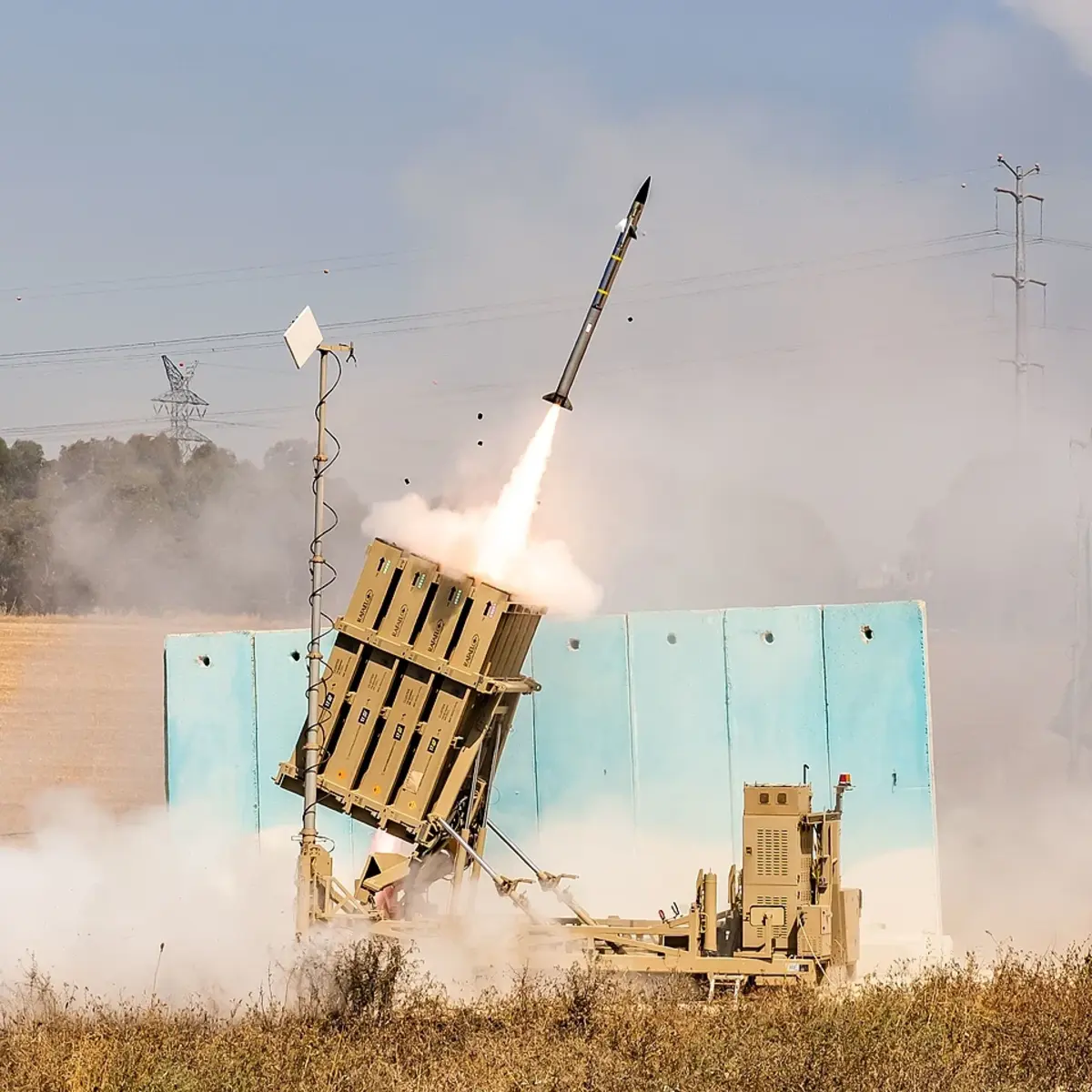


Iron Dome Intercepts Iranian Missiles and Confirms Efficiency; Israel Plans Laser Alternative with Lower Cost and Unlimited Ammunition
The escalation of conflicts between Israel and Iran has highlighted the Israeli missile defense system known as Iron Dome. On Friday (13/06), Iran launched dozens of missiles at Israel after Iranian nuclear facilities were hit by Israeli forces.
The majority of the projectiles were intercepted by the Iron Dome, but seven managed to breach the defense and hit areas in the capital.
Created in 2011, the Iron Dome is already considered a key element in protecting Israel against external threats. The system was designed to intercept short-range missiles and artillery projectiles.
-
Australia to Deploy Up to 8 Nuclear-Powered Submarines in Indo-Pacific, Establishes Billion-Dollar Naval Chain Through AUKUS, Joining Elite Group Capable of Extended Underwater Missions

-
Indonesia Begins Construction of 2,000-Ton Scorpène Stealth Submarines with Advanced Weaponry and French Steel

-
Brazil’s Largest Navy Ship, NAM Atlântico, Transforms into Field Hospital During National Crises

-
Brazilian Navy Demonstrates Strength in Naval Exercise with Over 20 Nations, Deploys Frigate Independência in Anti-Submarine and Air Defense Scenarios, and Joins Historic Formation with 26 Ships from 14 Allied Navies off the U.S. Coast



According to the manufacturer Rafael Advanced Defence Systems, the technology has already neutralized over 5,000 aerial threats since its debut.
Three Layers of Defense
The Israeli air defense system consists of three layers. The first is the Iron Dome, responsible for intercepting short-range missiles.
Next is “David’s Sling,” known as the “magic wall,” focused on medium-range missiles, drones, and cruise missiles. Finally, the Arrow system is aimed at long-range missiles.
The Iron Dome operates quickly and efficiently. A radar detects enemy launches and, within seconds, the control center calculates their trajectory.
Defensive missiles are only launched if the system identifies that the target will fall in populated areas. Interception does not occur through direct collision, but through an explosion near the enemy projectile, destroying it in the air. Nevertheless, debris can cause ground damage.
Each unit of the system is equipped with three or four batteries, each containing up to 20 defensive missiles. The systems are mobile and can be relocated as needed. According to Rafael Systems, a single battery can protect an average-sized city.
Iron Dome: High Effectiveness, High Cost
The effectiveness of the Iron Dome is highlighted by authorities and analysts. The success rate reported by the manufacturer is 90%. However, operational costs are high.
Each interceptor missile costs between 40,000 and 50,000 euros (R$ 221,000 to 277,000), according to the U.S. Center for Strategic and International Studies. Therefore, missiles are only launched against threats that pose a direct danger to civilian populations.
During another Iranian attack in October 2024, also in response to Israeli actions, the system performed even better and prevented missiles from hitting Tel Aviv.
Since October 2023, the Iron Dome has also been used to intercept projectiles fired from Lebanon, Syria, Gaza, Iraq, and Yemen.
Laser Alternative Is Already in Testing
To reduce costs, Israel plans to deploy a new technology: the Iron Beam system. The new weapon is based on high-energy laser beams, developed by Rafael Systems in partnership with American company Lockheed Martin since 2022.
The Iron Beam was unveiled in 2014 and is designed to destroy small missiles, mortar projectiles, and swarms of drones. One of the main advantages of the system is the cost per launch: around 2,000 dollars (R$ 5,500), well below the costs of the Iron Dome.
Additionally, the Iron Beam offers theoretically unlimited ammunition and lower operational costs. The deployment of the system is expected to begin in 2025.
With information from MSN.