





 Portuguese
  English
  Spanish
  3 min of reading


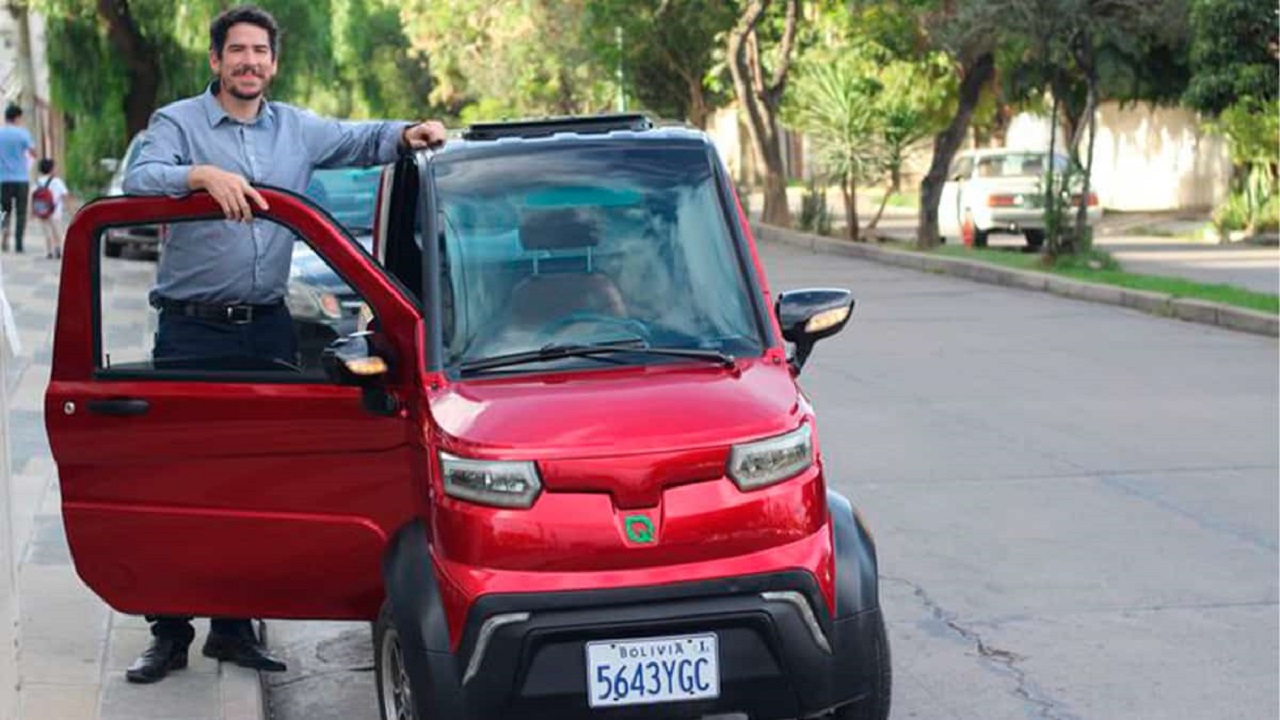
Bolivian Company Develops Low-Cost Electric Minicar That Promises to Conquer the Automotive Market. The Model Costs Only R$ 40 Thousand (in Direct Conversion) and Can Deliver Up to 95 Km of Autonomy.
The Tesla and other automakers are already bringing aerodynamic and luxurious electric cars to the market; however, other manufacturers take the opposite approach, producing cheaper and compact models. This is the case of Quantum Motors, a Bolivian startup that offers a smoother ride with its new electric minicar, which has space for up to three people and a top speed of 56 km/h.
MiniCheap Electric Car from Bolivian Company Delivers 95 Km of Autonomy
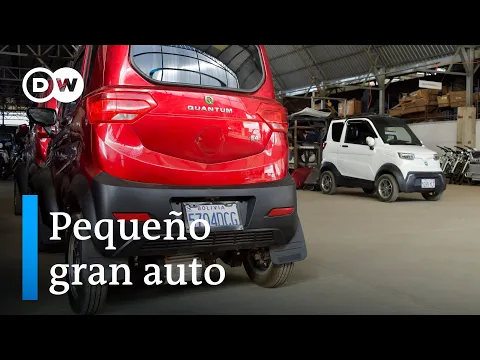

The size of a golf cart and developed like a box, the models from the Bolivian brand only have space for the driver in the front, while up to two passengers can cozy up in the back.
Furthermore, the electric minicar can deliver an autonomy of 95 km on a single charge. The electric takes six to eight hours to fully charge. According to Daniel Derenne, a 62-year-old retiree from Cochabamba, it was love at first sight. The retiree purchased the affordable electric car in September 2019. Until now, he has driven 9,600 km, a distance slightly greater than between São Paulo (the capital) and London (England) in his minicar.
-
GOODBYE TO DELAYS? BYD faces a surge in orders after launching technology that recharges electric cars in just minutes

-
U.S. students create a vehicle that travels 911 km using only 1 liter of fuel.

-
Toyota prepares a new pickup derived from the RAV4 to compete with the Ford Maverick and Hyundai Santa Cruz in the urban truck market in the United States.

-
California is considering creating bullet buses that reach up to 225 km/h on exclusive lanes to connect Los Angeles to San Francisco in less than four hours, at a cost lower than the rail system.



The retiree claims that three people fit in the vehicle, but they can’t be too heavy. The founders of the company believe that the electric minicar, the first manufactured in Bolivia, is the future of the automotive industry in Latin America, which has 670 million residents.
In the congested streets of the world, mini cars make more sense, according to Carlos Soruco, one of the company’s founders. And it is much cheaper to operate than conventional vehicles. Owners of the electric minicar claim they spend an average of R$ 35 a month to charge their cars.
Cheap Electric Car Costs Only R$ 38 Thousand (direct conversion)
The cheap electric car manufactured in Bolivia can be plugged into any outlet, thus eliminating the need to invest in expensive charging stations and making finding parking spaces a much simpler task.
With a price of US$ 7 thousand (R$ 35 thousand in direct conversion), it makes it much more accessible than the flashier electric cars hitting the streets in the U.S. and Europe. Soruco asserts that the company is convinced that electric vehicle development in Latin America will not be with Teslas or Volkswagens. So far, Quantum has sold 370 electric cars.
Angie Sciaraffia, a medical student, was delighted when she bought a Bolivian-made car, with a rearview mirror small enough to fit in the palm of her hand. She opted for a diamond blue Quantum with a sunroof and dark windows.
In Bolivia, Quantum has few followers among car owners; however, they are loyal like Sciaraffia, who waves and honks at other drivers of the brand when they see each other on the streets of Cochabamba.
Bolivian Manufacturer Could Not Register Its Models
Initially, the company could not register its cars in Bolivia, as local laws required all vehicles to have an import document, a paperwork common in a country where no one had ever produced a car before.
Insurance companies were cautious in providing coverage. Banks were unsure how to structure loans for cars. The company shut down shortly after opening in 2019, when violent protests paralyzed Bolivia.
Then came the pandemic, disrupting global supply chains and making the import of Chinese parts more expensive. Currently, the lack of dollars in Bolivia makes it difficult to pay for imports. While there are enormous lithium resources in Bolivia, the country produces almost none due to strict state control that has hindered private investment. As a result, Quantum batteries use lithium from China.






Be the first to react!