Portuguese
  Spanish


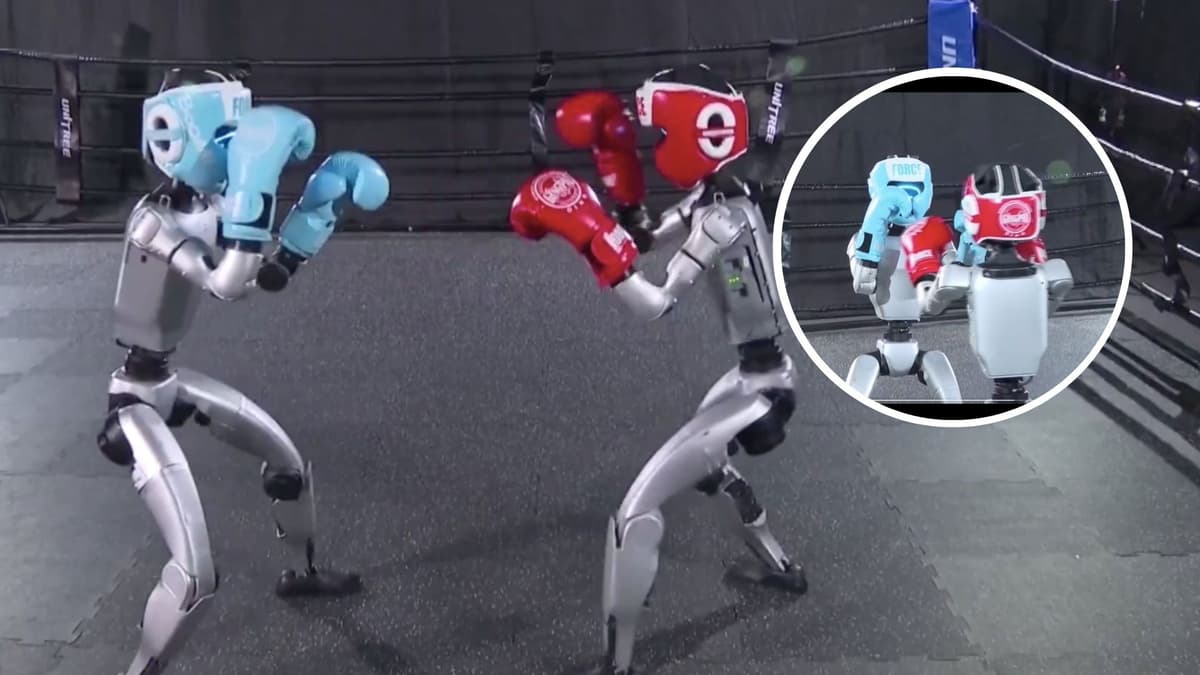


Unitree Humanoid Robots Showcase Punches, Kicks, and Resilience at Chinese School Ahead of World’s First Robot Boxing Match Scheduled for May 25.
Unitree humanoid robots Unitree Robotics drew attention in Hangzhou, China, by demonstrating aggressive boxing skills at an event held in a school.
The presentation served as a preparation for what will be the world’s first robot boxing match, scheduled for May 25.
Students at the school closely watched the robots’ movements, which showcased jabs, hooks, side kicks, roundhouse kicks, and even the ability to get back up after falling.
-
Brazilian Researchers Develop Cost-Effective Method for Key Component of Green Hydrogen Electrolyzers, Enhancing Energy Efficiency and Equipment Longevity

-
1,700-Year-Old Roman Mosaic Discovered by Farmer Planting Cherry Trees in Turkey

-
Brazil launches $1.9 billion plan in response to El Niño, issuing national extreme heat alert and bolstering public health system

-
Polyformer Machine Converts PET Bottles into 3D Printer Filament, Reducing Costs and Expanding to Over 50 Countries



The demonstration elicited applause from the students and also generated curiosity about the future of these devices.
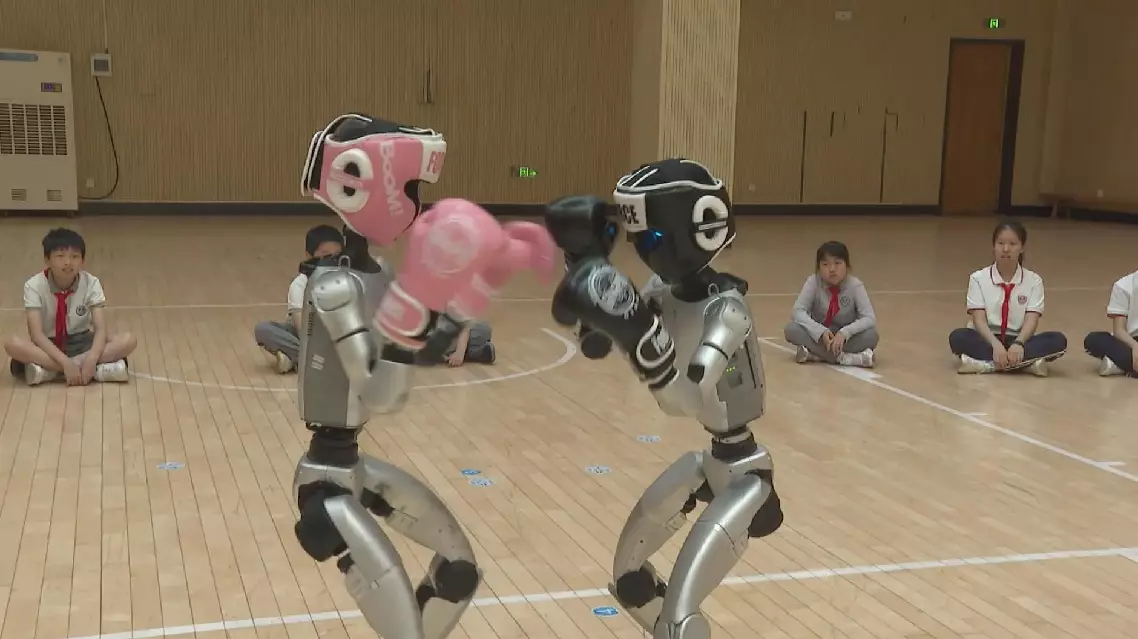
Tests Before the Official Tournament
The event in Hangzhou functioned as a practical test ahead of the official debut at the Hangzhou Mech Combat Arena. During the activity, the robots participated in a 40-minute running session on the school’s basketball court, which also served as a demonstration of resilience.
According to Chu Yang, a member of the marketing team at Unitree Robotics, the robots operate in collaboration with humans. “We have three ways to control them,” he explained. “The most common is simple control, but we will showcase two new modes at the main event on Sunday.”


Tournament Format Combat
The boxing competition will be divided into two parts. The first will be a performance showcase, with individual and group demonstrations.
The second part will be a tournament-style competition. In it, four teams of human operators will control the robots in real-time, competing in one-on-one fights as well as in groups. The winning team will be determined at the end of the series of matches.
Each team will utilize different technical formations to operate the robots during matches, making the competition more dynamic and varied.
The goal is to showcase not only strength and resilience but also coordination and reaction capability.
Training Based on Human Movements
According to the organizers, this type of event is more than just entertainment. The intention is also to train the robots based on human movements.
By capturing detailed data during the matches, the humanoids can improve flexibility and coordination, replicating human actions with greater precision.
Data collection for this training can be done through three methods: remote control operation, motion capture, and the use of large models.
Among these, motion capture has emerged as the most suitable for humanoid robots due to its high precision and efficiency in data use.
Cost and Mass Production Are Still Challenges
Despite technical advancements, one of the challenges is still finding ways to train the robots with high-quality data at a low cost. This issue is considered crucial for robots to be produced on a large scale in the future.
Unitree hopes that events like the tournament in Hangzhou will contribute directly in this sense, generating data in controlled environments and allowing the robots to develop more refined responses to physical interactions with humans and other robots.
First Match Will Be on the 25th
The first official robot boxing match will take place at the Hangzhou Mech Combat Arena. The robots from Unitree will be the stars of the event. The expectation is that the tournament will inaugurate a new phase in the use of humanoid robots in coordinated physical activities.
With the participation of four human teams controlling the robots in real time, the competition is expected to attract the attention of experts, technology enthusiasts, and the general public.
The event will mark not only the beginning of a new type of entertainment but also an important step in the development of interaction technologies between machines and humans.