






 Portuguese
  Spanish


Discover The 6 Revolutionary Megaprojects That Promise To Transform Brazil By 2025, Boosting The Economy, Creating Thousands Of Jobs, And Redefining The Country’s Future!
Brazil, with its vast territory and great ambitions, has been standing out on the global stage with megaprojects that are redefining the limits of engineering and architecture. In recent years, these projects have not only consolidated the country’s infrastructure but have also boosted the economy and positioned Brazil as one of the leaders in structural innovation. Check out the six megaprojects that are set to transform Brazil by 2025. These grand works include monumental bridges, strategic highways, and other infrastructure initiatives that promise to expand job creation, stimulate the economy, and improve the quality of life for the population. Furthermore, these Brazilian megaprojects highlight the country’s commitment to sustainable development and the modernization of its cities.
Largest Natural Gas Thermal Power Plant
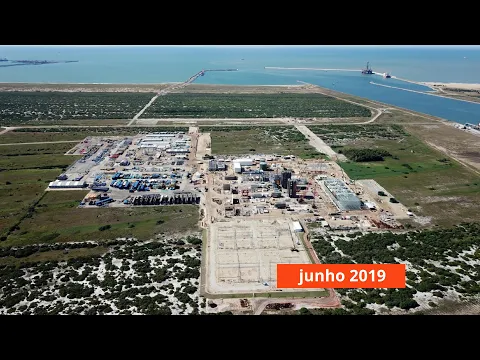

Among the megaprojects that will transform Brazil by 2025 is the largest natural gas power generation plant in Latin America. Representatives from the company Gás Natural Açu (GNA) presented investment plans totaling R$ 12 billion. The GNA I has been in operation since 2021 at the Port of Açu.
Now, with GNA II nearing completion, the region will have the largest natural gas power generation plant in Latin America, optimizing the state’s exploration potential. This is one of the Brazilian megaprojects planned for 2025. With 1,672 MW of installed capacity, enough to generate energy for nearly 8 million households, it will be the largest thermal power plant in the country, creating thousands of jobs.
-
Detroit Microhouse Village Offers Former Homeless Residents Ownership After 7 Years: First 3 Tenants Receive Deeds

-
Brazilian Factory in Ivoti Produces 500 Modular Steel and Fiberglass Concrete Homes Following 2024 Floods, Securing $13 Million Contract
-
Brazilian Startup Develops Recycled Plastic Bricks, Cutting Construction Costs by 40% and Speeding Up Building by 90%

-
Tarcísio Opens New São Paulo Metro Line After 18-Year Wait, Offering Free Rides at 6 Stations and Aiming to Cut Commute to 23 Minutes for 633,000 Daily Passengers



Xambioá Bridge

With an estimated total cost of R$ 193.1 million, the Xambioá Bridge is one of the megaprojects that will transform Brazil by 2025. The project is changing the northern region of Brazil by connecting Tocantins to Pará, eliminating the need to use ferries to cross the Araguaia River.
This will be one of the largest bridges over a river in Brazil, with an incredible span of 1,727 meters and a budget of 193 million reais, creating thousands of jobs. The strategic importance of this project for the northern region of the country is undeniable, with benefits that go beyond infrastructure, positively impacting local economies.
Ceará Water Belt

In fourth place on the list of Brazilian megaprojects that promise to generate jobs and income is the Ceará Water Belt (CAC). This project aims to enable greater capillarity of the flows transposed by the São Francisco River Integration Project in the state.
This, which is one of the megaprojects that will transform Brazil in 2025, has its Section 1 currently under implementation. It includes 145.3 km of construction, comprising segments of open canals, tunnels, and siphons, with the aim of bringing water from the Jati dam. The project promises to generate over 450 jobs during its construction.
Mário Covas Ring Road

The Mário Covas Ring Road is a 176-kilometer highway that circumscribes the central region of Greater São Paulo. This, which is one of the largest Brazilian megaprojects, was built over two decades (with the completion of the final stage expected in 2026) and connects all 10 state or federal highways that pass through Greater São Paulo, generating alternative routes that prevent trucks coming from the inland state heading to the port of Santos from traveling through the already congested urban areas of the metropolitan region.
Transnordestina Railway

According to new projections released by the Ministry of Transport, the works of the Transnordestina Railway, which generate thousands of jobs, are expected to be completed soon. Being one of the largest megaprojects that promise to transform Brazil in 2025, the railway has an extension of 1,757 kilometers. Of this total, 1,209 kilometers correspond to the railway line between Piauí and Ceará, passing through Salgueiro (PE).
The remaining 548 kilometers comprise the Pernambuco branch, which extends from Salgueiro to the Port of Suape (PE). The current budget for the project is R$ 15 billion, of which R$ 7.1 billion have already been invested. The works of the Transnordestina were resumed in 2023.
Bioceanic Route

To conclude the list of Brazilian megaprojects in 2025, we have the Latin American Integration Route (RILA), or Bioceanic Route. It is a 2,396-kilometer highway corridor that plans to connect the Atlantic Ocean to the ports of Antofagasta and Iquique in Chile, passing through Paraguay and Argentina.
According to its proponents, it would be an alternative to the Port of Santos (SP), shortening distance and time for Brazilian exports and imports between potential markets in Asia, Oceania, and the West Coast of the United States. In the state of Mato Grosso do Sul, the highway crosses the southern part of the Pantanal.





Vão roubar feito bicho
Põe tua foto ****
Analisando os custos destas megas construções, comparo os bilhões destinados a lei Rouanet, pra vocês terem ideia. Gente é dinheiro que não acaba mais! Enquanto a saudeeee.. faz..OL
L de **** de Jóias? Continuem chorando……