Portuguese
  Spanish


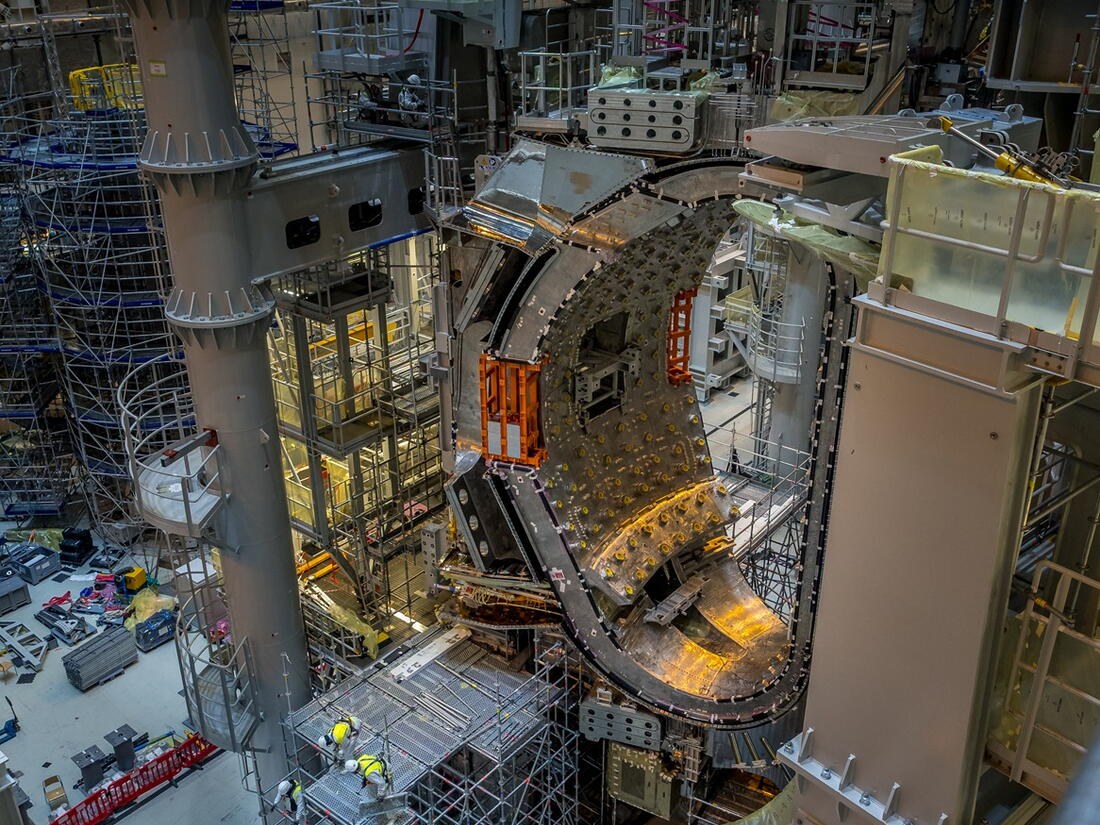
In the south of France, the assembly of the largest nuclear fusion reactor ever built has gained a significant helper: a giant robot about four meters tall, nicknamed Godzilla, created to handle colossal parts with millimeter precision in a tight and dangerous environment too risky for any human, in the race to replicate the Sun’s energy here on Earth.
Nuclear fusion is the oldest and most ambitious energy dream of science. Instead of splitting atoms, as current nuclear plants do, it fuses light nuclei, the same process that makes the Sun shine, releasing a gigantic amount of energy without the long-lasting radioactive waste of conventional plants. The problem is that reproducing this on Earth is extremely difficult.
The planet’s biggest bet in this direction is called ITER, an experimental reactor built in France with the collaboration of dozens of countries, including powers like the United States, China, the European Union, Russia, Japan, and India. It is one of the most expensive and complex scientific projects in history, and its assembly is an engineering feat in itself.
The robot that assembles the impossible
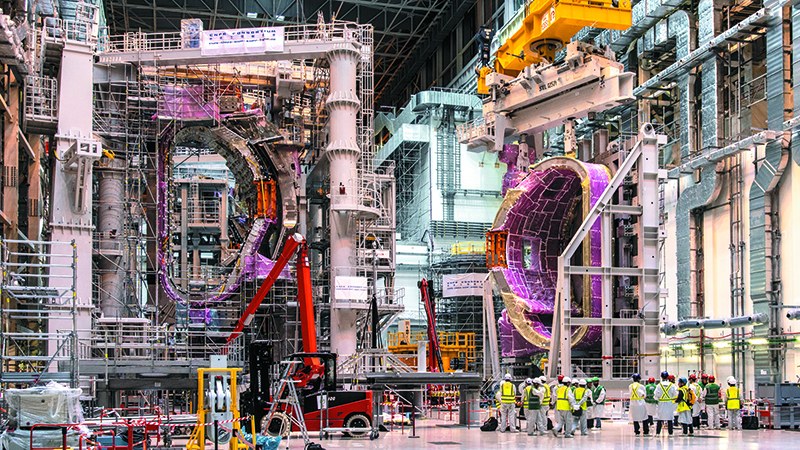
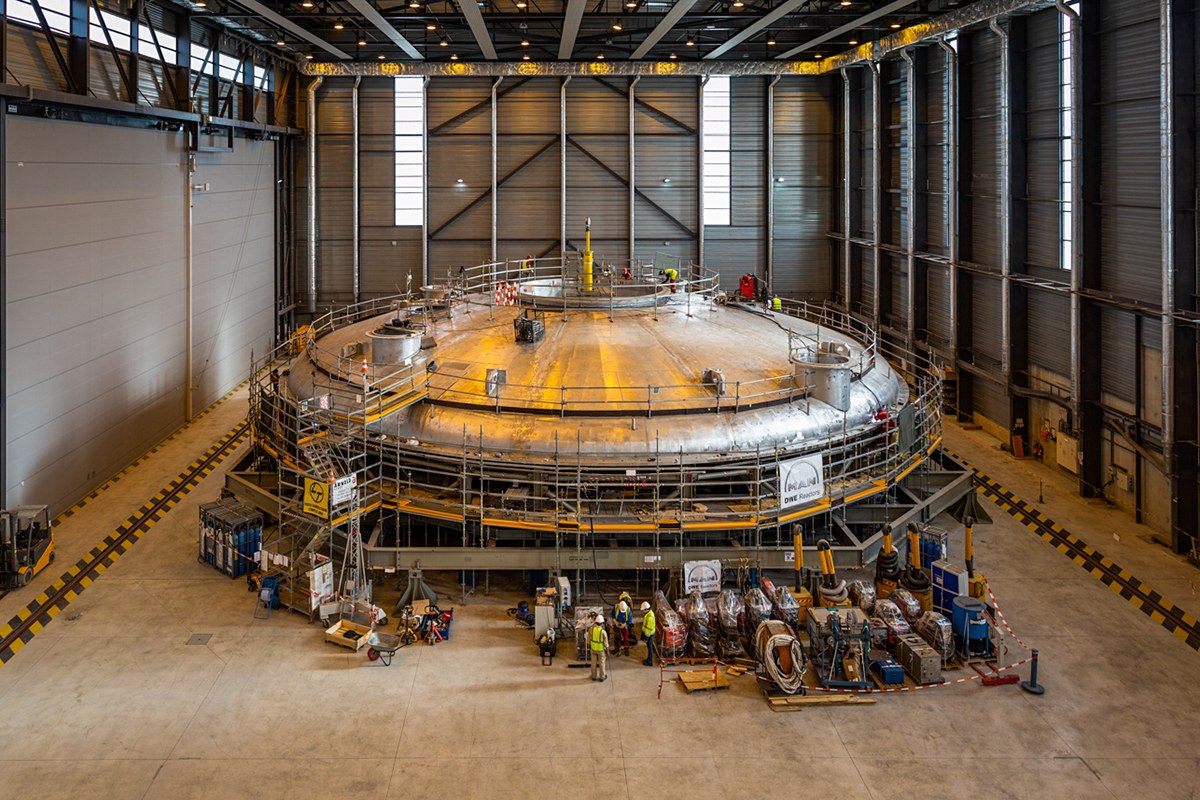
The heart of ITER is the tokamak, a doughnut-shaped chamber where the fuel is heated to temperatures over 150 million degrees, ten times hotter than the core of the Sun, for fusion to occur. Assembling this structure requires fitting pieces weighing hundreds of tons with minimal, millimeter clearances, in an increasingly tight space as the reactor takes shape.
-
Experts Warn: Aging NASA Launch Facilities Could Hinder Artemis Moon Mission Progress

-
Self-Driving Harvester Now Operating in Brazil’s Vast Farmlands
-
Astronomers Discover Two Giant Exoplanets as Light as Cotton Candy, Challenging Current Scientific Models 1,110 Light-Years from Earth
-
NASA’s Plan to Dump ISS Debris in Ocean Sparks Environmental Concerns Among Scientists


This is where the robot nicknamed Godzilla comes in. About four meters tall with arms capable of both strength and delicacy, it was designed to work where a human cannot, handling gigantic components with the precision of a watchmaker. In an environment with radiation and confined spaces, leaving the task to the machine is safer and more accurate.
The assembly of ITER is described as fitting together the most complex three-dimensional puzzle ever attempted, with pieces coming from factories around the world. Each component needs to fit perfectly, and an error of centimeters can compromise years of work.
The promise of infinite energy
What makes fusion so coveted is the rare combination of virtues. The main fuel can be extracted from seawater, is practically inexhaustible, does not emit greenhouse gases, and does not generate the dangerous radioactive waste lasting millennia of current plants. If it works on a large scale, it would be a clean and almost limitless energy source, capable of transforming the future of humanity.
The challenge is that fusing atoms requires creating and controlling a plasma hotter than the Sun, contained by powerful magnetic fields, without touching the reactor walls. Keeping this furnace stable and extracting more energy than is spent to maintain it is the problem science has been trying to solve for more than half a century, and ITER is the biggest test ever conducted for this.
It is fair to keep expectations grounded: even if ITER works, commercial fusion energy, powering homes, is still likely decades away. The French reactor is experimental, made to prove the technology works on a large scale, not to generate electricity for the grid. It is a giant step, but a step, not the finish line.
The cost and timeline are daunting. ITER consumes tens of billions of euros and accumulates years of delay, a result of the complexity of coordinating dozens of countries and manufacturing unique parts in the world. Each component is a prototype, custom-made, and any problem in a factory on the other side of the planet delays the entire assembly. It is the price of attempting something no one has ever done.
A global race for fusion
ITER is not alone. A wave of private companies, funded by billionaires and investment funds, is racing to achieve fusion through their own paths, often with smaller reactors and different approaches. Some bet that one of these startups might get there before the giant, state-backed project, in a competition that has heated up in recent years.
This competition is healthy for the field. The more people trying, through more paths, the greater the chance one of them will unlock the problem. And the advancement of tools like the Godzilla robot, which solves assembly bottlenecks, shows that the engineering around fusion is maturing rapidly, even if the final goal is still distant.
For the world, and for a country like Brazil, which seeks to diversify its energy matrix and already masters part of nuclear technology, following the fusion race is strategic. The energy that powers the stars, if ever tamed down here, will redefine who has power and who depends on whom on the global board.
If fusion ever works on a commercial scale, the impact will be hard to overstate: clean and abundant energy could lower costs for everything, from industry to transportation, and reduce the world’s dependence on fossil fuels. It is precisely this colossal reward that justifies spending billions and decades pursuing a dream that has always seemed too distant.
For now, what we see is a giant robot patiently and precisely fitting together the pieces of a machine that aims to bring a piece of the Sun inside a warehouse in France. It is one of the most impressive engineering spectacles underway on the planet.
Will nuclear fusion really become the clean and infinite energy of the future, or will it always remain decades away?