Portuguese
  Spanish


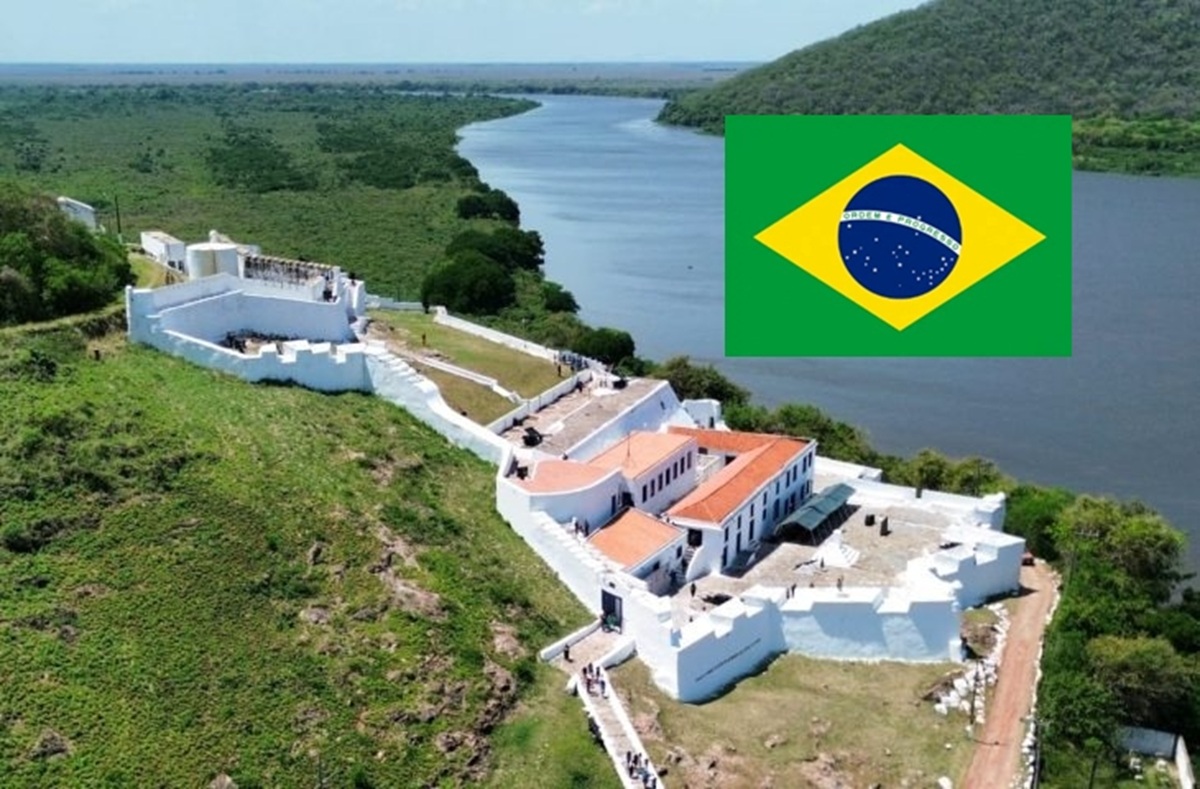

Fort Coimbra: 250 Years of History, Resistance, and Restoration in Pantanal with Investment of R$ 19 Million for Cultural Preservation
One of the historical symbols of Mato Grosso do Sul, Fort Coimbra, located in Pantanal, has completed 250 years and entered a new phase in its trajectory.
The State Government announced the complete restoration of the monument, with an investment of R$ 19 million, reaffirming the importance of preserving the memory and history of Brazil.
The celebration took place on Saturday (20), with the groundbreaking ceremony for the work and a military event.
-
Brazilian Airport to Receive $2.8 Million Investment, Completion Expected Within a Year

-
UN Warns of AI’s Environmental Impact and Calls for Greater Corporate Transparency

-
Former Atacadão Employee Turns Online Cake-Baking Lessons into a Confectionery Brand with Factory, Store, Delivery, and Nearly $400,000 in Revenue
-
Brazilian Startup Sells Nearly 9 Million Surprise Bags of Near-Expiry Food, Prevents Thousands of Tons of Waste, Aiming for $42 Million Revenue by 2026




Present were Governor Eduardo Riedel, Defense Minister José Múcio, Army Commander General Tomás Paiva, and CMO Commander General Alcides de Faria.
Governor Highlights Integration Between History and Future
During the event, Governor Eduardo Riedel emphasized the historical value of the Fort and the connection between preserving memory and the development of the State.
“I visited Fort Coimbra to learn a bit about the entire history; we must never forget, at any moment, our origins, formation, where we came from,” he stated.
Fort Coimbra is considered a landmark of Brazilian military engineering and played a strategic role in the defense of the territory, especially in the process of defining boundaries between Portugal and Spain.
Tombamento and National Relevance
Built in 1775, on the banks of the Paraguay River, near the triple border with Bolivia and Paraguay, the Fort was registered by Iphan in 1974.
The Army Commander, General Tomás Paiva, highlighted the role of preservation:
“With this celebration of the Fort’s 250 years, we set an example for Brazil of how we integrate society, the State, and the Brazilian Army. With respect, continuity, and commitment, to preserve this heritage, enhance culture so that people can visit and see what happened in the past and how important it was for integration in Brazil. It’s a lesson in history and citizenship, with tolerance, respect, integration.”
Throughout its history, the Fort has been the stage for conflicts, such as the War of the Triple Alliance in 1864, in addition to serving as a base for operations of the Armed Forces against border crimes and in the protection of Pantanal, including combating forest fires.
Heritage with World Potential
Fort Coimbra belongs to the Army, which maintains a garrison on site.
The neighboring village houses residents devoted to Our Lady of Mount Carmel, the patroness of the region, whose religious festival, on July 16, is one of the oldest in Mato Grosso do Sul.
With the extensive restoration, the monument may seek the title of World Heritage from UNESCO.
Access and Sustainable Tourism
The State Government is also responsible for ensuring road access to the Fort, through the implementation of MS-454.
The project, budgeted at R$ 40 million, aims to promote sustainable tourism, preserve history, and enhance Mato Grosso do Sul’s image on the international stage.
“We have an obligation to enable, restore the Fort and enhance it for Brazil and the world. Our history is important for the country and for Mato Grosso do Sul. I am moved to be in Pantanal, at the celebration of the 250 years and in the revitalization. I invite the private sector to participate in this process because it is a monument that will certainly be recognized by UNESCO. The process is already underway, it is a global reference for the history of South America. The Brazilian Army has been a great partner in all stages. We are steadfast to enable the restoration and value this historical asset that Mato Grosso do Sul holds,” Riedel added.
The restoration was contracted by Iphan and made possible through an agreement between CMO and the Association for Culture and Promotion of the Arts (APPA), responsible for raising funds through Incentive Laws.
History of Resistance
The foundation of the Fort dates back to 1775, when Captain Matias Ribeiro da Costa was tasked by Captain-General Luiz de Albuquerque to erect a strategic fortification to secure the Portuguese presence and drive away the Spanish.
Initially, the structure was modest: a palisade of carandá trunks and straw constructions. In 1797, Lieutenant Colonel Ricardo Franco took command and designed a new stone and lime structure, adapting to the terrain.
In 1801, during the conflict between Portugal and Spain, Ricardo Franco commanded 50 soldiers and 60 civilians against four Spanish ships with about 900 combatants. After nine days of siege, the Fort held out and solidified its strategic importance.
Decades later, in 1864, the Fort was again attacked by Paraguayan troops during the War of the Triple Alliance. With 150 soldiers, 20 allied indigenous people, and resident families, the resistance ensured the survival of the population.
Devotion to Our Lady of Mount Carmel marked the episode. The image raised by the bugler Verdeixas is said to have surprised the enemies, who retreated. Nevertheless, the Fort remained under Paraguayan control for four years, being rebuilt in 1868 by Brazilians, in its current shape.
A Heritage in Transformation
Fort Coimbra reaches 250 years as a living witness of Brazilian history and a central piece of territorial defense. It now enters a new chapter that merges cultural preservation, tourism enhancement, and international recognition.
With the support of the State, the Army, and society, the restoration promises to transform the Fort into a global reference for memory, resistance, and integration, reinforcing the identity of Mato Grosso do Sul and Brazil on the world stage.