






 Portuguese
  Spanish


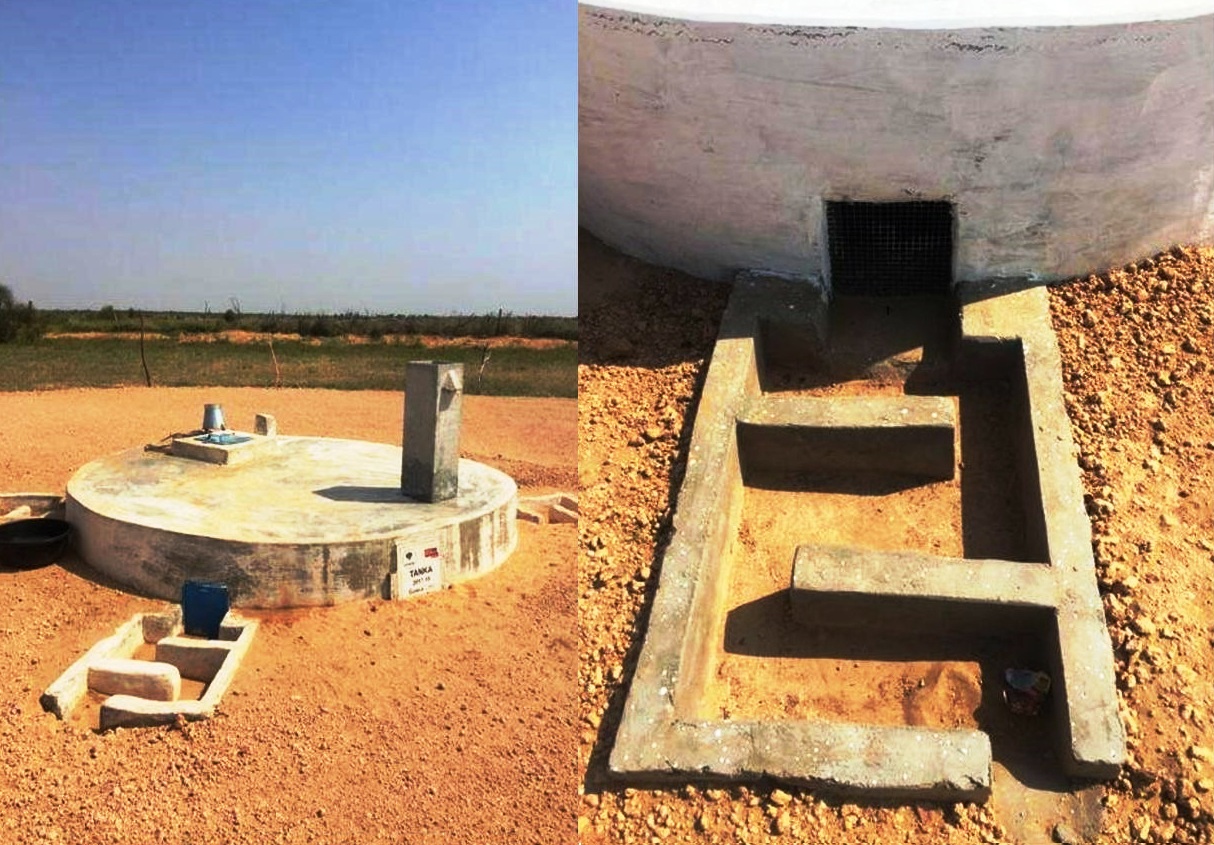

O tamanho da família, a quantidade de chuva e a área de captação são fatores que influenciam o volume de água que deve ser armazenado.
Em geral, a capacidade varia de 10.000 a 25.000 litros, mas pode ser ajustada para mais ou menos, conforme o contexto.
O custo de construção também varia, mas o investimento é considerado acessível para muitas famílias, especialmente quando comparado aos benefícios de ter uma fonte de água segura e confiável durante a maior parte do ano.
-
Scientists Plan to Release Air Bubbles Underwater to Protect Antarctica’s “Doomsday Glacier” from Melting

-
Chinese R6000 Drone Combines Airplane and Helicopter Features, Carries Up to 12 People for Multiple Missions

-
Smart Glass Revolutionizes Privacy: Touch-Activated Opacity Transforms Windows into Connected Home Features with App and Voice Control
-
Young Innovators from Brazil Turn Discarded Plastic into Eco-Friendly Bricks Using Coconut Fiber, Offering a Sustainable Alternative for Construction


Além disso, a taanka é uma solução sustentável, pois utiliza materiais locais e técnicas tradicionais de construção, o que reduz o impacto ambiental e promove a resiliência comunitária.
Com o apoio de organizações locais e internacionais, a disseminação dessa tecnologia tem potencial para transformar a vida de milhares de pessoas em regiões áridas, garantindo acesso à água potável e melhorando a qualidade de vida.
The CAZRI states that the sizing should consider the number of people served, the daily demand, and the period for which the water needs to be stored, in addition to the volume of rain effectively available for capture.
Technical publications show that this flexibility is one of the system’s greatest strengths. In western Rajasthan, there are traditional taankas with capacities ranging from 1,000 liters to 500,000 liters, while the improved models developed by CAZRI cover ranges from 5,000 liters for family use to 600,000 liters for community use.


The ISSCA/ICRISAT platform adds an important practical fact: a taanka of 21,000 liters can meet the drinking water needs of a family of six people throughout the year, provided the system is well-sized and operates in an appropriate capture context. This shows why the structure can be small in some properties and much larger in others.
Why the taanka is vital for water security in the Thar Desert
The importance of the taanka grows when observing the human scale of the problem. The FAO records that the Thar has a population density of about 83 people per square kilometer and defines it as the most densely populated desert ecosystem in the world, with millions of rural inhabitants exposed to recurring drought and strong water vulnerability.
The same source highlights that rainfall, in many areas, is limited to about two months of the year, with annual precipitation below 100 mm to 200 mm in parts of the desert. Without storage structures, water from isolated events is quickly lost, and communities end up being forced to even buy water for domestic use.
In this context, the taanka ceases to be just a tradition and becomes essential infrastructure. The FAO reports that these underground cisterns reinforce drinking water security and also relieve the daily burden of fetching water, a task that historically falls on women and girls in many rural communities in the Thar.
Materials, circular shape, and cover increase the durability of the cistern
The structure of the taanka has changed over time, but without losing its central logic. The CAZRI records that traditional versions ranged from simple mud plaster to lime mortar, while more recent models have started using stone, cement, concrete, ferrocement, and even prefabricated PVC tanks in some urban applications.
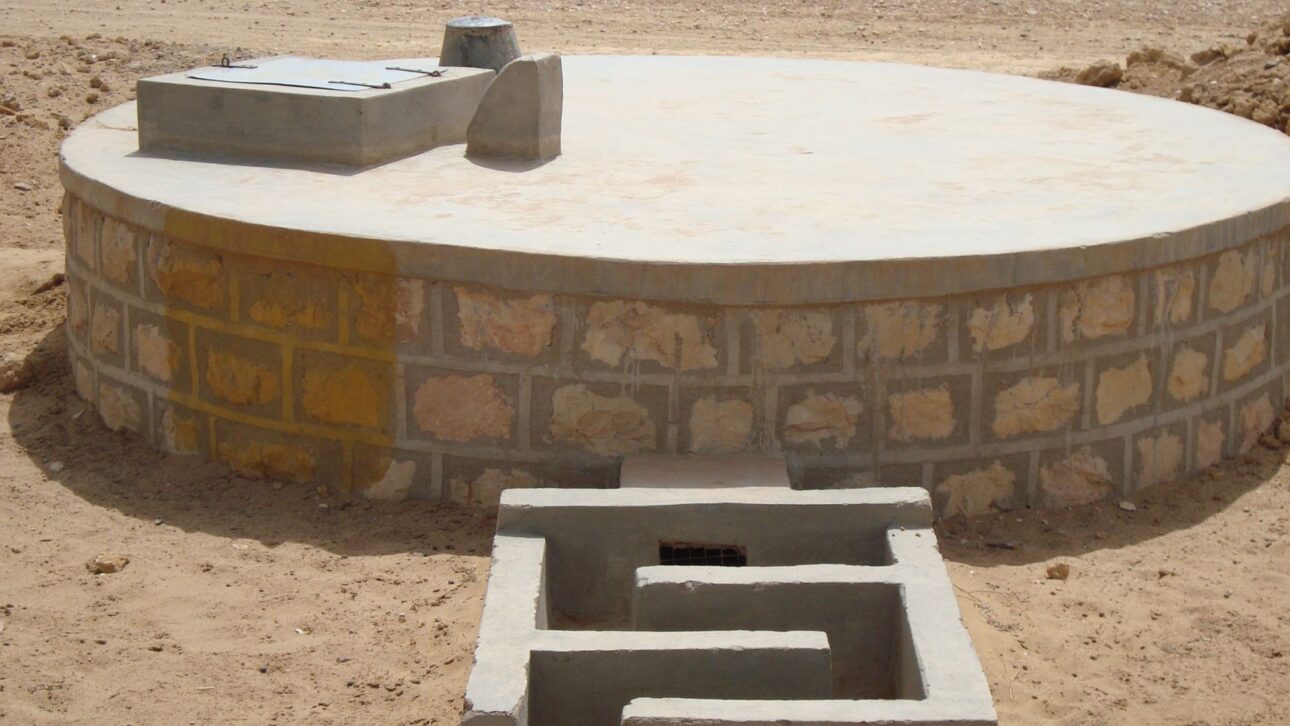
In the improved models, the shape also matters. ISSCA/ICRISAT states that the circular taanka tends to be more economical than the rectangular one for the same capacity, and it also presents a lower risk of cracks in the corners by better distributing the pressure on the walls.
The same technical reference informs that the depth of the taanka should be equivalent to the diameter, and that the upper cover, the lower maintenance requirement, and the lifespan of over 30 years are among the advantages of the improved design. This helps explain why an ancient technology remains competitive even in the face of more recent solutions.
Traditional technology remains current and has been expanded by modern programs
Far from having disappeared, the taanka has been absorbed by modernization initiatives and supply policies. CAZRI states that, after decades of research, its improved models have gained wide regional acceptance, while ISSCA/ICRISAT records that the design has been replicated by different development agencies and adopted in public drinking water programs.

The numbers help measure this permanence. According to the technical information gathered by ISSCA based on CAZRI’s work, more than 11,469 improved taankas have been built in the region, with a total capacity of 475,200 cubic meters, a volume considered sufficient to meet the drinking and cooking water needs of about 132,000 people throughout the year.
The strength of the taanka lies precisely in this rare combination of simplicity and efficiency. In a region of scarce rain, severe heat, and high human pressure, the underground cistern transforms a few monsoon episodes into months of domestic supply, showing that an ancient technology can still respond, with enormous relevance, to one of the most urgent problems of the century: water security.


