Portuguese
  Spanish


Ten years after buying an 18th-century terraced house in Ellerby, northern England, a couple decided to renovate. When lifting the kitchen floor, they found a ceramic bowl filled with rare gold coins, and the hidden treasure ended up at a million-dollar auction.
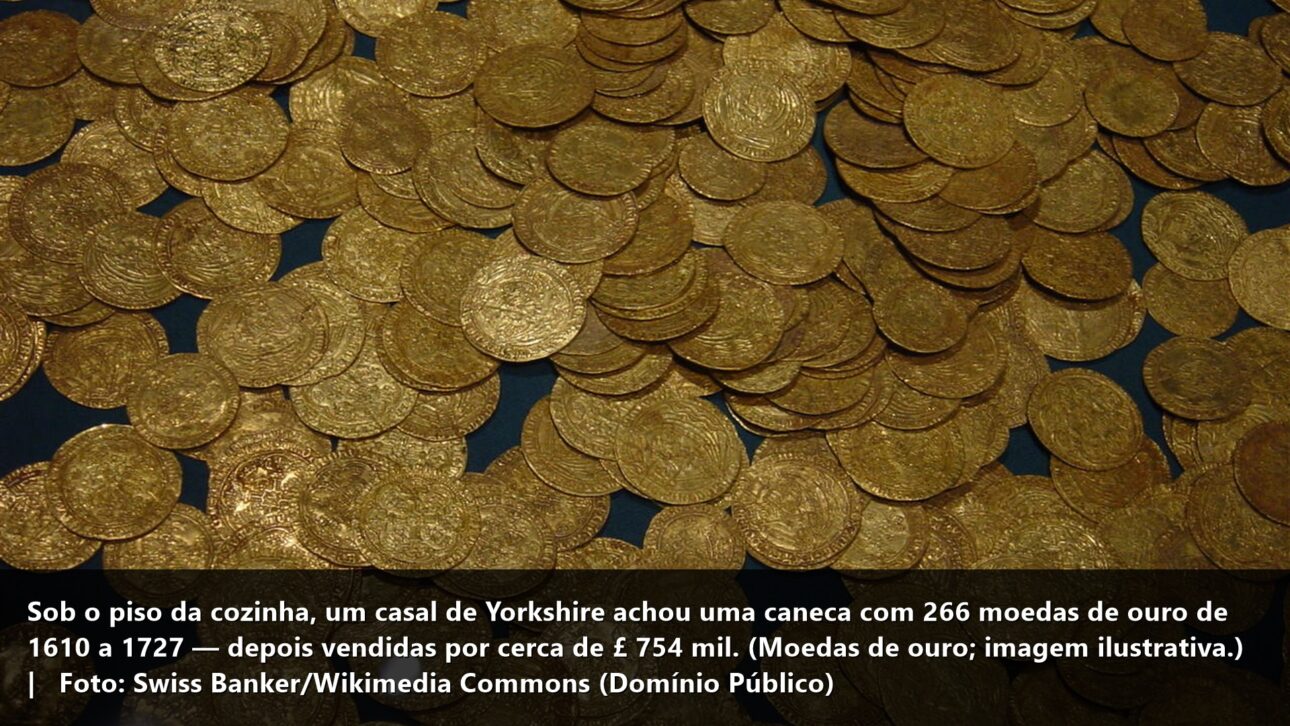
What was supposed to be a simple renovation ended in a cinematic find. According to Smithsonian magazine, an anonymous couple replacing the kitchen floor of their house in Ellerby, a village in North Yorkshire, northeastern England, found under the floorboards a small clay mug crammed with rare gold coins, some over four centuries old.
According to the Smithsonian, the discovery happened in July 2019 and included 266 coins dated from 1610 to 1727. The auction house Spink & Son estimated the collection at over £250,000 but, when the hammer fell, the “buried retirement” reached about £754,000, approximately three times the expected amount.
An “electric cable” that turned into a fortune
The discovery began with a trivial scare. While working on replacing the kitchen floor, the couple encountered something hard under the concrete and thought they had hit an old buried electric cable.
-
Archaeologists lift a giant stone in 3,500-year-old ruins in a country neighboring Brazil and discover a ritual treasure buried 3,800 years ago, with human figures, shells, beads, and symbols of a city that connected the Pacific, Andes, and Amazon.

-
Couple sees their home’s sidewalk sink, starts digging and discovers under the 1890 property a 2.7-meter-high brick tunnel even older than the house itself, a secret passage from around 1840 sealed and forgotten for nearly 180 years.

-
Chicago transforms colossal quarry into an “underground bathtub” of nearly 13 billion liters, sees the reservoir fill up six times in 2026 alone, and digs the hole to nearly 38 billion liters to create one of the largest water and sewage vaults in the U.S.
-
A couple who grew up surrounded by factory waste transforms ash and silica sludge into cement-free blocks, builds houses in up to 30 days, keeps interiors cooler in India’s heat, and claims to have already helped build homes for 450 families.




Upon investigating the obstruction, however, they realized it was something else: a ceramic bowl filled with gold coins, a find that soon raised the question that haunts every unearthed treasure in the country, whether it fell under the British treasure rules.
The dimensions help to understand the astonishment. The stoneware bowl was buried between 15 and 20 centimeters below the surface and was roughly the size of a soda can—small enough to go unnoticed for generations, but enough to hold 266 gold coins. The modest container practically hid a small fortune asleep under the floorboards.
Coins from 1610 to 1727: everyday money from another era
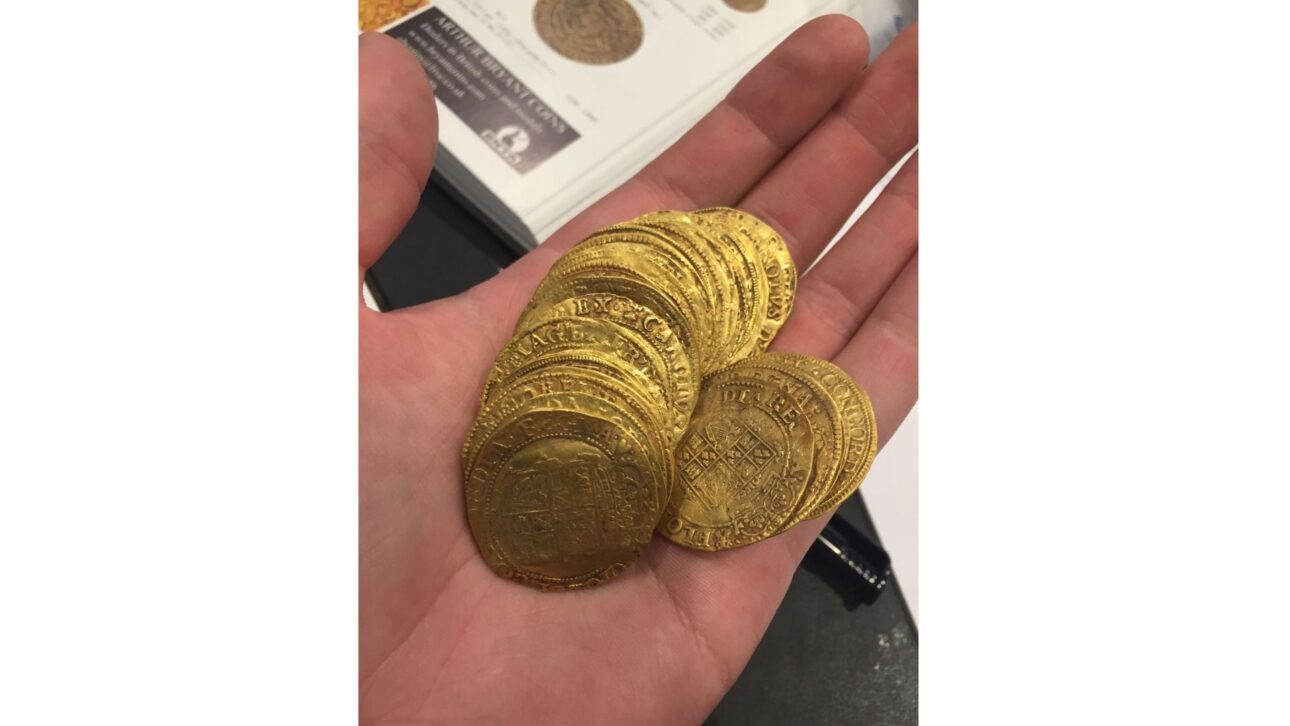
Courtesy of Spink & Son / Gregory Edmund.
Although the collection is extraordinary, the pieces were not born as rarities. The coins circulated as common money at the time, used in everyday trade before being stored and forgotten. Dated from 1610 to 1727, they were worth, together, something between £50 and £100 when they were buried, a considerable amount for the period.
Among all, some stand out for the whimsy of the error. The rarest and most valuable is a 1720 George I guinea with a minting error, featuring the same inscription on both sides, valued at around £4,000. There is also another coveted curiosity: a Charles II guinea with the Latin name misspelled, estimated at around £1,500.
Why the couple could keep the treasure

Not every find of this type remains with the finder, but this one had a favorable outcome. After a legal back-and-forth, a British government coroner concluded that the coins could be “released” because the most recent one, a 1727 George I guinea, was less than 300 years old at the time of discovery.
Not fitting the legal definition of “treasure,” the pieces could mostly remain with the couple.
The state, nevertheless, reserved a keepsake. The government decided to keep a single item: a rare Brazilian gold coin that circulated in England in the 1720s, destined for the collection of one of its museums. The rest remained with the owners, free to be taken to auction.
The 17th-century couple that distrusted banks
The story behind the coins is almost as curious as the find. Before becoming forgotten treasure, they likely belonged to Joseph and Sarah Fernley-Maisters, a couple from a prosperous merchant family that grew wealthy from trading natural resources like timber, coal, and iron ore. They married in 1694; Joseph died in 1725 and Sarah in 1745.
For experts, the choice to bury the money reveals much about the era. According to Gregory Edmund, numismatist at Spink & Son, the couple “clearly distrusted the newly created Bank of England, banknotes, and even the gold coins of their time”, as they preferred to accumulate pieces dating back to the English Civil War and earlier periods.
“Why they never retrieved the coins, so easy to find just below the original 18th-century floorboards, is an even greater mystery,” he adds.
From the buried mug to the £754,000 hammer
The next step was to turn the find into cash. Conducted by Spink & Son, the auction started with an estimate above £250,000, already considered high for a set of this type.
In the end, however, the lot was sold for about £754,000, almost triple the expected value, a result that surprised even the organizers.
The figure matches the tone of the evaluations. For Edmund, “the remarkable collection is unlike any discovery in British archaeology or any coin auction in memory”. More than the gold itself, what enhances the set’s value is the combination of rarity, state of preservation, and the personal history it carries.
What still intrigues about the find
Even with the mystery of the value resolved at the hammer, some questions remain unanswered. It is not known for sure why the former owners never returned to retrieve the savings, stored just a few centimeters deep and so easy to reach. What led a prosperous family to abandon a small fortune under their own floor remains open.
The episode also serves as a reminder that old houses can hide entire chapters of history beneath the feet of those who live in them. A simple kitchen renovation was enough to reopen a window to the 17th century and to transform an ordinary couple into the protagonists of one of the most talked-about finds in recent British numismatics.
And you, what would you do if you found this under your house?
A pot the size of a can, 266 gold coins, and a £754,000 hammer: the story of Ellerby has everything to fuel the dream of anyone who has ever imagined unearthing a treasure at home.
Would you take everything to auction like the couple did, or keep the coins as a keepsake? And honestly, have you ever wanted to rip up the kitchen floor just to see what’s underneath? Tell us in the comments here.