Portuguese
  Spanish




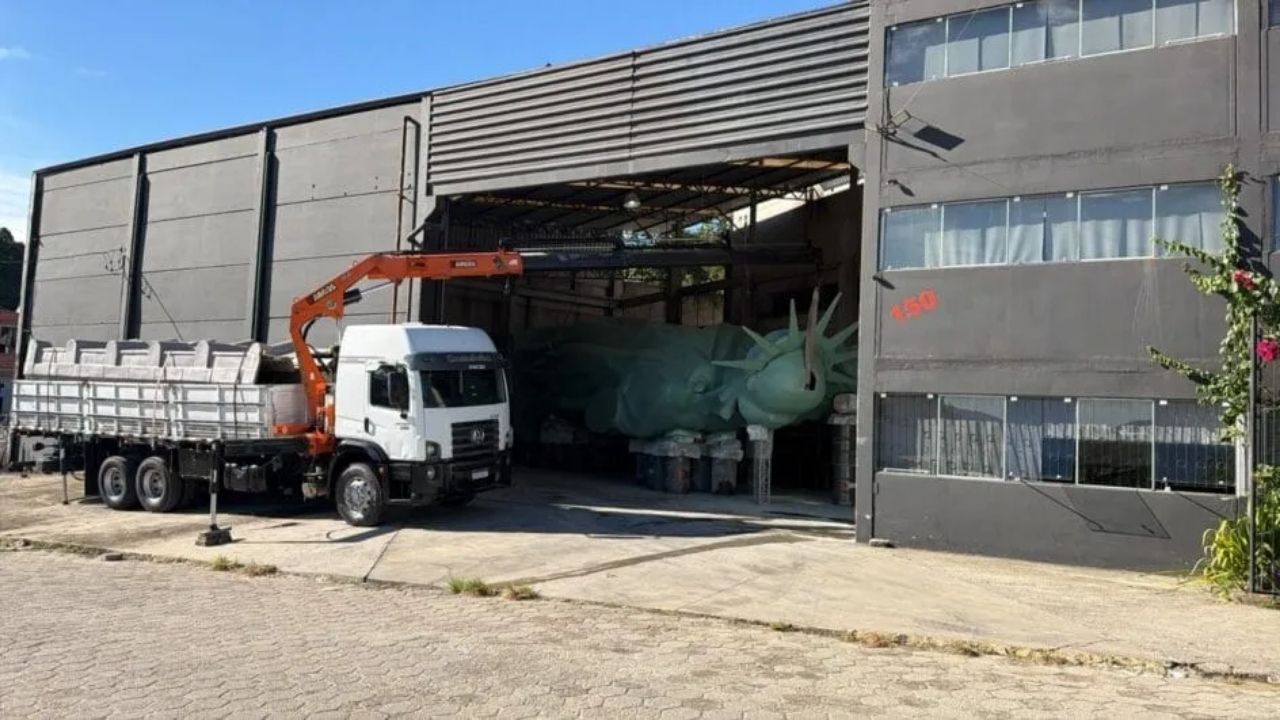
According to NSC Total, a Havan statue left Camboriú at 10:30 AM on Friday, July 10, 2026, heading to Ariquemes, in Rondônia, caught attention on BR-101, caused slowdowns in Balneário Camboriú, and revealed the operation of replicas produced in Santa Catarina for the chain’s stores.
The Havan statue that left Camboriú heading to Rondônia caught the attention of drivers on BR-101, in Santa Catarina, during the morning of Friday, July 10, 2026. The structure was heading North and caused slowdowns in Balneário Camboriú.
The information was published by NSC Total. According to the source, the statue had left Camboriú at 10:30 AM and the trip was expected to take at least five days to reach Ariquemes, in Rondônia.
Structure caught attention on BR-101
Shortly before noon, the structure was passing by km 137 of BR-101, in the Balneário Camboriú section. The size of the load and the reduced speed of the transport contributed to forming a line in the Northbound direction of the highway.
-
A woman left her job as a cashier in a supermarket to create frozen pulps with leftover fruits from her family’s farm in a quilombola community in Minas. She turned the surplus into a business and established the only formalized factory in the municipality, which now processes up to 10,000 kg per month and supplies schools, regional commerce, and large industrial meals.

-
Drivers hugged after a car crash in Santa Catarina, surprising those who expected a fight in the middle of the street, and went viral with a rare scene: the man who was hit got out of the vehicle, consoled the person who caused the accident, and turned traffic tension into a lesson in empathy.
-
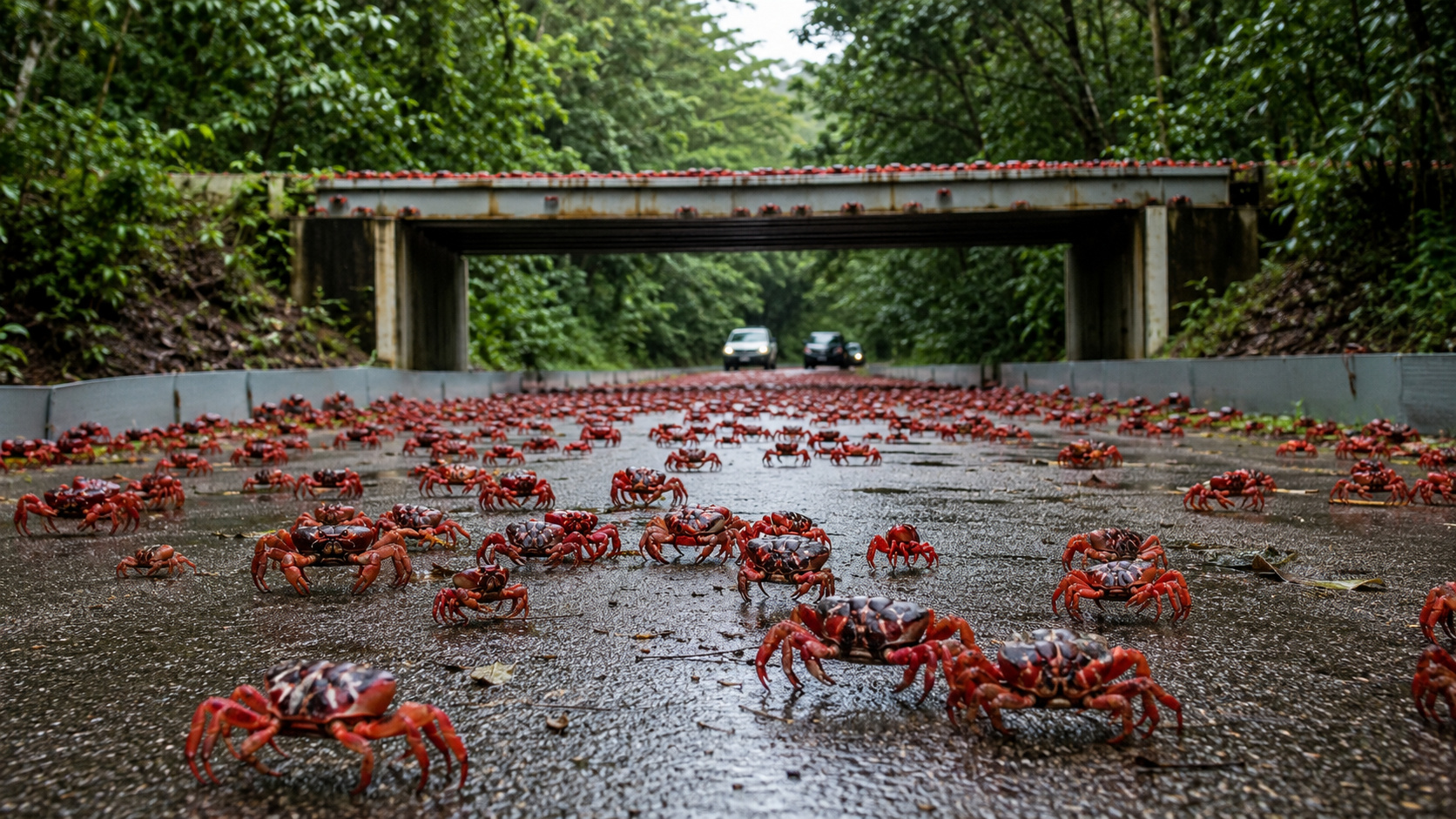
An Australian island closes roads, diverts vehicles, and installs kilometers of barriers to guide over 100 million red crabs to the sea.

-
Detectorists find three Bronze Age torcs near Carlisle, 3,000 years old and valued at £500,000 each, in an area where an energy project may build a substation and a 28 km overhead line.



The scene caught attention because it was not a common load. The image of a giant replica traveling along BR-101 turned a logistical operation into a curious episode in the traffic of Santa Catarina, especially for those passing through the section at that time.
Transport had monitoring on the highway
Due to the size of the structure and the slow movement, the truck was accompanied by a vehicle from Arteris Litoral Sul. The concessionaire is responsible for the maintenance of BR-101 in the Northern Coast of Santa Catarina.
The presence of the support vehicle indicates that the transport required operational care. Even without detailing the dimensions or weight of the load, the report shows that the operation needed to be monitored to reduce risks and organize the flow on a busy highway.
Trip to Rondônia is expected to last five days
According to information from Havan’s advisory cited by NSC Total, the Havan statue left Camboriú at 10:30 AM. The informed destination was Ariquemes, in Rondônia, with arrival expected on Wednesday, July 15, 2026.
The route draws attention due to the distance and the complexity of the movement. Transporting a giant structure from Santa Catarina to the Northern Region requires route planning, controlled speed, and attention to urban stretches, highways, and high-traffic points.
Slowdown also had other factors on BR-101
The report states that, besides the transport operation, there were records of slowdowns in other stretches of BR-101 heading North. According to Arteris, the other queues were related to the intense movement on the highway.
It was also raining in the region, a factor that can influence vehicle speed and increase driver attention. In this context, the transport of the statue added to an already heavier traffic scenario on the Santa Catarina coast.
Replicas come from a company in Camboriú
NSC Total highlighted a little-known backstage: practically all the replicas of the Statue of Liberty used by Havan come from a single company in Brazil. This company is located in Camboriú and makes the structures destined for the chain’s stores.
The replicas have become one of the visual symbols of Havan, created by the businessman from Santa Catarina, Luciano Hang. The operation shows that, before appearing on the store facades, these structures go through production, assembly, transport, installation, and maintenance.
Camboriú became the starting point for the structures
The departure of the statue heading to Rondônia reinforces Camboriú’s role as the origin point of these pieces. The city appears not only as a transit point but as the base of the company responsible for building the structures.
This detail helps explain why such a load was circulating on BR-101 in Santa Catarina. The piece left the Santa Catarina municipality to cross the country to a store in the North, in an operation that links local production and national expansion of the chain.
Scene became a topic for mixing brand and logistics
The transport of the Havan statue easily goes viral because it mixes two elements with strong visual appeal: an out-of-standard load and a brand known for giant structures. For the driver, the scene on the road stands out immediately.
Despite the curiosity, the episode is also a logistics topic. Moving a large piece by highway affects traffic, requires monitoring, and shows an invisible stage of the installation of large commercial elements in the country.
Behind the scenes shows how commercial icons arrive at stores
The report does not provide the exact size of the transported structure nor the cost of the operation to Rondônia. It also does not detail the name of the company responsible for manufacturing the replicas in Camboriú.
Even so, the case reveals a little-seen part of the process: before becoming landmarks in stores, the statues undergo long displacements, road monitoring, and planning. The trip to Ariquemes is an example of this logistics.
A giant load that became a traffic debate
The Havan statue that left Camboriú heading to Rondônia drew attention because it turned a Friday of traffic on the BR-101 into an unusual scene for those passing through Balneário Camboriú. The structure continued its journey with a forecast of five days to the final destination.
The episode raises a practical question: should giant commercial loads circulate at more controlled times to reduce slowdowns, or is this type of transport an inevitable part of Brazilian highways’ routine? Leave your opinion in the comments.