






 Portuguese
  Spanish


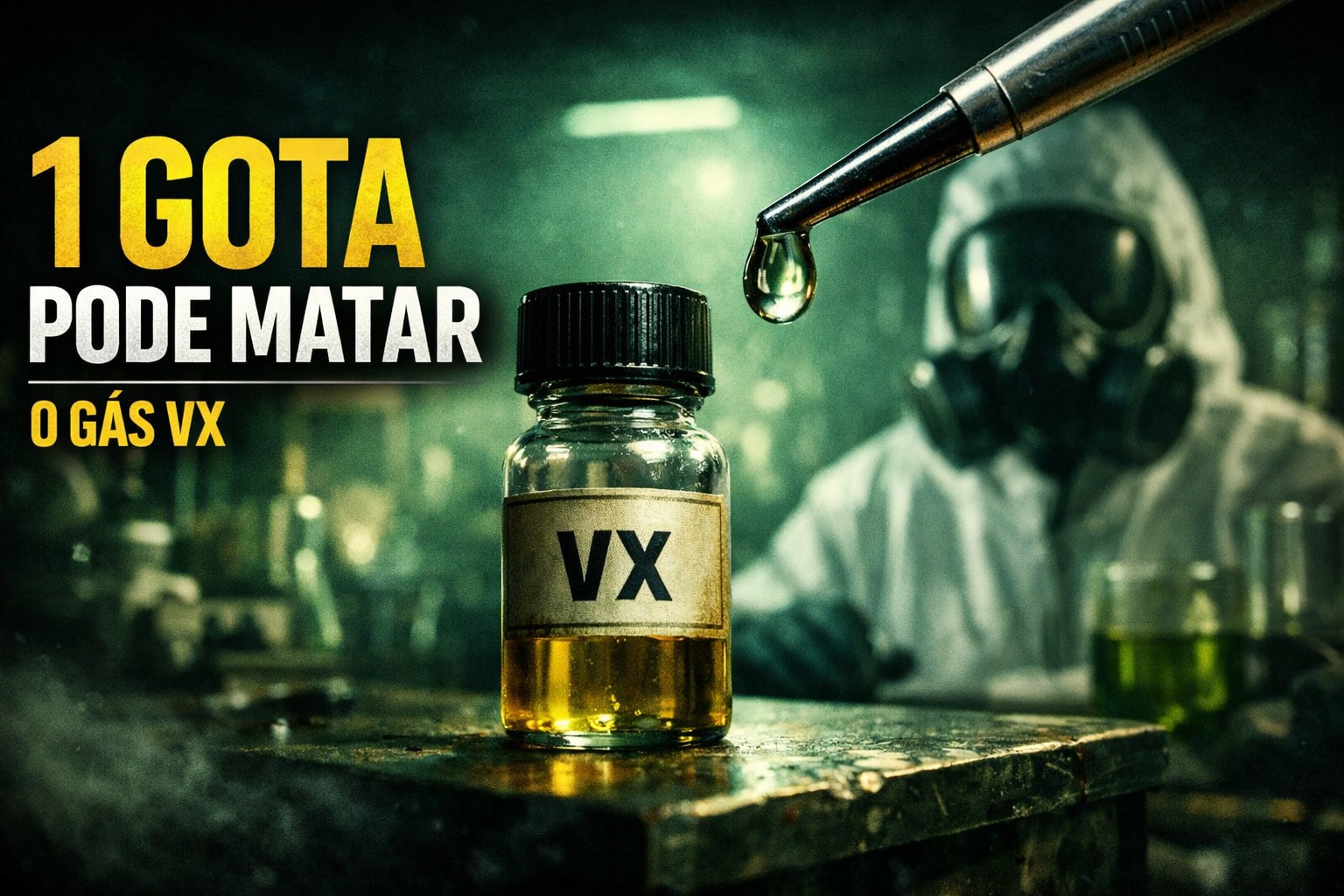


VX Gas: The Most Lethal Substance Created by Man Kills in 15 Minutes, Just 1 Drop on the Skin is Enough and It’s 100 Times More Lethal than Sarin
On February 13, 2017, at the busy Kuala Lumpur International Airport in Malaysia, Kim Jong-nam — half-brother of North Korean dictator Kim Jong-un, was calmly walking towards check-in for his flight to Macau. At 9 AM, two women approached him. Within seconds, they rubbed something on his face and disappeared into the crowd. Kim immediately felt that something was wrong. He staggered to a clinic at the airport, desperately seeking help. He reported that he had been attacked with “some kind of chemical spray.” Minutes later, he began to have violent seizures. His blood pressure spiked to deadly levels. He was rushed into an ambulance racing against time.
He died on the way to the hospital. Time elapsed since the attack: 15 to 20 minutes. The autopsy would reveal that Kim Jong-nam had been murdered with VX, the most toxic and fast-acting nerve agent among all known warfare agents. The two women, one Indonesian and one Vietnamese, claimed they thought they were participating in a prank for a TV show. They had no idea they were carrying components of one of the deadliest substances ever created by humanity.
What is VX Gas and Why is it So Deadly
VX is not exactly a “gas,” the popular term is technically incorrect. It is an odorless and tasteless liquid that looks somewhat like motor oil. But don’t be deceived by its innocuous appearance: VX is the most lethal chemical weapon in the modern arsenal.
-
China Unveils Laser Weapon Capable of Instantly Neutralizing Military Drones, Marking a Significant Advancement in Air Defense Technology

-
U.S. Navy’s Ticonderoga-class Cruiser Becomes a 9,800-Ton Missile Fortress with Advanced Aegis System Capable of Tracking Hundreds of Targets

-
France’s Charles de Gaulle: The Sole Nuclear-Powered Aircraft Carrier Outside the US, Weighing 42,500 Tons and Equipped with Two Atomic Reactors

-
The military spaceplane that almost took the Cold War into orbit: Boeing X-20 Dyna-Soar was designed to re-enter above Mach 20, fly for up to 40 hours, land like a plane, and transform Titan rockets into a gateway to a new era of orbital warfare.





Exposure to VX can cause death within minutes. Just one drop of VX on the skin can be fatal. To put this into perspective: it takes only 10 milligrams of VX in dermal exposure (on the skin) to kill an adult, equivalent to a few drops.
Compare this to sarin, the nerve agent used in the Tokyo subway attack in 1995 and in chemical attacks in Syria in 2013 and 2017. VX is between 100 and 200 times more potent than sarin. While sarin evaporates quickly, VX lingers in the environment for days or even weeks, depending on weather conditions.
VX is the most potent chemical warfare agent; a single drop of VX on the skin can be fatal. Its exceptional potency led the United Nations to classify it as a weapon of mass destruction.
How VX Kills: A Conscious and Terrifying Death
Death by VX is particularly horrific because the victim remains conscious for much of the dying process.
VX is an organophosphate chemically similar to organophosphate pesticides, but far more potent. It affects the nervous system by blocking the action of the enzyme acetylcholinesterase (AChE). This enzyme is responsible for breaking down acetylcholine, a neurotransmitter that transmits signals between nerves and muscles.
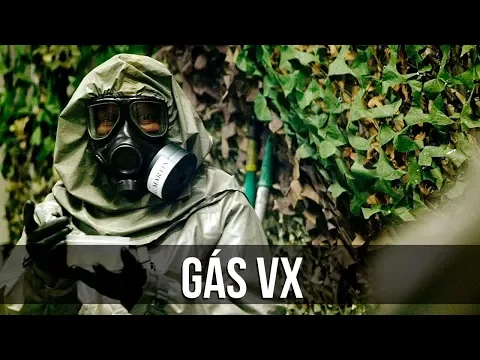
When acetylcholinesterase is blocked, acetylcholine accumulates in the nerve synapses. The muscles are prevented from receiving signals of “relaxation” and become effectively paralyzed. It is this paralysis throughout the body that quickly leads to more severe complications, including the heart and the muscles used for breathing.
The symptoms appear frighteningly quickly. The first symptoms usually appear within 30 seconds after exposure, and death can occur from asphyxiation or cardiac arrest within minutes, depending on the dose received.
The physical effects include:
- Involuntary muscle contractions
- Increased secretion of fluids (tears, saliva, sweat)
- Chest tightness and extreme difficulty breathing
- Seizures resulting from the accumulation of acetylcholine in the central nervous system
- Severe nausea and vomiting
- Total loss of bodily control (involuntary urination and defecation)
Death from VX exposure typically results from respiratory failure caused by paralysis of the respiratory muscles, accumulation of pulmonary secretions, and depression of the brain’s respiratory center.
The most terrifying aspect: for much of this process, the victim remains conscious, trapped in a body that no longer responds to commands from the brain. It is a slow death by asphyxiation while fully aware of what is happening.
The Sinister Origin: From Insecticide to Weapon of Destruction
The story of VX is one of the darkest ironies of modern science. VX was developed at a British government facility in 1952, not as a weapon but as a pesticide.
A British industrial scientist was researching organophosphate compounds for agricultural use when he discovered the base compound of the V-series nerve agents. It quickly became apparent that the new compound was too lethal for commercial use, but perfect for military use.

The United Kingdom renounced all chemical and biological weapons in 1956, but exchanged information about VX production with the United States in return for technical information on the production of thermonuclear bombs.
In 1961, the United States began large-scale production of VX. The only other countries believed to have built arsenals of VX were the Soviet Union, France, and Syria.
The Deadly Arsenals: Tons of Death Stored
During the Cold War, the United States and the Soviet Union produced terrifying quantities of VX. When the Chemical Weapons Convention came into effect, the parties declared global stocks of 19,586 tons of VX. To put this into perspective: with 10mg potentially fatal, 19,586 tons of VX could theoretically kill nearly 2 trillion people — about 250 times the world’s population.
The Soviet Union developed its own version, VR (also known as “Russian VX”), in the 1950s. By the 1970s, the Soviet Union had produced over 15,000 tons of the chemical compound.
The United States stored VX at multiple military facilities, including the Blue Grass Army Depot in Kentucky, Pine Bluff Arsenal in Arkansas, and other sites. The Blue Grass stockpile consisted of 101,764 warheads and containers holding a total of 523 tons of chemical agents loaded into M55 rockets, M104 155 mm howitzer shells, and M426 8-inch artillery projectiles.
The Long Path to Destruction
After decades of production and storage, the international community finally recognized the existential danger these arsenals posed.
Following the signing of the Chemical Weapons Convention (CWC) in 1993, the United States and Russia began eliminating their chemical warfare stockpiles.
Efforts to destroy these agents began in 2019, with the goal of eliminating the entire stockpile of chemical weapons in the United States by September 30, 2023. The destruction was slow and dangerous — VX is so toxic that even the process of elimination poses enormous risks.
The Centers for Disease Control and Prevention announced in September 2022 that the last stockpile of VX gas in the United States had been destroyed, confirming that the last VX rocket was dismantled and destroyed on April 19, 2022.
The United States was the last of the eight countries that signed the Chemical Weapons Convention to destroy its entire stockpile, ironically because it adhered to more stringent safety protocols than other countries, with the government wanting to ensure the protection of the public and workers above all else.
By December 2015, 98% of the world’s stockpiles had been destroyed. But that does not mean the world is completely free of VX.
Real Cases: When VX Escapes the Laboratory
The murder of Kim Jong-nam is the most notorious case of VX use, but it’s not the only one.
Aum Shinrikyo Cult (Japan, 1994-1995)
On December 12, 1994, members of the Aum Shinrikyo cult attacked a victim on the streets of Osaka, spraying the nerve agent on his neck. He chased them for about 90 meters before collapsing, dying ten days later without ever coming out of a deep coma.
The Aum Shinrikyo cult, which also carried out the sarin attack on the Tokyo subway in 1995 (killing 12 people), used VX in assassination attempts against enemies of the cult in 1994 and 1995. One person died.
Iran-Iraq War (1980-1988)
While there is no conclusive evidence, experts and an Iraqi defector claim that Saddam Hussein used VX against Iranian forces during the 1980-1988 war, and again in 1988 in a chemical attack against Iraqi Kurds in the city of Halabja — a massacre that killed 5,000 people and created serious health problems for thousands more.
Syria (2010s)
There are reports that Syria successfully produced VX or a similar agent and tested warheads armed with VX, although the Syrian government has denied this.
The Antidote that Didn’t Save Kim Jong-nam
One of the most tragic revelations in the Kim Jong-nam case was discovered months after his death. The Malaysian High Court heard that Kim Jong-nam was carrying 12 doses of atropine in his bag at the time of his death.
Atropine is the primary antidote for poisoning from nerve agents. It is often distributed to soldiers in the event of a chemical attack. Kim knew he was in danger, according to a South Korean lawmaker, citing a briefing from the National Intelligence Service, Pyongyang had attempted to assassinate Kim Jong-nam for five years prior to the incident in Malaysia.
But having the antidote did not save his life. For atropine to be effective, it must be injected almost immediately after exposure. Atropine is most commonly injected into a muscle, under the skin, or administered intravenously, but it is also available in pill form or as eye drops.
Kim was carrying pills. As one expert explained: “If you swallow it as a pill, it will take 15 to 20 minutes to enter the bloodstream, and by that time, VX will have already taken effect.”
He literally had the antidote in his hands, but in the wrong form and without time to use it.
Why VX is So Difficult to Combat
VX presents unique challenges for prevention and treatment:
Extreme Persistence
VX is considered a very persistent agent. If released, it can remain in the environment for days to weeks before evaporating. This means that contaminated areas remain dangerous for long periods.
Multiple Routes of Exposure
VX is toxic in its liquid, aerosol, and vapor forms. It is most dangerous when absorbed through the skin. As an aerosol, it can be inhaled and absorbed by the lungs. It can also be absorbed by the digestive system if ingested.
Ultra-Fast Action
Exposure to VX produces health effects within seconds to minutes. Large exposures can cause death in 1 to 10 minutes.
Complex Treatment
The standard treatment for nerve agent poisoning is a combination of an anticholinergic (atropine) to manage symptoms and an oxime (2-PAM Chloride) as an antidote. Both must be injected immediately after exposure to be effective.
But even with immediate treatment, survival is not guaranteed. And if treatment is delayed even by a few minutes, it is often too late.
The Dark Legacy
VX represents one of the darkest paradoxes of modern science: a compound accidentally discovered during research to improve agriculture became one of the deadliest substances ever created by humanity.
Today, after decades of production and storage, we have finally destroyed most of the world’s VX stockpiles. But the technology to produce it still exists. Knowledge cannot be erased. And cases like the murder of Kim Jong-nam prove that VX is still a real threat.
Just one drop can kill. Fifteen minutes from exposure to death. One hundred times more lethal than sarin. Invisible, odorless, persistent. VX is not just the most lethal chemical weapon ever created — it is a terrifying reminder of what humanity is capable of when science is put to the service of death.
As one chemical weapons expert said: “VX was designed with a single purpose: to kill human beings in the most efficient way possible. And in that terrible goal, the scientists had a chilling success.”


