






 Portuguese
  Spanish


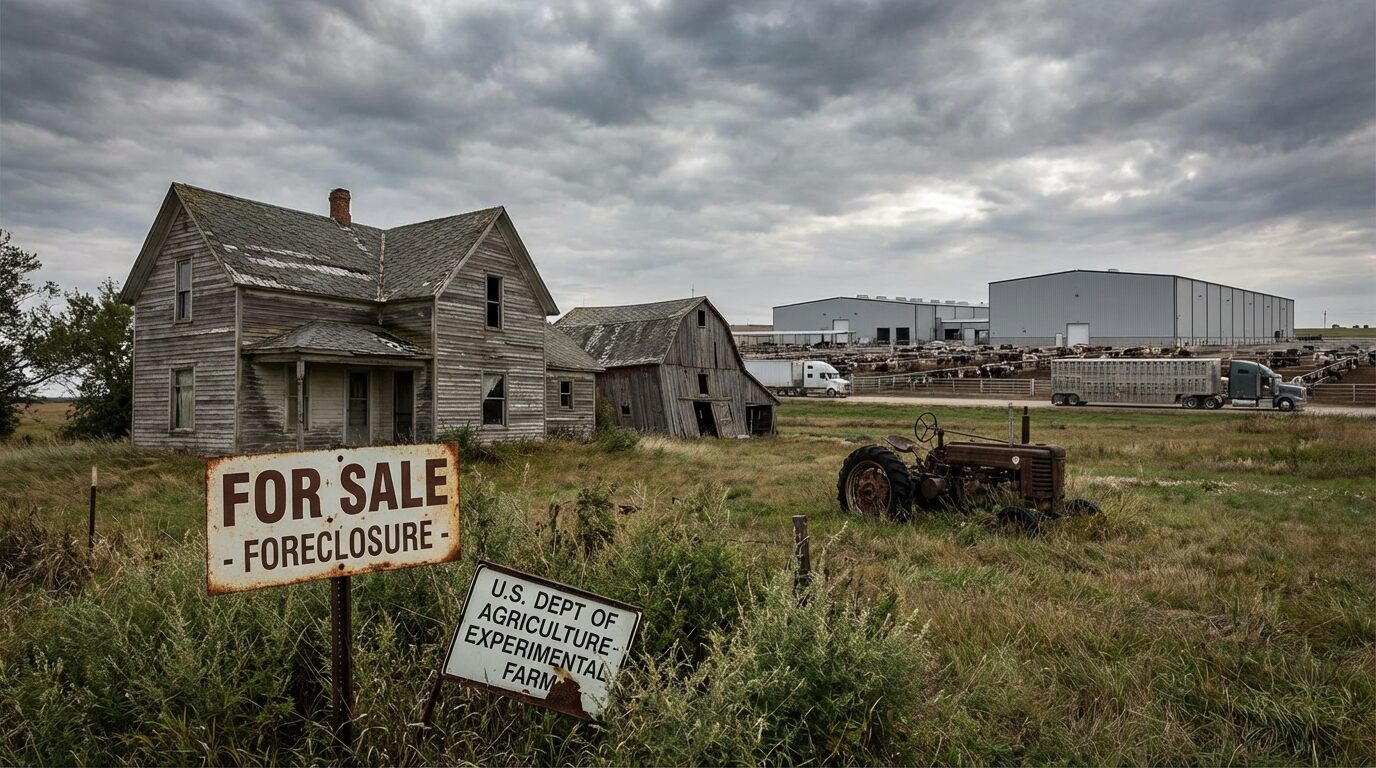
USDA Confirms Broad Contraction in U.S. Agriculture, with Fewer Farms and More Concentration in 2025
Decline Occurs Amid Beef Crisis, Rising Bankruptcies and a Recessionary Environment in the Agricultural Sector
The United States ended 2025 with a new decline in its rural productive base. According to the official report Land in Farms 2025 from the U.S. Department of Agriculture (USDA), the country lost 15,000 farms in one year and saw a decrease of 1 million hectares in the area dedicated to agricultural activity. The total number of farms fell to 1.865 million, consolidating a cycle of retraction that has been ongoing for decades.
The movement is accompanied by a structural transformation. The average size of farms increased to 190 hectares (compared to 189 the previous year), while larger operations are expanding their share of land and income. Meanwhile, the beef crisis, high input costs, and financial pressures are creating a more hostile environment for small farms.
According to the USDA, no state recorded an increase in the number of farms in 2025. The contraction was widespread, notably in Texas, which experienced the largest absolute loss of operations.
-
Low-Demand Brazilian Beef Offal Gains Popularity Abroad: Indonesia Purchases $19.5 Million, Boosting Revenue and Reducing Waste

-
Soy Expansion in Former Brazilian Savanna Sparks Water and Land Conflicts in Major Agricultural Frontier
-
Mexican Pest Threatens U.S. Cattle Herds at Historic Lows, Potentially Boosting Brazilian Beef Exports as Burger Prices Soar

-
Avocado Boom for European and U.S. Markets Fuels Water Crisis in Drought-Stricken Chilean Region


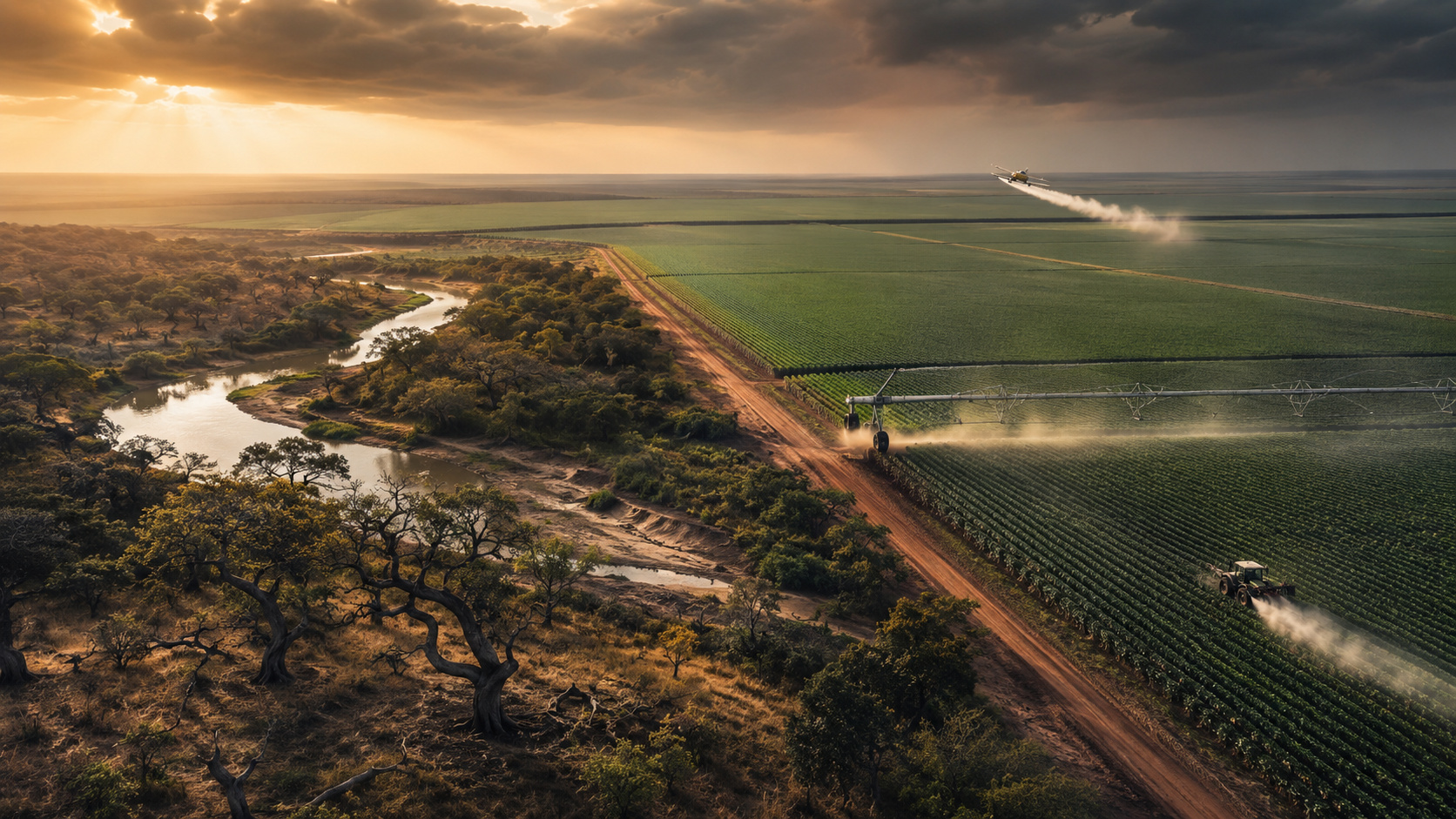


The data also corresponds to a tougher economic landscape. There was a significant increase in agribusiness bankruptcies and a decline in sentiment in the field, as shown by surveys from Purdue University in partnership with CME Group.
Farm Losses Spread Across States, with Texas Leading the Declines
Texas remains the state with the most farms in the country, totaling 229,000 properties, but it also had the largest absolute loss, with 2,000 fewer operations in 2025, according to the USDA. No federal unit recorded an increase in the number of farms during this period, reinforcing the disseminated nature of the adjustment.
In the Midwest, a strategic region for grains and animal protein, the declines stand out. Illinois lost 400 farms, totaling 69,600; Iowa decreased by 500, totaling 86,200; Indiana shrank by 500, totaling 51,500; Nebraska dropped by 200 to 44,100; and Minnesota experienced the largest relative contraction among these, with 1,300 fewer farms, reaching 64,000. The pattern indicates accelerated consolidation in large-scale agricultural states.
Experts cited by the USDA attribute the trend to multiple factors, such as urbanization, low profitability per hectare in grains, high input costs, and indebtedness. In practice, smaller operations face greater difficulties in absorbing price and credit shocks.
Agricultural Area Shrinks, Farms Get Bigger, and Consolidation Advances
The total area in farms fell to 353.7 million hectares, a yearly contraction of 1.02 million hectares, according to Land in Farms 2025. In acres, the total reached 873.95 million, a decrease of 0.3% compared to 2024. The combination of fewer farms and stable or slightly larger areas per unit reinforces the concentration phenomenon.
The increase in average size to 190 hectares helps explain why production does not necessarily fall in the same proportion as the reduction in the number of farms. The trend suggests that the scale and technology of larger operations support supply, even as the productive base shrinks.
Small Producers Decline, Large Operations Concentrate Land and Revenue
The only group that grew in 2025 was farms with annual sales above US$ 1 million, with a net increase of 50 units, according to the USDA. Meanwhile, properties with revenues between US$ 1,000 and US$ 9,999 lost 8,000 units, the largest decline among the ranges.
Land concentration increased. Farms with revenues exceeding US$ 500,000 now control 50.1% of all agricultural land in 2025, while those with sales above US$ 1 million expanded their territorial base by 344,000 hectares. This reflects the picture of “fewer, but larger.”
Despite this, the structure remains numerically dominated by small farms. 48% of farms earn less than US$ 10,000 per year and 78.8% report revenues below US$ 100,000. The contrast is striking: the majority are small in revenue, but most of the land is held by large farms.
According to industry analysts cited by the USDA, shrinking margins and price volatility make entry and survival for smaller operations more difficult, accelerating consolidation.
Bankruptcies and Rising Debt Pressure the Field, Indicating Agricultural Recession
The financial environment worsened. In 2025, bankruptcy filings in American agribusiness rose by 46%, reaching 315 petitions under the Chapter 12 bankruptcy legislation in the U.S., according to the USDA. For 2026, total agricultural debt is projected to reach US$ 624.7 billion (+5.2%), with a 40% increase in loans in the last quarter of 2025 and a 30% rise in the average value of financing.
The sentiment among producers also soured. A survey by Purdue University with CME Group indicated that the share of farmers expecting financial difficulties jumped from 47% to 59% between December and January. Meanwhile, 76% of economists see the grain sector in recession, and 74% of producers agree.
The consensus points to further consolidation ahead: 72% of economists believe that low prices and high costs will drive out the most fragile operations, and 80% of retailers project an increase in mergers and acquisitions in agribusiness, according to the referenced survey.
Milk in Wisconsin Shows the Logic of Scale, Fewer Farms with Equal Production
The dairy sector illustrates the process. In Wisconsin, there were about 5,100 dairy herds at the beginning of 2026, just over half of what was recorded a decade ago, according to data cited in the report.
Even so, the number of milked cows remains similar to that of two decades ago, and annual production continues to grow slightly. This is the direct effect of productive scale and the technical efficiency of the larger operations.
Impacts for Brazil, Opportunities and Risks in Global Trade
For Brazil, the structural reduction of the American productive base, coupled with increasing debt and land concentration, may reshape competitiveness in beef and grain supply chains, according to the sector analysis summarized by CompreRural based on USDA data. Changes in supply and costs in the U.S. tend to reverberate in international prices and trade flows.
Scenarios of greater consolidation may reduce supply elasticity in the short term, increasing volatility during shocks. On the other hand, financial and productive bottlenecks in the U.S. may open windows for Brazil to expand its share in beef and grain markets.
However, the country needs to maintain competitiveness through logistics, sanitation, and adequate financing, in addition to risk management. The global landscape may offer opportunities but could also impose greater competition and non-tariff barriers.
What do you think about this shift in American agriculture, with fewer farms and more concentration of land and income? Does this trend strengthen efficiency or threaten the resilience of agricultural supply chains in the long term? Leave your comment and join the debate, especially on how Brazil should position itself in this new competitive scenario.





-

1 person reacted to this.