Portuguese
  Spanish


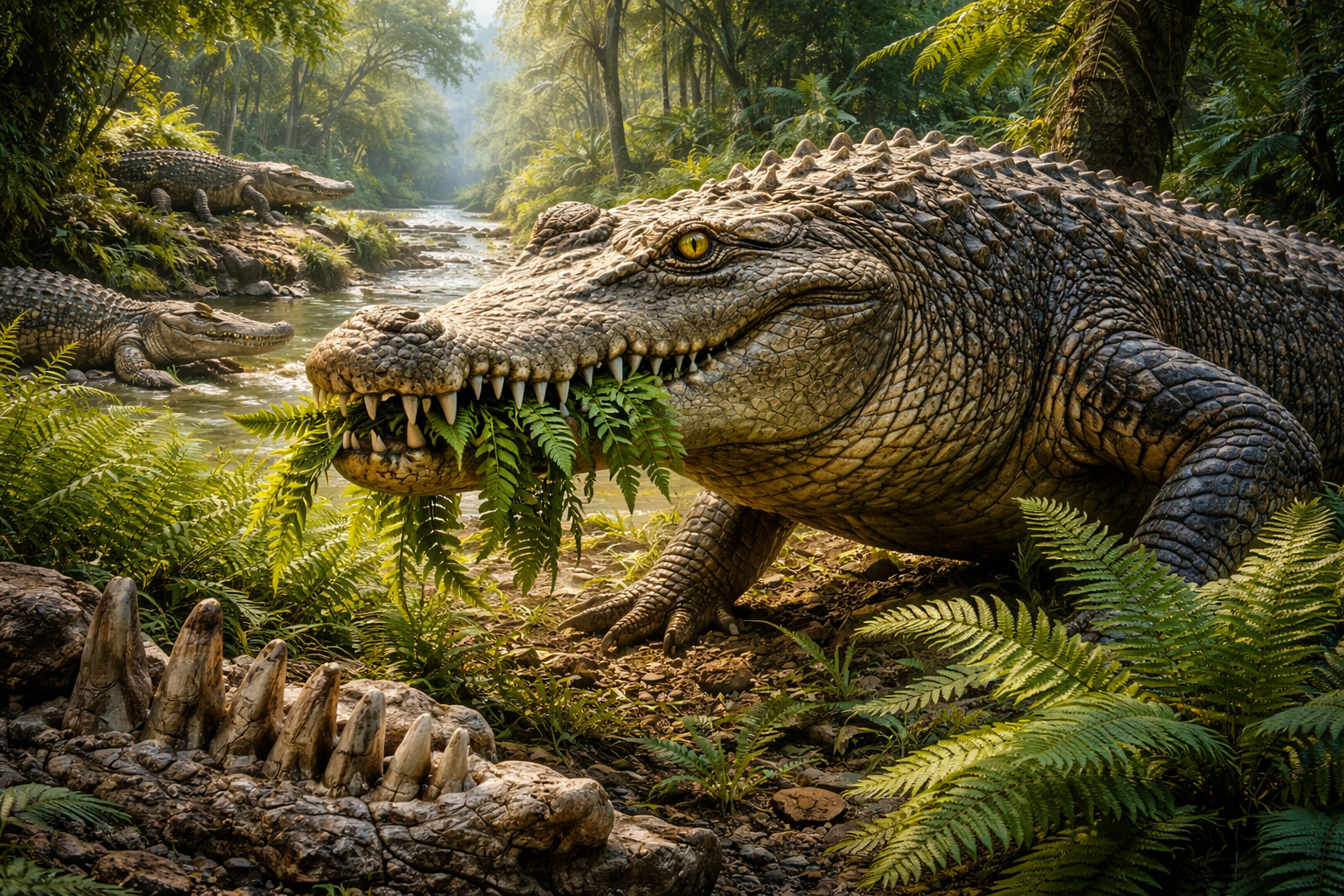

Scientific Research Analyzes 146 Fossil Teeth and Points Out That Ancestors of Crocodiles May Have Developed Herbivorous Diets Throughout Evolution
A paleontological investigation released by the University of Utah and the Museum of Natural History of the United States has provided new evidence concerning the diet of ancient crocodyliforms, expanding the understanding of the evolution of these reptiles. The analysis examined 146 fossil teeth from 16 extinct species, and based on comparative criteria, indicated that some of these animals may have exhibited dietary habits distinct from modern crocodiles. The study, conducted by paleontologist Keegan Melstrom, revealed that the dietary diversity in the past was broader than previously thought.
Technical Analysis of the Teeth Reveals Distinct Patterns
The research identified clear differences in the dental morphology of the fossils examined, thus allowing inferences about possible diets. As explained by Keegan Melstrom, carnivores tend to have simple, conical teeth, while herbivores develop more complex structures adapted for plant chewing. Some of the analyzed fossils had a shape similar to that of current crocodiles, suggesting a meat-based diet. However, other specimens had straighter teeth with distinct characteristics, indicating possible adaptations to varied diets.
Comparative Method Reinforces Dietary Reconstruction
To deepen the analysis, the researchers applied a comparative method that confronts fossils with teeth from current species whose dietary habits are already known. This approach allowed them to reconstruct dietary patterns with greater accuracy, as it relates ancient structures to contemporary biological data. This way, the team was able to identify signs of dietary diversity throughout the evolutionary history of crocodyliforms. The procedure follows recognized scientific criteria and contributes to greater consistency in interpreting fossil data.
-
Brazilian Engineer Who Grew Up Without Electricity Develops Software, Expands AltoQi to 67,000 Clients, Aiming for $21 Million by Digitizing Brazil’s Construction Industry

-
Spain Launches World’s Largest Floating Dry Dock: 56-Meter Giant Produces Massive Concrete Structures in A Coruña Using Technology Proven in Brazil

-
AI-powered toys that talk, recognize faces, and collect data face scrutiny from Brazilian government over children’s privacy concerns

-
4,000-Year-Old Child’s Skull Unveils Ancient Burial in 7,500-Year-Old Norwegian Rock Shelter, Impressing Archaeologists




Evolution After the Triassic Extinction
The researchers believe that herbivorous crocodyliforms may have emerged early in the evolutionary trajectory of the group, shortly after the mass extinction at the end of the Triassic period, which occurred about 201 million years ago. This event marked profound environmental transformations and opened the way for new adaptations among different species. There is still no definitive conclusion on the subject; however, dietary changes over geological time are phenomena observed in various animal groups. Thus, the hypothesis of dietary transition within crocodyliforms is considered compatible with the known evolutionary context.
Scientific Impact of the Discovery
The possibility of ancestral crocodiles with a herbivorous diet expands the understanding of the ecological flexibility of these reptiles over millions of years. Furthermore, the study demonstrates that evolution does not follow a fixed pattern, but may involve significant transformations in dietary behavior. Although further research is needed to consolidate the conclusions, the published analysis contributes to deepen the scientific debate about the diversity of crocodyliforms.
In light of this evidence, could the dietary evolution of crocodiles have been much more dynamic than that observed in current species?