








Approved unanimously by the National Assembly, the package gives autonomy to state-owned companies, authorizes the bankruptcy of deficit state-owned companies, and opens direct foreign investment in the private sector. The reforms come amid the worst crisis in decades, with Cuba accumulating a 15% drop in GDP over five years.
Cuba approved more than 170 economic reforms at once, legalizes holdings and corporations, allows foreigners to buy shares in private companies, and removes the employee limit per company after more than six decades of prohibition. It is the most profound transformation of the island’s economic model in many decades.
The National Assembly of People’s Power (ANPP) of Cuba approved, on June 18, the most profound package of economic and social reforms promoted by the country in recent decades. According to information released by the portal Brasil de Fato, there are more than 170 legislative initiatives that practically modify all mechanisms of the economic model, placing the market and private capital at the center of the transformations. The changes come amid one of the most severe crises in history, with an accumulated drop of 15% in GDP over five years, and amid an escalation of US sanctions, which, according to the source, includes energy strangulation and the expansion of so-called secondary sanctions.
The largest package of reforms in Cuba in decades
The National Assembly of People’s Power approved the most profound package of reforms promoted by Cuba in recent decades. There are more than 170 legislative initiatives that practically modify all mechanisms of the country’s economic model, placing the market and private capital at the center of the transformations and substantially altering the social and economic structure.
-
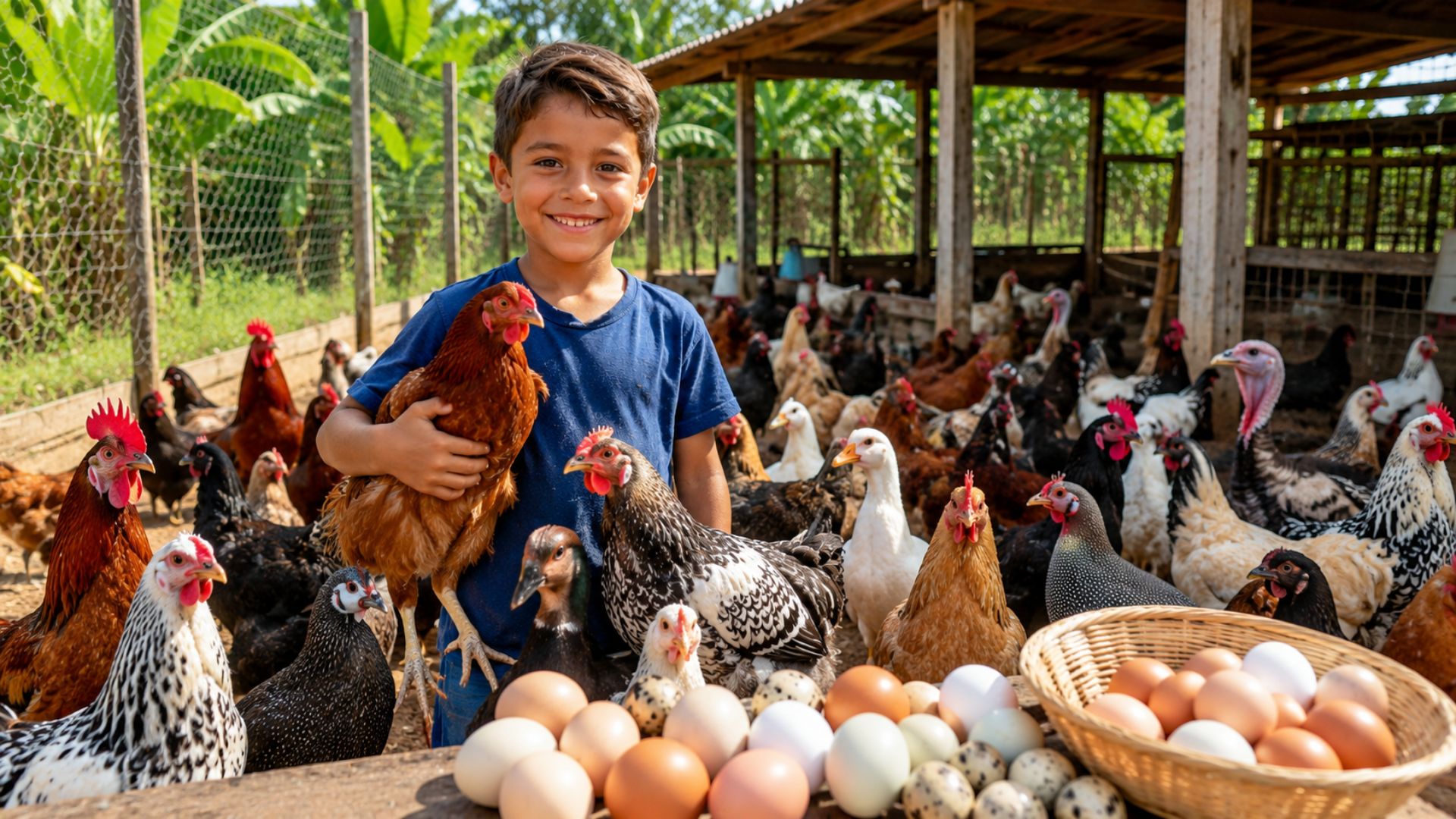
8-Year-Old Entrepreneur from Brazil Builds Poultry Business with 80 Birds, Aspires to Study Agronomy at Leading University

-
Couple Transforms School Bus into Mobile Home with Full Bathroom Using YouTube Tutorials, Invests $50,000

-
Chester County, USA, Achieves “Functional Zero” in Chronic Homelessness by 2026 with Housing First, Reducing Shelter Use by 52%
-
Brazil Extracts 12 Million Cubic Meters of Sand for Largest Beach Expansion Project, 82% Complete Along 8.8 km Coastline



The changes come at a time when Cuba is going through one of the most severe crises in its history, with an accumulated drop of 15% in GDP over the last five years. Added to this, since the beginning of the year, is an escalation of sanctions by the United States, which, according to the source, includes energy strangulation and the expansion of secondary sanctions against entities outside the United States that maintain commercial relations with the Cuban state.
Díaz-Canel says reforms do not respond to the United States
President Miguel Díaz-Canel stated, during the parliamentary debate, that the reforms do not respond to pressures from the White House, but to decisions that, according to him, needed to be adopted. He presented the changes as a path to strengthen socialism and ensure the sustainability of Cuba’s economic model.
“We are not doing this because of Yankee pressures,” declared Díaz-Canel.
The leader further argued that, even in a less unfavorable situation, the country would have to move towards these transformations. The escalation by the United States, the most intense in decades according to the source, forms the backdrop of the decision, although Díaz-Canel insists that the reforms stem from a moment of maturity in Cuba, not external pressure.
Unanimous approval and the debate inside and outside the island
Despite Díaz-Canel warning, a day before, that some proposals would not have absolute consensus, the package was unanimously approved by the Assembly. Even so, the approval generated intense debates inside and outside Cuba.
Sectors advocating for greater economic liberalization received the measures as a healthy step, although they maintain reservations about effective implementation. Meanwhile, sectors linked to the left, inside and outside the Communist Party, criticized the accelerated nature and depth of the changes, with some questioning the lack of greater popular participation and others arguing that several initiatives are direct concessions to private capital.
State companies gain autonomy and may fail
Both the Soviet-style centralized planning model and the operation of state companies in Cuba are undergoing substantial changes. State companies will no longer be subordinate to the administrative decisions of ministries or a centralized plan, and will be able to select their suppliers and clients with greater autonomy, with prices set by the market.
The State also eliminates automatic financial bailouts, meaning that state companies will face the real possibility of bankruptcy and liquidation, and authorizes the transformation of these state companies into joint-stock companies, paving the way for partial privatization, including by foreign investors. The salary scale is eliminated, replaced by a minimum wage adjusted for inflation, and the new National Institute of State Business Assets (INAEES) will oversee more than 2,000 state companies, with the ability to audit, declare bankruptcy, and liquidate the deficit ones.
Private sector: end of employee limit and holdings
Among the changes, a greater liberalization in capital accumulation stands out, an unprecedented measure in Cuba after more than six decades. The legalization of MIPYMES, micro, small, and medium enterprises, in 2021, had already marked a turning point, as private management of this type was prohibited since the so-called Revolutionary Offensive of 1968.
Now, the maximum limit of workers that a private company can hire disappears, and the simultaneous ownership of several companies by the same person is authorized, facilitating the creation of business groups and holdings.
The reform also allows for the establishment of joint-stock companies, with the buying and selling of shares, and authorizes companies to own commercial stores, industrial warehouses, and offices, something previously restricted.
Land, Agriculture, and Foreign Investment
The agricultural sector was one of the main focuses, after a deep crisis that, according to the National Office of Statistics and Information (ONEI), brought down the production of basic foods in Cuba: rice went from covering about half of national consumption to just 11% of demand, bean production fell by about 60%, and sugarcane, a historical symbol, plummeted by more than 90%. The reforms allow private companies to receive state land in usufruct, import inputs directly, and operate without price ceilings.
Another relevant change is the opening of direct foreign investment in private companies, a modality not previously allowed. Since the mid-1990s, foreign capital could only participate through mechanisms controlled by the State, such as joint ventures and wholly foreign-owned companies, practically limited to spaces like the Mariel Special Development Zone in Cuba.
Together, the reforms approved in Cuba establish the foundations of a mixed economic model, in which the State maintains a relevant role through public companies and regulatory bodies, while significantly expanding the space for the market, private initiative, and capital accumulation.
Due to their scope, they constitute the most profound transformation of the Cuban model since the declaration of the socialist character of the revolution. The package arrives amid the worst crisis in decades and an escalation of U.S. sanctions, with President Díaz-Canel framing the measures as a way to strengthen socialism, while liberalizing sectors celebrate and the left criticizes the concessions to private capital, in a debate that is far from over.
And you, what do you think of Cuba’s economic reforms? Do you believe that opening up to the private sector and foreign capital will help the island? With respect to different views, share your opinion and exchange ideas with other readers about economics and politics.


Be the first to react!