Portuguese
  Spanish





Growth of Technical Education in Brazil Drives Demand for Quick Qualification, Competitive Starting Salaries, and Jobs in Strategic Economic Sectors, According to Research by Industry-Related Institutions and Recent Enrollment Data.
Technical courses have returned to the center of the debate about qualification and income in Brazil, driven by the promise of quicker entry into the job market and competitive salaries right at the beginning of a career.
Research released by entities and media outlets indicates that professionals with technical training can earn, on average, 32% more than workers with only traditional high school education, in addition to finding opportunities in segments facing a shortage of qualified labor.
The increase in demand is also reflected in numbers from the National Service of Industrial Learning, Senai.
-
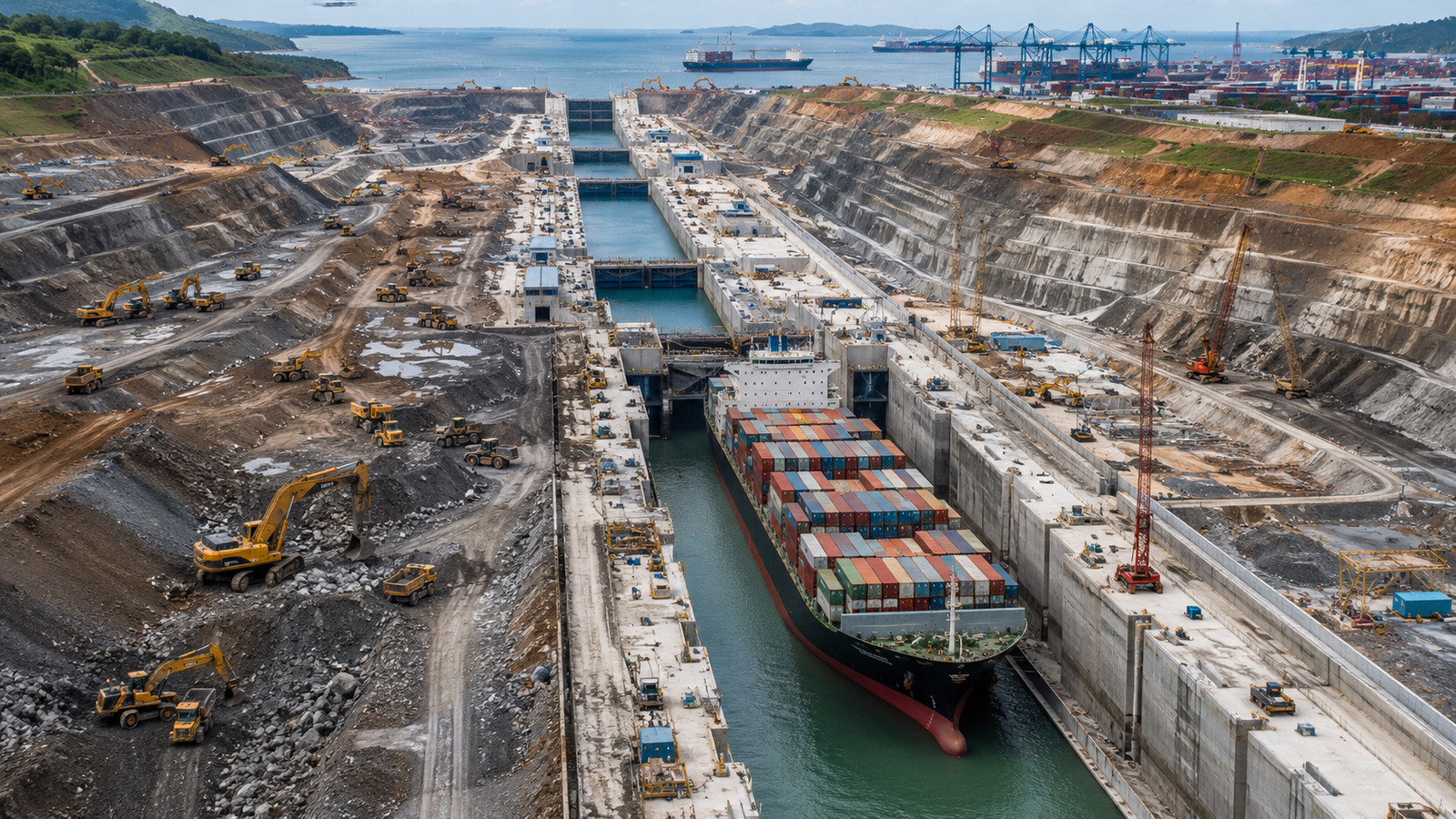
China wants to impress the world once again with a mega canal featuring giant locks, deep waters, and space for the largest ships, in a project aimed at shortening journeys, reducing queues, and rivaling the Panama Canal in global trade.

-
Brazil saved US$ 32.4 billion in 2025 by switching from fossil to renewable energy and only ranked behind China and the United States on the IRENA global podium.

-
A company from SC that moves R$ 125 billion in agribusiness is integrated into an international group, maintains its headquarters and jobs in Chapecó, and is preparing to expand software for cooperatives, grain companies, and industries while targeting new markets without leaving the western region of Santa Catarina.
-
Portugal “hides” gold reserves of 382 tons valued at 47 billion euros in an armored building, and the story involves gold from colonial Brazil, Nazi Germany, and a fortune that once amounted to 866 tons.




In 2024, the institution recorded more than 225,000 enrollments in technical courses, an indicator used by various publications as a sign of growing demand for this type of education.
Although salaries vary by region, company size, and experience, a list published by Crusoé magazine compiled ten technical qualifications with high employability and initial salary estimates that can reach R$ 6,500.
The values are presented as market references and not guarantees, as they depend on factors such as sector, certifications, and economic conditions.
Technical Education and Faster Financial Return
The advantage of technical courses often lies in the combination of shorter duration and curriculum focused on skills demanded by companies.
In practice, students tend to graduate with applicable skills for specific functions, which can speed up selection processes and facilitate the first job.
When discussing the average gain of 32% compared to those who only completed high school, reports in Brazil attribute the result to studies that analyze the impact of technical education on salary and employability.
Nevertheless, the data is general and does not replace evaluations by area, as each sector has its own salary structure and varying levels of formalization.
Technical Courses with Highest Employability in the Country

In the technology field, the technical course in Systems Development is among the most mentioned when it comes to hiring.
The list indicates an estimated starting salary of around R$ 5,000, with roles in programming, systems analysis, and technical support, common functions in IT companies and technology departments of other sectors.
In the energy field, the technician in Oil and Gas emerges with an estimated starting salary of around R$ 6,000.
Work occurs on platforms, refineries, and industrial units related to the energy chain, with performance that often fluctuates according to industry investment cycles and regional job concentration.
Aviation appears on the list with the technician in Aviation Maintenance, whose estimated starting salary ranges from R$ 4,500 to R$ 6,200.
The work includes preventive and corrective maintenance and requires strict attention to operational safety procedures and standards.
In industries that adopt automation and robotic production lines, the technical course in Mechatronics is seen as a gateway to roles related to automated systems.
The estimate mentioned in the research ranges between R$ 4,350 and R$ 4,800, reflecting the multidisciplinary nature of the work, which combines mechanics, electronics, and automation.
Following the same logic of industrial digitization, the technician in Industrial Automation has an estimated starting range of R$ 3,400 to R$ 5,000.
Work involves installation, calibration, and maintenance of automated systems, frequently found in the food, automotive, and pharmaceutical sectors.
More Traditional Industrial and Technical Sectors
For those pursuing the path of electrical infrastructure, the technical course in Electrotechnics has an estimated starting salary of between R$ 3,200 and R$ 5,500.

The professional can work on construction sites, maintenance, utility companies, and service companies, with tasks related to electrical systems and technical inspections.
The technician in Electromechanics is presented with an estimated starting salary of R$ 4,700, focused on the operation and maintenance of industrial machines.
In large factories, this training is usually associated with teams responsible for reducing failures and equipment downtime.
Among the more traditional qualifications, the technician in Mechanics appears with an estimated starting salary ranging from R$ 3,100 to R$ 4,600.
Work takes place in metallurgy, steelmaking, and the automotive industry, involving assembly, machining, maintenance, and quality control.
In the administrative sector, the technician in Accounting is listed with one of the broadest salary ranges, from R$ 2,800 to R$ 6,500.
The variation reflects company size, location, and level of responsibility, as the role can range from basic bookkeeping routines to support in closures and internal controls.
Closing the group, the technician in Occupational Safety emerges with an estimated starting salary between R$ 3,700 and R$ 4,400.
The training is linked to accident prevention, training, and compliance with regulations, with job opportunities in industries, construction, and service companies.
Why Companies Are Valuing Technicians More
One of the factors behind the increased valuation is the need to fill intermediate positions that require specific qualifications but do not necessarily require a higher education degree.
During periods of industrial modernization, expansion of specialized services, and digitization of operations, the demand for professionals who combine theoretical knowledge with practical execution grows.
The time required for training also influences.
Technical courses allow a shorter path to the first formal job, attracting those who need to start working quickly or wish to switch fields without spending years in a degree program.
Still, employability is not uniform.
It depends on the quality of the course, the infrastructure, partnerships with companies, and the availability of internships.
With enrollments on the rise and starting salaries that stand out, the expansion of technical education is likely to continue attracting those seeking income and quicker placement, but which of these qualifications aligns best with the reality of jobs and salaries in your region?