






 Portuguese
  Spanish


Seaweed roofs in Læsø show how the scarcity of wood, the historical production of salt, and the use of local material gave rise to a rare construction solution, now studied by vernacular architecture and heritage conservation.
On the island of Læsø in Denmark, old houses draw attention for an unusual roofing solution: roofs made with seaweed, specifically eelgrass, a marine plant that accumulated on the beaches and began to be used as a building material.
More than a visual curiosity, these constructions reveal a technical response to a concrete problem: the lack of wood on an island marked by the historical production of salt, the difficulty of transporting materials, and the need to protect homes against wind, rain, and cold.
The wood crisis transformed the way of building on the island
The history of seaweed roofs is linked to the old salt production in Læsø. For centuries, the activity consumed a large volume of firewood to heat the saltwater, contributing to the reduction of local forests.
-
U.S. Organization Builds Sixth Micro-Home Village with Comprehensive Support to Aid Homeless Veterans

-
Engineer from Brazil Develops Eco-Friendly Insulation from Palm Waste, Supporting Quilombola Communities

-
Brazil Constructs 6.5 km Tunnel to Overcome Toughest Stretch in São Francisco River Water Transfer, Delivering 20,000 Liters per Second to Semi-Arid Northeast
-
Nearly Every Cable Car Worldwide, from Alpine Ski Lifts to South American Air Metros, Traces Back to the World’s Largest Cable Car Manufacturer, an Austrian Company Founded in 1893


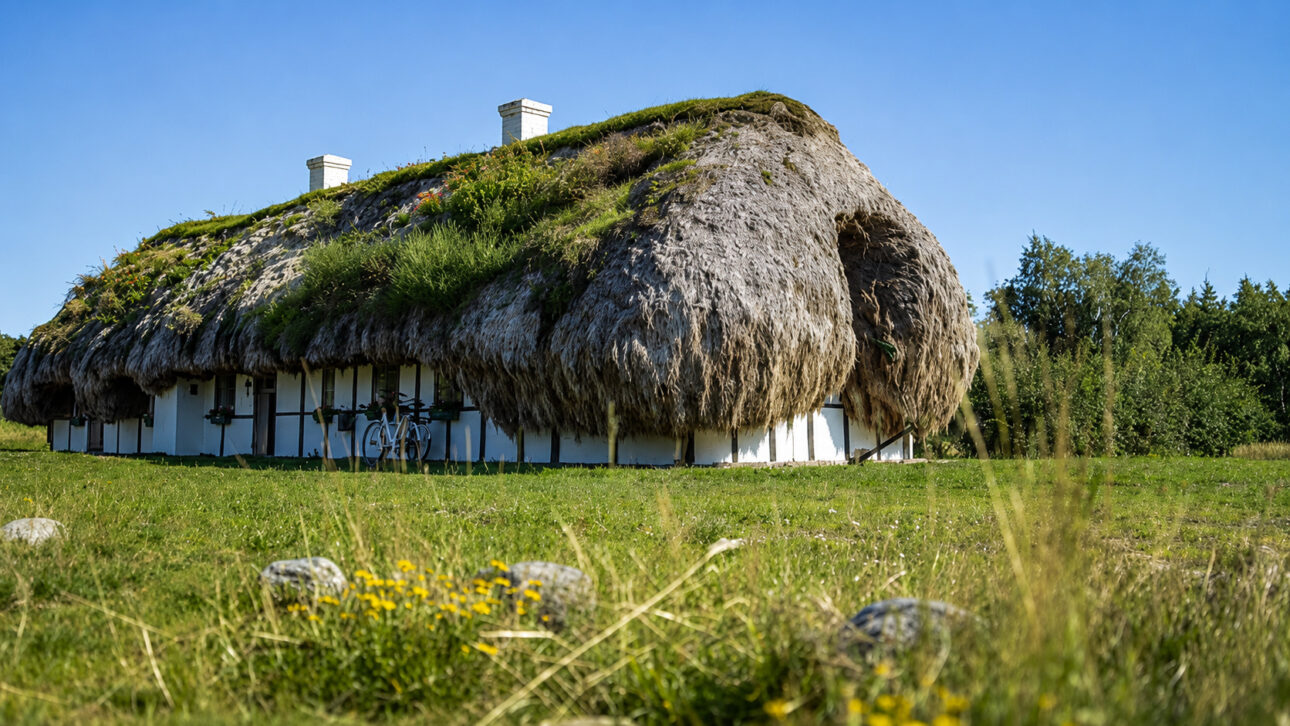
With little wood available for new constructions and house maintenance, the residents began to use materials available in their own territory. Part of the wood used in the structures came from shipwrecks, while the marine vegetation found on the beaches was incorporated into the roofs.
How seaweed became a thick and durable covering
The material used on the roofs was not applied like a common tile. The eelgrass was collected, dried, and organized in large volumes, forming a very thick covering over the house structure.
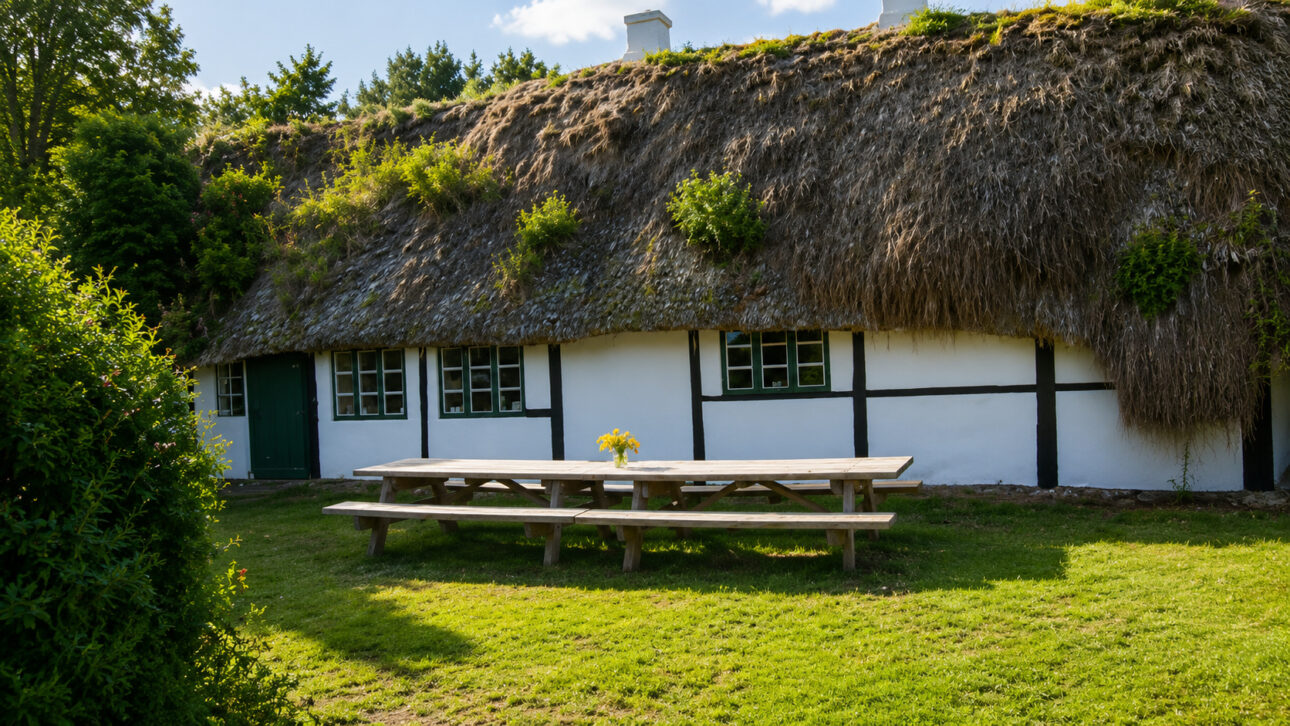
This layer could reach great thickness and weight, creating voluminous roofs that protected the construction and helped with insulation. The natural presence of salt in the material also contributed to its resistance to decomposition and fire, important factors in a roof exposed to the coastal climate.
The technique required collective labor and constructive knowledge
The construction of these roofs depended on an organized process. The material needed to be collected at the appropriate time, prepared before application, and distributed in large quantities over the house.
Records about Læsø indicate that women played a central role in this technique, especially during periods when many men worked at sea. However, the main point for architecture is the practical mastery of the material: selecting, drying, braiding, and installing the covering efficiently.
Why these houses are of interest to architecture and conservation
The seaweed roofs of Læsø are an example of vernacular architecture, a term given to construction solutions developed based on the climate, available resources, and local needs, without relying on modern industrial systems.
Today, these houses are also relevant for heritage conservation studies. The technique survives in few buildings and requires specialized maintenance, as replacing or recovering the covering needs to respect the original method and characteristics of the marine material.
Local material does not mean a universal solution
The case of Læsø does not mean that seaweed roofs can simply be copied in other countries. Such a solution depends on climate, material availability, building structure, humidity, maintenance, and technical studies.
For Brazil, the main lesson lies less in the direct reproduction of the technique and more in the concept: observing local resources, evaluating performance, reducing dependence on distant materials, and designing constructions compatible with the environment where they will be used.
A traditional technology created out of necessity
The houses with seaweed roofs in Læsø show how an environmental limitation can generate a durable construction solution. The lack of wood, the presence of marine material, and local knowledge resulted in a technique that has lasted for centuries.
Today, these constructions remain relevant not only for their historical aspect but for demonstrating how natural materials can gain technical function when used with knowledge, maintenance, and adaptation to the territory.
If a technique created centuries ago still challenges modern construction, which local materials could be studied more seriously in Brazil?


