






 Portuguese
  Spanish


Corticeira Amorim, from Portugal, produces billions of wine corks per year from the bark of the cork oak, a tree that lives for centuries without ever being cut down
Every time someone opens a bottle of wine and hears that “pop,” there’s a good chance they’re holding the product of a single Portuguese company. The largest cork company on the planet produces more than 5 billion corks per year, all born from the bark of a tree that remains alive after donating its raw material.
Its name is Corticeira Amorim, located in Portugal, and it has led this market for more than a century. The most fascinating detail is that the cork is harvested without cutting down the tree: the trunk is merely stripped, recovers, and is harvested again years later, in a cycle that can repeat for two centuries in the same plant.
How Portugal became the owner of the largest cork company
Portugal has a rare natural advantage: the perfect climate and soil for the oak from which cork is derived. The country has turned this gift of nature into a sophisticated industry, mastering not only extraction but also the processing and technology of making high-quality corks.
-
After a court-ordered shutdown years ago, Onça Puma nickel mine in Brazil’s Pará region restarts, boosting production from 25,000 to 40,000 tons annually, becoming the largest ferronickel operation in Brazil while staying 13% under budget.

-
World’s Largest Playing Card Manufacturer is Belgian, Producing Everything from Market Decks to Pokémon, Magic, and Las Vegas Casino Cards
-
Most of the world’s wigs and hair extensions are made from Indian human hair and assembled in a single Chinese city, the global wig capital, where 300,000 people rely on this billion-dollar industry.
-
Despite declining smoking rates in the U.S., Zippo’s windproof lighter factory sees record sales in over 180 countries, remaining the largest employer in its region for decades.


It was in this environment that Amorim grew to become a world leader. While other countries have the same oak, it was Portugal that built the science, the machines, and the brands to transform tree bark into billions of products, from table wine to the most expensive champagne. The largest cork company in the world is the result of this combination of nature and engineering accumulated over generations.
The tree that is stripped without dying
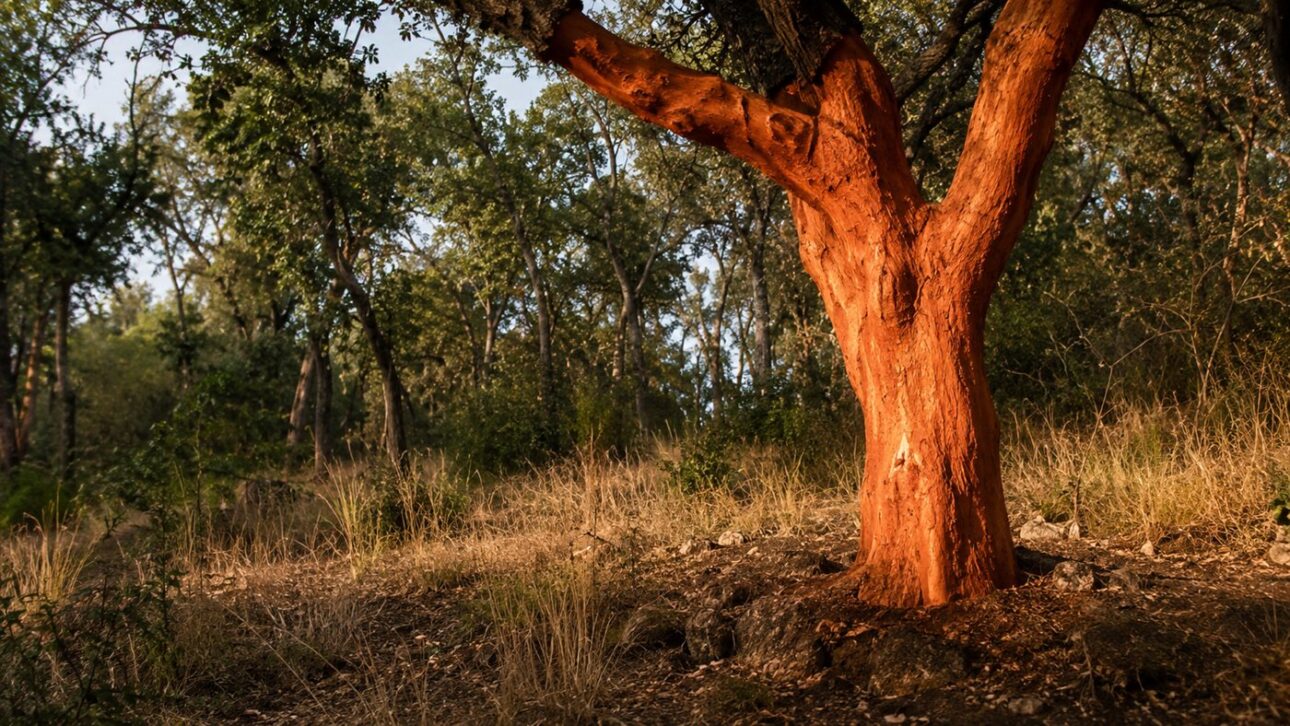
The heart of this story is an extraordinary tree. According to Forbes, the cork oak can live for more than 200 years and has its bark harvested at nine-year intervals. With each harvest, skilled workers remove the outer layer with axes, by hand, without injuring the living trunk beneath.
After the removal, the tree closes the wound and begins to produce new cork, ready for the next harvest almost a decade later. It is one of the few raw materials in the world that can be harvested without killing the source, which makes cork a truly renewable material. According to Forbes, cork is harvested without cutting down the tree, making it a genuinely renewable resource.
5 billion wine corks per year
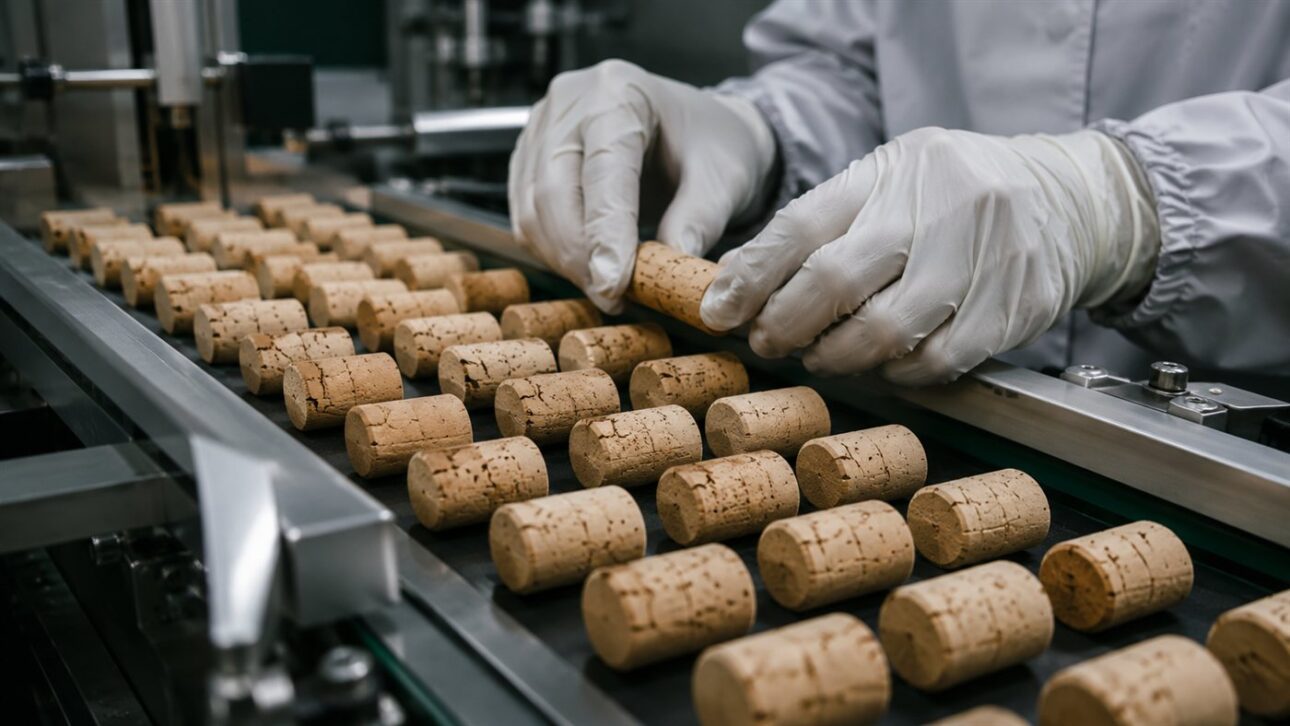
The scale of production is impressive. According to Amorim Cork, the company manufactures over 5.5 billion corks per year and presents itself as the largest producer, supplier, and distributor of cork stoppers in the world. Each cork undergoes selection, treatment, and rigorous control to ensure it does not spoil the beverage.
Making a good cork is more complex than it seems. It needs to seal perfectly, allow the wine to breathe just right, and not transmit any smell or taste. A bad cork can ruin a bottle that took years to mature, which is why the technology behind wine corks has evolved significantly, with tests that detect any defects before the cork reaches the cellar.
Half of the world’s cork comes from Portugal
The Portuguese dominance in the sector is almost absolute. According to Forbes, Portugal produces about half of all the cork in the world and is the largest exporter on the planet, with 730,000 hectares of forests of this tree. It is a rare case of a small country leading an entire global market.
This position makes cork a national pride and a valuable export. When the world needs quality cork, the path almost always leads to Portugal, and much of it to Amorim. Portuguese cork has become synonymous with a standard of excellence, from cheap supermarket wine to the most expensive bottles at auctions.
From cork to floor, wall, and rocket
What few people know is that cork goes far beyond the bottle. The same material becomes flooring, wall covering, thermal and acoustic insulation, shoe insoles, and technical parts for industry. It is lightweight, insulating, fireproof in certain uses, and absorbs impact.
The most surprising destination is space. Cork composites are used as thermal protection in rockets, helping to shield structures against the extreme heat of launch and re-entry. The same tree bark that seals your wine has already protected spacecraft against temperatures capable of melting metal. Few natural materials have such an astonishing range of applications.
More than a century dedicated to a single material
Behind the giant lies a long family history. Corticeira Amorim has roots in the 19th century and has remained connected to the same family over generations, growing from a small cork workshop to today’s global conglomerate, leading the sector for over a century.
This continuity allowed for long-term investments, such as investing in research to eliminate cork defects and in new uses for cork. Maintaining focus on a single material for generations and becoming a world leader is a rare feat in the business world. The company transformed a Portuguese rural tradition into an industrial exporting powerhouse, with sales exceeding 860 million euros per year.
Why the natural cork resists screw caps and plastic stoppers
In recent years, screw caps and plastic stoppers have tried to replace cork, promising lower costs and fewer defects. But the natural cork has resisted, supported by both tradition and a modern argument: sustainability. It is renewable, biodegradable, and linked to the preservation of these forests.
These woodlands are rich ecosystems, home to wildlife and help combat desertification in southern Europe. Buying wine with a cork stopper has also become a way to support entire forests, an argument the industry uses strongly. Thus, the old material has proven to have a future precisely because it is ancient and natural.
Why a piece of bark matters so much
In the end, Amorim’s story shows how a simple material can sustain a billion-dollar industry and still help the planet. Portuguese cork uniquely combines nature and technology: the more it is harvested, the more trees are preserved, a model many industries would like to copy.
It’s the kind of product that goes unnoticed until it’s missing. Next time you open a bottle and hear that “pop,” remember the tree that continues to live in some Portuguese field. Did you imagine that a simple cork could carry such a big story?


